

The admissions process at the University of Arizona PharmD program has evolved several times over the last five years. A traditional springtime interview week transitioned to rolling interviews, where, every few weeks, prospective students would travel to campus for their interview. The program has also moved from a basic one-on-one interview to implementing the Multiple Mini Interview (MMI) format commonly used by medical schools.
“When the pandemic hit, like everyone else we were forced to move our process online,” shared Tara Burke, the Coordinator for Admissions and Financial Aid at the University of Arizona’s School of Pharmacy.
Unable to recreate an MMI on Zoom without adding time-consuming workarounds, Arizona Pharmacy transitioned back to one-on-one interviews. However, with that transition came the loss of the bias mitigation inherent to the MMI format, and that didn’t sit well with Burke and her team. They knew they needed a new solution, and they found it in Kira Talent.
Building a reliable virtual admissions process
“In that first pandemic year, when we held our interviews on Zoom, we didn’t feel that we could pull off a virtual MMI," explained Burke. "It was definitely a challenging year, so in the spring the admissions committee met to discuss how we could improve the process, both for us and our applicants”
“Through our experience with Zoom we discovered that, although the platform has definite weaknesses, the ability to have applicants interview remotely was a huge benefit,” Burke continued. "We needed a platform that could deliver those benefits, but with more reliability.”
With Arizona’s College of Nursing and Arizona Veterinary Medicine already using Kira Talent, and having previously worked at a college that used Kira, Burke knew first-hand how Arizona Pharmacy could benefit from Kira's purpose-built platform.
Mitigating bias through structured review
“With Kira, we’ve been able to transition back to an MMI where reviewers evaluate multiple applicants for just one competency.”
“Using horizontal review in the Kira platform allows every applicant to be assessed by at least six reviewers," Burke explained. "This process gives us a diverse range of evaluations, a more holistic look at our prospective students, and helps us mitigate bias in our admissions process.”
Horizontal review helps improve accuracy and reliability of scoring by having reviewers focus on a specific competency that they assess for across a wide pool of applicants. In this way, Kira helps reviewers become experts in assessing that competency while also ensuring that each applicant is evaluated by multiple reviewers.
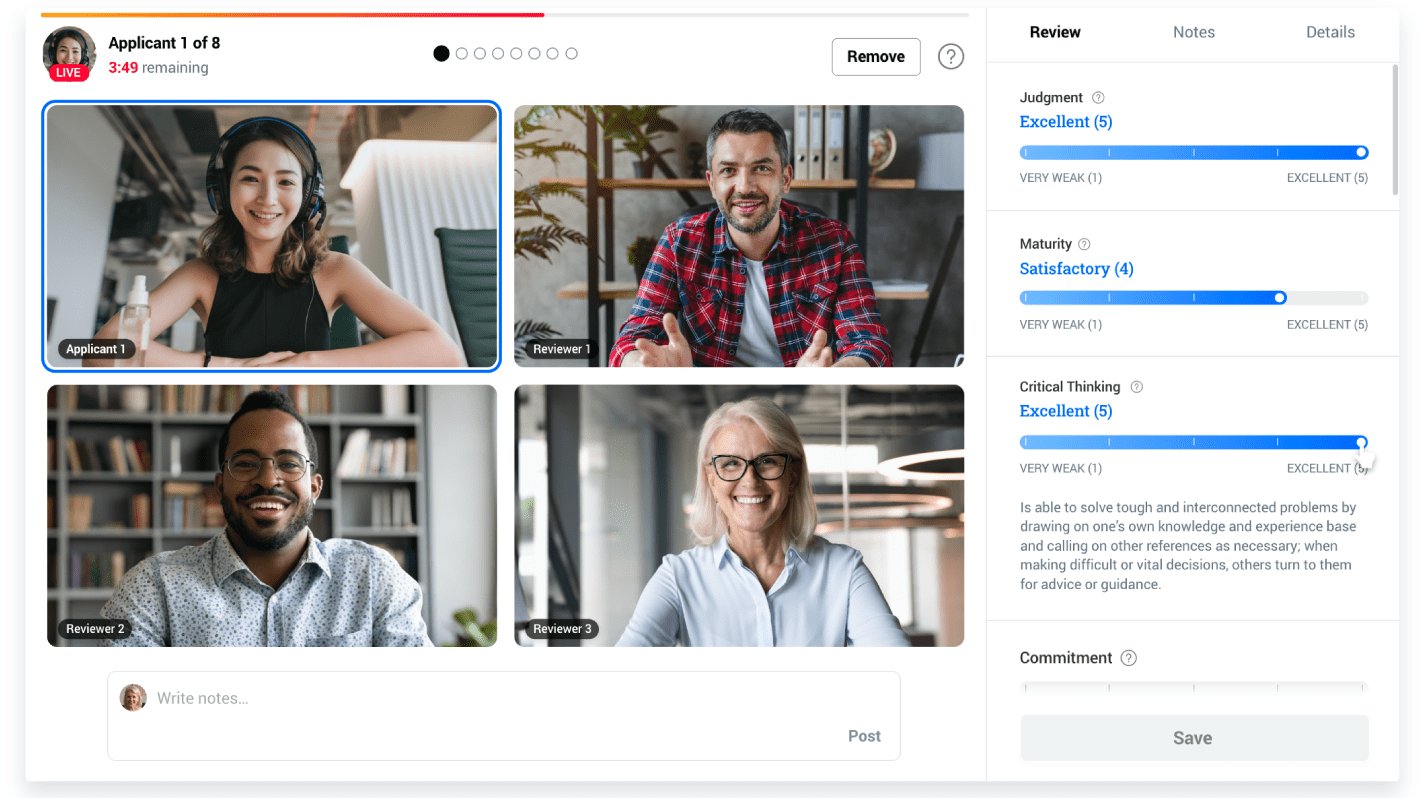
By having the rubric and related competency definitions integrated into the platform and visible on the screen at the same time as the video, Kira also helps reviewers score applicants more accurately, consistently, and in a way that helps mitigate reviewer bias.
“We can’t remove all biases from the admissions process, but Kira not only gives us the tools to help reduce biases proactively, it also provides our admin team with reviewer reliability data, flagging where biases may be affecting our scoring,” shared Burke.
Kira’s inter-rater reliability dashboard helps admissions teams monitor if reviewers are consistently scoring applicants higher or lower than average. Burke and her team use this data to assess whether a rubric needs adjustment, or if a specific reviewer might benefit from more training.
“And when there is a case where a reviewer has given an applicant a low score and we feel that it may not be fair, we don’t have to either rely on that score or go through the work to re-interview the applicant,” added Burke. “With Kira’s Asynchronous Assessment, we can simply watch the applicant’s video and see for ourselves.”
Increasing efficiency while boosting engagement
“We knew that Kira would work, but I was pleasantly surprised by the overall improvement the platform brought to our processes and workflow,” shared Burke. “Kira has streamlined everything and provides us with peace of mind when it comes to our day-to-day processes.”
“Our old process required a tremendous amount of planning and re-planning to keep up with changing needs,” she explained. “With Kira, it’s super simple. I know exactly when to invite applicants through PharmCAS, and I can just look at my calendar and know where all the groups are in the admissions process. It’s all nice, neat, and organized.”
In addition to efficiency, Burke also feels that Kira is able to help the school better engage and assess their applicants.
“I was really shocked at the amount of personality that comes through the applicants’ videos,” shared Burke. “The reviewers have been so happy with it, they really feel like they’re getting to know the applicants.”
And Burke feels that the overall experience is able to give applicants a similarly authentic feel for Arizona Pharmacy's campus community.
“We created a series of videos with Kira which help showcase the campus and facilities, as well as the community and atmosphere,” explained Burke. “We actually recorded ourselves asking the question prompts that are used in the assessment. Faculty, current students, and alumni from all over were involved in the process.”
“We took little snippets of everyone’s recordings and created a seamless voice-over for our welcome video,” she continued. “So when our applicants watch it, they really get a sense of the community that they’ll find at Arizona Pharmacy.”
“I really feel that it gives them a better sense of the university of Arizona than they would have any other way outside of physically coming to campus.”
Discover how more pharmacy programs are enhancing their admissions processes with Kira Talent
The Sinclair School of Nursing at the University of Missouri has been leading the way in nursing education for over 100 years. Focused on graduating dedicated and compassionate healthcare professionals who continue to elevate the field of nursing, Missouri Nursing recognized the importance of incorporating holistic practices into their admissions processes.
“When we launched our new master's program in the Fall of 2020, we had an astounding number of students apply. But what we saw after that first year, was that of those students we had enrolled, several of them didn’t remain in the program for very long,” explained Pete Ozias, the Director of Student Affairs at the Sinclair School of Nursing. “Although some of that was due to the COVID-19 pandemic forcing students to put their education on hold and return to work as Registered Nurses, it did show us that we needed to assess our applicants and their motivations more comprehensively.”
The workload created from the high volume of applicants the school received was impossible to handle with in-person interviews or even using a video conferencing platform.
“That was when our team learned about Kira Talent.”
The cost of using disparate systems
“We’re currently using Kira to support the admissions process for both graduate and undergraduate programs,” shared Ozias. “Knowing that both the grad and undergrad sides needed a tool like this, we were thrilled to find that Kira Talent could help us accomplish our goals for both programs.”
Using NursingCAS to collect the basic application components, Ozias and his team incorporated Kira as an additional assessment to help the programs increase their retention rate.
“Two years ago we began implementing a holistic approach within our admissions process,” Ozias explained. “Before we ranked students by GPA. It's a method that, while much easier, has been shown in various literature to not be the best way to admit medical students. Today, we use the American Association of Medical Colleges (AAMC) model to add credence to our decision-making process.”
The first semester that Missouri Nursing assessed applicants using the AAMC model, they pieced together a home-grown process with Zoom to conduct video interviews and a Microsoft Teams spreadsheet to keep track of scores.
“We had to reassign one of our advisors to be solely focused on managing the process,” Ozias shared. “Afterall, they were responsible for scheduling and coordinating around 140 interviews between faculty and applicants. It was a tremendous workload.”
From training the faculty on how to conduct interviews within their new process, to keeping scores and spreadsheets organized, to coordinating interview schedules and links, simply maintaining the homegrown system was taking focus from where it was needed most.
“We were investing so many hours into just maintaining the system,” Ozias explained. “Those are hours we wanted our advisors to spend supporting student success initiatives, and teaching and developing our students.”
Saving time to invest where it matters most
By switching to a platform built for admissions teams, Missouri Nursing estimates they are saving approximately 145 hours with Kira compared to their previous process using Zoom, and 206 hours with Kira compared to their old in-person interview process.
“In the Spring of 2021 we did an audit of time spent on our assessment processes,” shared Ozias. “We were spending over 80 hours scheduling and rescheduling interviews alone.”
“With Kira, we have not only been able to reallocate these hours, but the efficiency and seamlessness of the overall process has been felt and recognized by our reviewers and staff.”
“They’ve found the scoring to be super easy," he continued. "Whereas before you had to juggle a Zoom recording, a score sheet, and a rubric all in different windows, with Kira, you can see the interview question and response, and the scores, rubrics and criteria all on one screen.”
“Our old process was complicated. Kira Talent has made it super easy.”
Adding assurance through randomized questions
In addition to increasing efficiency, Missouri Nursing has increased the security of their assessment by utilizing Kira’s randomized question banks.
“The Kira team helped us create a bank of questions that could be randomized for applicants, meaning they aren’t able to share the questions online or with other applicants,” explained Ozias.
After determining the specific competencies that each program wanted to assess, Kira helped Missouri Nursing’s team create a bank of questions for each competency. For each applicant, a different combination of questions is pulled from the bank, ensuring applicants are evaluated consistently while maintaining the integrity of the interview.
“When creating our assessments, the Kira team used our existing questions as a starting point and then showed us where we could dig deeper and improve,” shared Ozias. “Kira opened our eyes to new ways of asking questions and eliciting the kinds of responses we were looking to evaluate.”
“This is a tool we will use for the long term,” he continued.
“When I look back at our old process, I see all those hours we were wasting. With Kira, our time is better spent advising and teaching, and we want to maintain that.”
With a student-centred curriculum and intimate class size that stands in contrast to the typical large-scale, lecture-based education model of other Veterinary Medicine programs, the College of Veterinary Medicine at the University of Arizona offers students a brand new way to study veterinary medicine. Enrolling their inaugural class in 2020, the University of Arizona’s unique three-year program runs year-round, offering students a condensed schedule that saves them an extra year of tuition costs.
And where most Veterinary Colleges boast an on-campus hospital where upper-year students can complete their in-clinic rotations, Arizona offers something a little bit different. Connected to more than 250 clinical partners, the College places final-year students in rotational positions at real clinics across the country.
“By sending them to different areas and clinics, we aim to give our students a better perspective on what it actually looks like in a veterinarian’s office,” shared Katie Beringson, Director of Student Affairs and Admissions at Arizona’s College of Veterinary Medicine. “It’s a more interactive way of learning about different offices, people, and personalities, rather than just going to a hospital filled with students.”
“It helps our students prepare for the real world of being a veterinarian.”
To ensure their applicants were well suited to this unique learning environment, Arizona Veterinary Medicine knew they needed to assess soft skills and traits as well as cognitive abilities within their admissions process. To do so, they enlisted the help of Kira Talent.
Reviving an MMI that fell flat on Zoom
Designing an application for a brand new program, Arizona Veterinary Medicine had the opportunity to start fresh with their admissions process. Knowing that the Multiple Mini Interview (MMI) process – long selected by medical schools around the world – would provide a reliable method of assessing aptitude, Arizona decided to build it online.
“Last year, we tried to conduct our Multiple Mini Interviews through Zoom,” explained Beringson. “We had three different questions and since we didn’t want to be dealing with multiple links and all the potential mishaps that that entails, applicants simply stayed with the same interviewer for all three questions.”
“It was fine, but it didn’t really deliver what we needed,” she continued. “It was more like a traditional interview rather than an MMI.”
“With Zoom, we were missing the bias mitigating factors and validity that the MMI process brings to the interviews.”
Building an effective experience with Kira
“With Kira’s Live Interviewing, we are able to run a true MMI with six separate stations, all online,” shared Beringson. “Applicants see six different evaluators and are automatically moved through the stations, so the experience truly mirrors the traditional MMI process.”
Discover how Queen's University used Live Interviewing in Kira Talent to bring their MMI online
By meeting multiple interviewers, Arizona’s applicants have the opportunity to acquire a broader understanding of the school and its community. And for Beringson and her team, the multiple-reviewer process helps build confidence in the fact that they’re helping mitigate the potential for bias.
“With Zoom we were missing the bias mitigating factors and validity that the MMI process brings to the interviews,” she explained. “Having the applicants meet multiple interviewers, and getting multiple, independent evaluations on each applicant helps ensure that the reviewing stays consistent across applicants.”
In addition to the live MMI, Arizona Veterinary Medicine uses the asynchronous component of Kira’s platform to conduct a pre-interview assessment. By having them complete an on-demand timed-video assessment, Arizona enables applicants to demonstrate their passions and soft skills earlier in the admissions process.
“Having the video component of the assessment is so helpful,” she continued. “As a veterinarian, you have to be able to talk, communicate with clients, and be personable. The video component enables us to gauge that much more accurately than an essay would.”
As the school receives applications, Beringson and her team review applicants’ GPAs to ensure that they meet the academic requirements and then invite them to complete an asynchronous assessment in Kira. The assessment gives the team a more holistic view of the applicant’s soft skills and traits, which helps them determine if the applicant is going to be compatible with the school’s community and values prior to the live interview. The efficiency of the process has helped Arizona’s small admissions team manage a 300% increase in applications while ensuring that they’re investing their time in the right applicants.
“In our first year, we had 500 applicants. For the 2020/21 cycle, we had 1500 applications,” shared Beringson. “We’re an office of 3 people, so we needed a process which would enable us to get to know the applicant beyond their paper application, but wouldn’t overwhelm our small team. With Kira, we were able to efficiently assess all the applicants who met our minimum cognitive thresholds so we could select the 300 applicants who demonstrated the right personality traits and soft skills to succeed in our program. Those were the applicants we invited to a live interview.”
“Kira helped us figure out if the applicant would be a good fit for our school, in an efficient way."
The flexibility to do rolling interviews
In addition to the efficiency that Kira brings to Arizona’s process, the flexibility of the platform allows the school to conduct their interviews on a rolling basis. Rather than managing a flood of submissions all at once, Arizona Veterinary Medicine allows applicants to submit their application at any time.
“A lot of applicants submit earlier because they want to know earlier, and those are the keen applicants that you want to keep engaged,” explained Beringson. “On the admin side, it’s also a lot more manageable to review small batches of assessments, rather than having to evaluate 1500 applicants all at once.”
“Without the rolling assessments, we wouldn’t be able to engage those eager applicants as early as we do.”
Supporting a seamless process
“Kira’s client service has been amazing,” Beringson shared. “They are so hands-on and helpful, going the extra mile to make sure that we’re up to speed and comfortable with all aspects of the process.”
Kira helped Beringson and her team build a custom assessment and MMI that introduced a new level of ease to their administrative work and helped them make more defensible admissions decisions.
“We were given a well-thought-out schedule, and our Kira Success Manager took us step by step, week by week, helping us get everything done on schedule in a way that was manageable for our small team,” shared Beringson.
“We sent her a list of attributes that we were looking for in applicants and she helped us craft questions,” Beringson explained. “It wasn’t just ‘here’s a platform, you guys figure it out’, instead we had a dedicated point of contact to provide us with extremely valuable insight and guidance in building our questions and rubrics. It made the transition so much easier for us, especially as a new school."
“For something that could be very difficult to do and very time-consuming, Kira made it easy.”
“When we did the MMIs through Zoom, it was a mess and I was responsible for sorting it out,” Beringson explained. “With Kira, I have someone who I can go to with any question I may have.”
“When choosing an external platform vendor to work with, you want to know that the customer service is solid and that there is someone dedicated to helping when needed," she added. "With Kira, we feel confident that there will always be someone ready to help us and our applicants.”
Find out what other clients had to say about their experience with Kira Talent
Building a first-class experience
Arizona Veterinary Medicine was thrilled to find that the reviewer and applicant experience with Kira was just as well-received as the experience behind the scenes.
“The platform is so intuitive, and the Kira team was just as attentive in assisting our applicants and reviewers as they were helping our admissions team,” Beringson shared.
“I have a wide range of reviewers, from veterinarians, doctors, and MDs, to staff from our office,” she continued. “Everyone thought that the platform was extremely easy to use, and if they did have a question, they used the chat function on the Kira platform to get assistance. I didn’t have to worry about being on-hand to problem solve or clarify.”
“It was the same for our applicants,” Beringson added. “I didn’t have a single applicant reach out to me asking how to complete their Kira assessment, which is a great sign of how well the platform works.”
“I would do nothing but recommend Kira, without a doubt. It’s been so helpful. Kira has made our process 110x easier.”
Future-proofing your admissions process is the first step in setting your program up for success in the new world of admissions. After a decade of slow growth, the COVID-19 pandemic brought large-scale change to higher education admissions in a very short period of time. Although the forced shift to virtual admissions didn’t come without challenges, the positive impacts inherent to a digital process are giving admissions teams several reasons to keep them around long-term.
Increased accessibility and investment in holistic assessment have inspired more first-generation, low income and ethnically diverse students than ever to apply to colleges and universities. Behind the scenes, admissions teams learned how to leverage purpose-built technology to bring fresh insights, as well as to enhance their existing processes, saving them hours of administrative work.
And while some mourn the loss of pre-pandemic processes, leading schools have found ways of melding tech with tradition to pave a new path forward in admissions.
Whether it’s a campus tour that makes an applicant fall in love with a school, or a discussion with a current student that sells them on a program, a few adjustments can help when future-proofing your admissions process — updating these time-honoured components for a new generation of applicants.
Discover how the University of Nevada, Las Vegas increased cohort diversity by 11% and how the University of Waterloo saved 20+ hours with three tech solutions that have enhanced their admissions process. Then, learn how Dartmouth College drove a 33% increase in applications by adapting two traditional components to suit the modern era of admissions.
Placing emphasis on problem-based, self-directed learning, the Physiotherapy Master’s at McMaster University’s School of Graduate Studies offers students a well-rounded academic and clinical education.
“We’re not like a typical lecture-based program,” explained Sarah Wojkowski, Associate Professor at McMaster Physiotherapy. “Our students learn through exploring health care problems that are reflective of the clients they would actually see in the clinic.”
An intensive 24-month schedule sees students alternate between being in class full-time and four full-time clinical placements, giving them a broad scope of academic knowledge and on-site learning in the different areas of practice.
To ensure students enrolled in the program had both the cognitive and soft skills to succeed within this rigorous curriculum, McMaster included an in-person interview in the final step of their admissions process.
“Our traditional interviewing process required a lot of coordination, and incurred significant costs, so we were limited in the number of people we could bring in for the interview,” shared Wojkowski.
“We realized we were limiting ourselves and our applicants, as many of them couldn’t attend due to financial or scheduling barriers.”
In order to increase their applicant pool and engage a more diverse group of applicants, McMaster Physiotherapy decided to move their interviewing process online with Kira Talent.
Expanding your applicant pool
Each year, only 70 students on average are admitted into the McMaster Physiotherapy program. With so much on the line for these hopeful students, selecting who received an invitation to the three-day on-site interview posed several challenges.
With their old process, McMaster invited applicants with the 300 highest grades to the interview weekend.
“We were restricted in the number of applicants we could bring in to interview because we could only run them on one weekend,” shared Wojkowski. “We had a limited number of assessors who needed to be onsite for the entire weekend. It just wasn’t feasible to increase the number of applicants we interviewed.”
Knowing that they could be missing out on stellar applicants who were hiding behind average scores, McMaster sought out a more holistic method of assessment. In 2012, the McMaster Physiotherapy Program found what they needed with Kira Talent.
“The transition to Kira gave the program an opportunity to really think differently about a number of admissions-related processes,” Wojkowski explained.
Kira’s on-demand assessment enables McMaster to increase their applicant interviews by 183% to 750-850 applicants without needing to add additional team resources.
“Whereas before applicants were selected for an interview based on their sub-GPA, now every applicant, as long as they meet the minimum requirements set by our graduate studies office, has the opportunity to show us who they are in an interview,” explained Shelby-Lynn Dunbar, Acting Program Coordinator.
“We’re able to offer the interview experience to almost triple the number of applicants,” she continued. “We’re also able to offer them more flexibility when it comes to completing their interview. Their candidacy in our program is no longer dependent on them being available during a three-day window.”
Creating an inclusive interviewing process
From travel arrangements to coordinating parking spots, hosting a multi-day, on-site event came with a seemingly endless number of time and cost barriers.
“We were limiting our applicant pool to candidates who were available to come on-site for the three-day interview period,” explained Wojkowski. “If they were from out of town, or from out of the country, they had to make travel arrangements. If their schedules or personal financial situation simply didn’t allow for them to participate on-site, unfortunately, they would have to give up their interview spot to the next person.”
Removing the time and cost barriers allows McMaster Physiotherapy to not only interview more applicants, it also provides access to a wider pool of reviewers because they can work whenever and from wherever they want.
“Enabling reviewers to evaluate on their own schedules helps ensure that we’re engaging a wide variety of individuals to assess our applicants,” shared Wojkowski. “Previously, we were limited to reviewers who were nearby or able to take 3 days off to attend our interview weekend. With Kira, we get access to so many more diverse perspectives because our reviewers are coming from different geographical areas and different areas of practice. That’s a win for everyone.”
Reducing bias through structured review
With Kira, McMaster has made the admissions process more equitable behind the scenes as well.
Transitioning to horizontal review in 2020, the program is mitigating the potential for biases within each step of the interviewing process. With horizontal review, reviewers assess applicants for specific competencies, instead of evaluating all of the responses from the applicants they're assigned to. In this way, reviewers not only become experts at evaluating their specific competency, it also ensures that each applicant is assessed by multiple reviewers.
The Journal of Physical Therapy Education
Read McMaster's research on the benefits of horizontal review in Kira Talent in this report published by the Journal of Physical Therapy Education.
Access report
The Journal of Physical Therapy Education
Read McMaster's research on the benefits of horizontal review in Kira Talent in this report published by the Journal of Physical Therapy Education.
Access report
“We were concerned that an applicant’s response in an early part of the interview could impact the interviewer’s impression as they continued to assess the applicant’s responses to other questions,” explained Wojkowski. “With a vertical review process, it’s not uncommon for reviewers to submit very different scores for the same applicant. When that happened in the in-person interview, it was difficult to resolve the discrepancy. With horizontal review in Kira, we rarely encounter that issue.”
Learn more about how to leverage horizontal review with Kira Talent
“Horizontal review helps assessors feel more comfortable with what a strong answer looks like for that specific competency,” Wojkowski continued. “And by having multiple reviewers listening to the applicant at different stages of their Kira interview, it helps us mitigate the potential for bias and ensure applicants aren’t being unintentionally disadvantaged.”
“When we compared our vertical review to horizontal review this year, we found that there was less influence of any one rater on the applicant’s total interview score,” she added. “Any biases that may have been associated with any one reviewer were minimized by using horizontal review.”
With this structure in place, the new process makes it easier for McMaster’s admissions team to complete a file review and make final admissions decisions without worrying about any potential discrepancies or biases.
Post-interview, Kira’s structured review brought additional consistency and efficiency to the admissions process. As evaluators enter their scores in the custom rubrics built into the Kira platform, the system automatically organizes the data and populates an applicant data dashboard showing individual scores as well as applicant integrity metrics.
“The transparency and accessibility offers a level of confidence to our data. It allows us to be more confident in the overall interview score.”
Elevating the experience with hands-on support
“Kira’s hands-on support in helping us build the assessment and utilize all of the platform’s features made the entire process seamless,” shared Dunbar.
Their dedicated Client Success Manager guided McMaster through the building of their assessment and the training of their reviewers, while 24/7 technical support ensured their applicants always felt supported.
“Kira has helped us better prepare our assessors because we’ve been able to look at feedback from applicants and assessors and adjust our training and rubrics accordingly,” shared Dunbar. “It has helped us empower our reviewers to assess applicants more accurately and consistently while elevating the overall applicant experience.”
“Compared to the stress of an onsite MMI, our process with Kira was a dream.”
“When the COVID-19 pandemic hit, it had zero impact on our admissions because we were already using technology to facilitate admissions,” shared Wojkowski. “While other programs were scrambling to figure out how to do interviews virtually, we never missed a step.”
“For us, that was the real confirmation that we had made an excellent choice partnering with Kira Talent,” she added. “It reinforced for us that both at the applicant and the university level, the value of using a virtual platform, and partnering with a team like Kira, is significant.”
At Notre Dame University’s Mendoza College of Business, a mission to enroll purpose-driven leaders is at the core of the school’s admissions decisions. Celebrating its 100th anniversary in 2021, the school’s rich history, awe-inspiring alumni network, and consistently strong rankings attract a wide audience of applicants.
Recognizing how difficult it was to ascertain their applicants’ academic aptitude, social capabilities, as well as their potential to succeed in their chosen field from only a resume, transcript, test scores and a couple of essays, Mendoza sought out a better way to connect with their applicants.
In 2015, the school added timed video and timed written questions through Kira Talent, as a way to give applicants the ability to exhibit their full potential while simultaneously streamlining the overall process for the admissions team.
Starting with the MBA program, Mendoza has since expanded their use of Kira assessments across multiple graduate business programs, providing the team with a more multi-dimensional picture of who an applicant is, beyond what they can show on paper.
Getting to know applicants earlier and more efficiently
Prior to Kira, Mendoza conducted interviews on a rolling basis, interviewing around 90% of all applicants who applied. Although this helped give the team a more well-rounded view of their applicants, the burden on the team was significant.
“The process was overwhelming our recruiting and admissions teams. Coordinating the interviews, with all the scheduling and rescheduling, and accommodating different time zones, was labour-intensive,” shared Maria Stutsman y Marquez, Director of Graduate Recruiting & Admissions at the University of Notre Dame’s Mendoza College of Business.
“We needed a structured way to provide our admissions committee with more in-depth insights into our candidates prior to sending out invitations to interview.”
With Kira, Mendoza is able to get a better sense of their applicants earlier in the admissions process.
Timed video and timed written responses provide reviewers with a more holistic view of each applicant, while streamlining the overall process. The platform’s integration with Slate further simplifies the process, allowing reviewers to view the responses with the rest of a candidate’s application.
“Now we have an efficient way to see and hear from everybody before we make that decision of who to invite to a formal interview,” shared Stutsman y Marquez. “We can conduct fewer interviews because we’re able to make more confident decisions about who we’re inviting to those interviews.”
Discover how UCD Smurfit used Kira to gain deeper insights into applicant fit
Finding the hidden gems in your applicant pool
With their new holistic approach in place, Mendoza’s team soon found a number of exceptional students who they may have missed with their old process.
“You’ll see someone’s scores, for example, and they’re not really where they should be. But then you’ll watch their video responses and they have great language skills, they express themselves clearly, and you can see their passion and potential to succeed,” shared Debby Herczeg, Assistant Director of Admissions at Mendoza School of Business.
“Kira has helped us find a lot of diamonds in the rough.”
“With our old process, I would estimate we were missing up to 10% of applicants who were hidden behind low test scores.”
With the ability to create an assessment specifically tailored to a program’s needs – from the questions asked to the competencies applicants are evaluated for – the Mendoza team can more quickly identify the candidates who will be successful in their programs and in the workplace.
“Kira really helps us uncover the humanness of the applicant profile you’re reading,” explained Stutsman y Marquez. “The candidates are no longer a static profile of cognitive scores, academic background and the essays they wrote. The admissions committee actually gets to see how they present themselves in a variety of in-program and real-life contexts.”
“Yes, Kira helps save us time. But, more importantly, it enables us to find the hidden gems in our applicant pool,” added Herczeg. “That’s been the biggest benefit. With Kira we get to meet every applicant and go into admissions decisions with a better understanding of their talents.”
A structured approach to reducing admissions bias
“With Kira we saw an opportunity to gain a deeper understanding of who our candidates are, while bringing a new level of structure not only to the interview process, but also to the application process as a whole,” shared Stutsman y Marquez.
One element that Kira brought to the table was independent review. By enabling multiple reviewers to independently evaluate an applicant's responses on their own schedule, Kira helps Mendoza gather more diverse perspectives without necessarily adding more time to the overall evaluation process.
Built right into the Kira platform, custom rubrics add further structure to the reviewing process by ensuring all reviewers are evaluating applicants based on the same criteria. Reviewers are able to reference the defined criteria on the rubric and score applicants as they review their responses.
“For us, having that structured process in place is so pivotal to creating a level playing field as much as possible for every candidate,” Stutsman y Marquez added.
“As we look to support the building of a diverse cohort, Kira plays an important role in helping us reduce bias by creating a more structured approach for all candidates, and this is critical to bringing in distinct voices and perspectives to the community.”
At the University of Waterloo School of Pharmacy, the admissions interview is a cornerstone of the admissions process. Centred around the knowledge that an applicant’s fit for the program is dependent on more than just their grades, Waterloo has long invested in creating an engaging and holistic admissions experience for their applicants.
“We really want it to be clear to applicants that, while grades are a component, we know that there’s so much more to them than that,” explained Kaitlin Bynkoski, the Director of Admissions & Undergraduate Affairs at the School of Pharmacy. “We’re continuously learning and experimenting with new ways to get deeper, more comprehensive insights into our applicants.”
For many years, interviews took place on campus, with hundreds of hopeful applicants travelling to Waterloo for a weekend of assessments, interviews, and tours. As such a core piece of the admissions experience, it was difficult to imagine the process going any other way. When COVID-19 forced most of the world to go remote, the school prioritized not only the interview but the experience that surrounded it.
“We needed a tool that was built with our team and our process in mind,” Bynkoski explained. “And that’s how we ended up finding a home with Kira.”
Why Waterloo Pharmacy is powering their admissions process with Kira
- The pitfalls of choosing the wrong platform
- How Kira has enhanced an already holistic process
- Transitioning admissions interviews online - seamlessly
- Reaching a 97.6% applicant interview rate with equitable admissions
- Saving 20+ hours of work with built-in data analysis
- Future-proofing admissions for repeatable success
A round-hole process meets a square-peg platform
Amongst a written skills assessment, a campus tour and other events, the focal point of Waterloo's interview weekend was the panel interview. For about 45 minutes, each applicant would sit down with a panel of two practising pharmacists and a current upper-year pharmacy student.
“Both interviewers and applicants travelled from all over to be on campus for the weekend - it was quite intense for everyone involved,” shared Bynkoski. “Some of our interviewers worked the entire weekend and stayed in accommodations near campus in order to participate in the process.”
“There’s an incredible amount of administrative work needed to make a weekend like that run smoothly.”
So when the COVID-19 pandemic forced most of the world to go remote, the admissions team at Waterloo decided to take their interviews online for the first time.
“The first year we went online, the asynchronous interview platform we chose served its purpose for that year, but both the reviewers and our administration team felt like a lot was missing,” shared Bynkoski.
A lack of customization options not only created more work for the admissions team as they adjusted their process to fit the constraints of the platform, but without the space to include those personal touches, the overall experience fell flat. Many reviewers voiced concern over the fact that they weren’t able to create a connection with applicants, and Waterloo School of Pharmacy knew they had to make a change.
Wanting to regain that face-to-face connection, the school was determined to recreate their token panel interviews. The seemingly easy solution was to jump on the same tool they were already using for internal video conferences, Microsoft Teams. But after a few trials and many errors, the idea was quickly abandoned.
“There are so many disadvantages to doing interviews with an off-the-shelf platform,” Bynkoski explained. “Coordinating 250 individual meetings with interviewers popping in and out is an immense amount of work and an often chaotic experience. Links getting missed and wires getting crossed, it’s just bound to happen.”
“We faced so many challenges, both technical and organizational,” Bynkoski continued. “And with no dedicated platform support, the burden was once again on us to organize and execute the entire weekend, this time with the added stress of relying on a technology we weren’t experts on.”
“Those platforms really weren’t designed for the way admissions teams interview, and they take away from the actual interviewing experience.”
An all in one platform for ultimate peace of mind
For 2021’s incoming class, Waterloo was determined to regain the quality and connection of their traditional interviews, but Bynkoski and her team still believed they could achieve that without giving up the benefits of being virtual. That’s when they connected with Kira Talent.
“The combination of using Kira’s Live Interviewing and Asynchronous Assessments was a home run for us,” shared Bynkoski. “We could have our real-time interaction with applicants and our structured skills assessment, and use both data points to create more comprehensive evaluations of our applicants. That’s what really solidified our decision to switch to Kira.”
The dual-capability of the Kira platform to support asynchronous and real-time interviews meant that Waterloo was able to conduct the entire second stage of their admissions cycle with one software. Waterloo’s fundamental skills assessment was transitioned from its traditional paper format to being completed by applicants through engaging, video and written responses to the school’s custom questions. They were then able to complete what previously was an in-person interview with Kira’s real-time video interviewing solution.
“For our fundamental skills assessment, the flexibility that the Kira platform offered to applicants and reviewers was a huge benefit,” explained Bynkoski. “And the real-time interviewing allowed us to maintain that face-to-face connection.”
“Getting the benefits of both synchronous and asynchronous solutions on the same platform not only made our process more efficient, but it created a very cohesive and professional admissions experience for our applicants.”
Virtual interviewing designed for admissions teams
From the first interaction to the last, Kira’s intentional platform design and streamlined process helped the admissions team create more memorable connections with their applicants.
“Our applicants were so thankful for the kind of experience that we were able to offer them,” Bynkoski shared. “Other schools came up with all kinds of substitutes, but what we heard from applicants was that they didn’t measure up to the experience we created with Kira.”
Discover what real applicants thought of their experience with Kira Talent
One week before their panel interview, Waterloo’s applicants received communication from Kira inviting them to complete their registration on the platform. The invitations, fully customized with the School of Pharmacy's branding, walked applicants through their device setup, encouraged them to use the practice suite to prepare for their real assessment, and connected them to Kira's 24/7 technical support if necessary.
“The reviewer training that Kira provided was also incredibly helpful,” shared Bynkoski. Jumping into Waterloo’s scheduled training sessions, Kira’s dedicated support team helped reviewers practice with the platform.
“Previous systems didn’t offer that, so in the past, I had to walk reviewers through a process that I was only just learning myself,” Bynkoski added. “Kira made sure that the reviewers felt really comfortable working with the platform, and we had no issues on interview weekend.”
With all the pieces in place, Waterloo’s applicants and reviewers could go into their assessment with full confidence.
“The platform is seamless,” shared Bynkoski. “The functionality is so smooth, and the custom branding allowed us to bring our unique identity to the platform. Every detail is so thoughtfully planned out. Everything down to the ability to record our team asking practice questions so that applicants could meet our faculty and community before they completed their assessment.”
“The degree of customization that was available to us, plus the ability to add our own unique flair to the platform – I hadn’t seen that anywhere else.”
When it came to replicating their panel interviews, Kira’s Live Interviewing enabled Waterloo to finally create the virtual interviewing experience they had always envisioned. From prep time and prompts to rubrics and scoring notes, the platform’s built-in features created a cohesive and professional experience that was never possible with their previous solutions. By simply clicking on the unique link included in their invitation, applicants and reviewers were automatically placed in the right interview rooms, at the right times.
“With Kira, our interview schedule was loaded into the platform so there was no day-of stress or coordination. All anyone had to do was follow the link from their emailed invitation and sit back as the platform automatically moved them through the rooms at the right times. It completely eliminated the work and worry of constantly toggling between screens.”
Discover what applicants and reviewers thought of their experience with Kira’s Live Interviewing
“You really can mirror your existing process with Kira, which a lot of other tools don’t allow you to do,” explained Bynkoski. “Where other platforms have you adjust your process to fit their platform, Kira approaches it in the opposite way.”
“You get a platform that is already designed for the higher ed admissions process and the flexibility to make it uniquely your own.”
“The customized branding and the ability to add branded videos right into the platform not only made the applicant experience visually appealing, it also acted as a valuable touchpoint for us to promote our school and our community,” shared Bynkoski.
Building a more equitable future by bringing more applicants to interview
With equity top of mind, Bynkoski feels more confident in how the school’s new process with Kira is able to engage more diverse candidates. With applicants often applying to more than one school, the travel and time costs associated with mandatory in-person interviews quickly add up. By removing those common barriers, Waterloo’s admissions process becomes more accessible to applicants.
Our virtual admissions interviews ran last weekend. Thanks to everyone who participated! By the numbers:
-230+ interviews
-25 interview panels
-75 interviewers (50 pharmacists – including 41 alumni! - and 25 pharm students) pic.twitter.com/bawFURPhBq— Waterloo Pharmacy (@UWPharmacy) May 3, 2021
“From a diversity and inclusion perspective, that’s a big change because it doesn’t cut out candidates just because of location or financial constraints,” Bynkoski explained. “If applicants can only afford to travel to one school, they’re having to make a very important decision very early in the admissions process.”
“With virtual interviews, applicants are able to make more informed decisions about where they want to study,” she continued, “and it ensures that we, as a school, have the opportunity to show them what we’re all about and why they should choose to enroll at Waterloo.”
For the applicants who do want to experience the atmosphere on campus, the School of Pharmacy plans to host open house days where applicants and their families can tour the campus outside of the stress surrounding the interviews.
“We see a substantial difference in how we’re engaging students to come to see campus when it’s an open invitation and not a requirement,” shared Bynksoki. “It’s a fun invitation to come and experience the atmosphere on campus, and it’s their choice whether or not to do so. Not wanting or being able to incur that cost does not affect their candidacy for the program.”
“We’re seeing now that not all students want to return to campus in the same ways,” Bynkoski added. “Yes, some can’t wait to get back in person, but there are many who prefer virtual interactions and the safety and convenience they provide.”
With Kira Talent, Waterloo’s School of Pharmacy increased their interview acceptance and attendance rate to 97.6%.
“More applicants accepted our interview offer and showed up day-of when we used Kira Talent, compared to our traditional process,” explained Bynkoski.
“As we seek to engage more diverse students in higher education, we need to address those issues and come up with new ways to make our processes accessible and equitable to every candidate, not just the ones that have the means to participate on-campus.”
Find out how more pharmacy programs are enhancing their admissions process with Kira
Saving 20+ hours with at-a-glance analytics
“Kira brings efficiency to each stage of our admissions process,” shared Bynkoski
Once invitations are sent out, administrators are able to see which stages of the process applicants have completed, whether it’s opening their email, registering on the platform, or completing a practice assessment.
“It helps us avoid any empty interview slots due to miscommunication or lost emails,” explained Bynkoski. “We can check in and see how our applicants are interacting with the platform before interview weekend.” With Kira’s admin dashboard, administrators can also see, in real-time, which reviewers and applicants are online, ready for their live interview.
However, it was post interview weekend where Bynkoski and her team experienced Kira’s real time-saving power.
“Since reviewers didn’t have to be on campus in order to grade the skills assessment, we had more volunteers than ever,” she explained. “We were able to have multiple reviewers evaluate each assessment without adding any time to the overall process. And because they could log in at whatever time to complete their review, Kira provided reviewers with flexibility and convenience that they really appreciated.”
As reviewers scored their assigned applicants, Kira’s real-time analytics dashboards provided key data points for the admissions team. Where in previous years Bynkoski had spent countless hours organizing the interview scorecards, inputting the data into their system, and then analysing and reviewing it all, with Kira it was already taken care of.
“With Kira, all that information was in my hands instantly,” shared Bynkoski. “Applicants and reviewers are finished when they leave interview weekend, but for the administration, there’s still weeks and weeks of work that goes into organizing, inputting, and analyzing all this data.”
“Having everything, including the scores from both our fundamental skills assessment and panel interview, recorded and organized in one platform and downloadable at the click of a button, saved us around 5 minutes of data entry per applicant. That means that this cycle, we saved more than 20 hours of admin work, and ultimately, this enabled us to spend more time completing a thorough and holistic file review rather than inputting data.”
“I think most people see the front end of the Kira experience and appreciate the design and functionality, but they don’t even realize everything that’s going on in the background,” continued Bynkoski. “We could see all our interviewers’ scores, monitor if anyone was consistently scoring above or below average, and make adjustments if needed.”
“We were able to show our admissions committee that we had multiple reviewers and their averages were the same, which helped us make more defensible decisions. In a paper-based system, you would never be able to get the level of analytic data that you get from Kira’s platform.”
Rave reviews and repeatable success
In a post-interview survey, Waterloo School of Pharmacy found that 90% of reviewers preferred this year’s experience with Kira over the previous years’ interviews.
“Kira Talent filled the void in last year's interviewing process,” shared one reviewer. “It was awesome to be able to conduct a regular interview online.”
“The system is way more time-efficient than in-person interviews,” added another. “I was a lot more effective in grading with the moveable rating scale than I was on paper.”
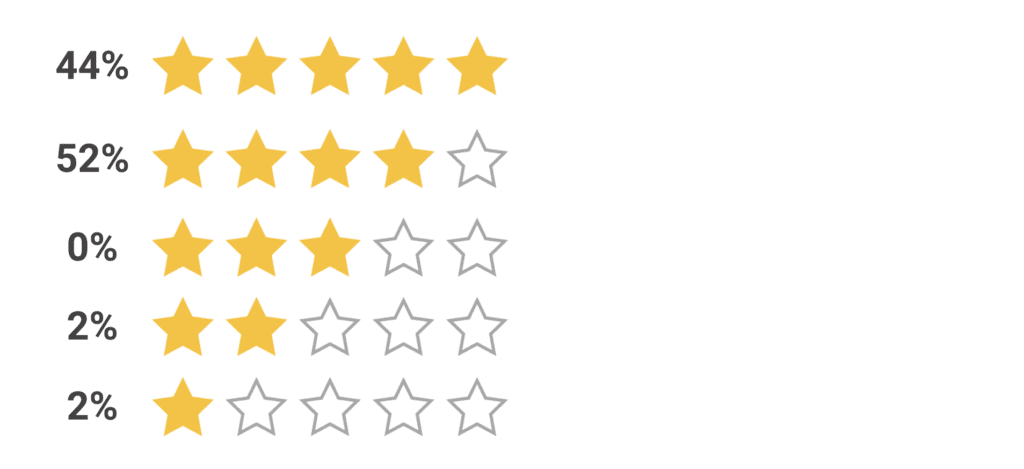
With 96% of reviewers rating the platform 4 or more stars, Bynkoski and her team are confidently moving forward with Kira Talent for future admissions cycles.
“We're committed to virtual interviews for the next five years. But from what we've seen with Kira, I'm optimistic this will be our process for the foreseeable future,” explained Bynkoski. “From the sustainability gains that we’ve seen and the cost savings around that, to the equity and accessibility of the online process, to those higher interview acceptance and attendance rates, all of these are reasons why we feel confident saying that we’re staying with Kira long-term.”
From the anticipation of college acceptance letters to the thrill of high school graduation, spring was an incredibly exciting time for us prospective college students. But now that the excitement has settled, it’s easy to get overwhelmed by all the big life changes that are fast approaching. From dorm room decorations to class selection and financial planning, preparing for university can at times feel as overwhelming as imagining my first day on campus.
Without the proper support, students can easily get knocked off course. 1 in 3 students falls victim to summer melt each year. This challenge for schools can end up costing them hundreds of thousands of dollars in lost tuition revenue.
As an incoming freshman at McGill University, my summer internship at Kira Talent provided the perfect opportunity to lend a student’s perspective on the challenges that cause summer melt. Through my own experience, as well as interviews with other incoming freshmen to universities throughout North America, I've cultivated some actionable insights for schools wanting to mitigate summer melt this year.
1. Engage your students on social media
The most effective way to keep students engaged over the course of the summer is to meet them where they already spend the majority of their time - online.
Instagram Takeovers
Holding student-run social media takeovers, where current students temporarily take over the school’s official Instagram account, provides incoming students with a way to actively engage with the school community in an authentic and informal way. Glossy photos on a website can make campus life seem like a different, slightly intimidating, world from the one they’re used to. Live streams and takeovers can help students relate to the school in a way they’re already comfortable with.
Creative Contests
Hosting fun activities like trivia contests via social media is another way to sustain authentic engagement while giving incoming students pertinent information about your university. With a simple prize of a school-branded sweatshirt or campus coffee shop gift card, it’s a low-cost way to keep the excitement fresh throughout the summer.
Facebook Groups
To help us get settled before we even reach campus, McGill created Facebook groups for students based on their residence hall assignments. Being able to easily get to know the students I’ll be living within the Fall has helped soothe my nerves and has kept me excited to meet my new online friends in person.
Leveraging technology to connect incoming students with professors, alumni, and their peers offers them a unique opportunity to integrate into the campus community and start building those important connections from the comfort of their smartphones.
2. Give students a peek into the future
Another great engagement technique is hosting live virtual events. Zoom, Facebook, Instagram and YouTube all have features that allow for live streaming, enabling a large group of students from anywhere in the world to interact in real-time.
This summer, Notre Dame University hosted live Zoom calls where incoming students were able to meet with each other, professors, and current students in order to get a better idea of what life would be like on campus. When I talked to my classmate about her decision to attend Notre Dame in the Fall, she told me that these virtual live streaming events helped solidify her decision to attend because they made her feel like she was already a part of the school community, reaffirming that Notre Dame would be a perfect fit for her.
New York University took a similar approach, offering incoming students a glimpse into what their future at the school would look like through their Student Showcase series. In program-specific Zoom calls, current NYU students discussed what they were up to at the university, including class projects, research programs, and extracurricular activities.
My classmate, who was deciding whether NYU was truly the school she would fit best at, told me that hearing from current students, who had been in her shoes only a few short years before, made it easier for her to visualize herself as a student there. It not only eased her nerves but also gave tangible moments she could look forward to if she chose to attend NYU in the Fall.
Discover how the University of Michigan leveraged virtual events to increase applicant engagement
3. Focus on one thing at a time
The journey from high school to university can be incredibly overwhelming for all sorts of reasons. The neverending to-do list – from registering for courses, to managing finances, to potentially moving to a new place – provides a full summer’s worth of work.
Gentle reminders from a school to take things one step at a time can make a huge difference. It’s easy to feel lost with all the different tasks that need to get done, and guidance from a knowledgeable source (the school) can ease the transition from high school senior to university freshman.
Try mapping out a simple timeline or checklist for students, and plan your outreach and due dates accordingly. Not only will this help your incoming students feel supported throughout the summer, it will give them a taste of the level of support they can expect over the next four years of college.
Checklists are a great way to reduce applicant stress and make your admissions process more accessible!
Discover another 6 simple ways to attract applicants by improving accessibility.
4. Connect with parents and guardians
Parents and guardians play a key role in guiding students through their college decisions. Keeping parents and guardians involved throughout the summer can help provide them with the peace of mind they need to confidently send their child off in the Fall.
Often busy with their own multitude of responsibilities, they don’t need as many touchpoints as the incoming students, but simple and concise communications can be very effective. Offer parents the opportunity to ask questions, let them know how you’re engaging their child, or connect them with other parents so they can begin to feel like part of the school community as well.
While summer melt can be a persistent issue for any school, good communication is what my fellow incoming class of peers and I have found to be the differentiator when it comes to engaging us in a way that makes us feel a sense of belonging. Preventing summer melt is a marathon, not a sprint, and keeping the lines of communication open throughout the summer is the best way to keep students, and their support networks, engaged all the way to the finish line.
Within the field of higher education admissions, few disciplines are as challenging to recruit for as pharmacy. With many distinguished programs across the country and only a limited number of students invested in pursuing a pharmacy degree, admissions teams need to ensure that they’re constantly finding new and improved ways to reach and engage potential applicants.
For the University of Michigan College of Pharmacy, a top-three ranking school in the United States, in-person events and on-campus conversations played a significant role in that strategy. From campus tours to peer lunches, these events helped prospective students get a feel for the school’s culture.
When the COVID-19 pandemic forced schools to cancel all in-person events, the admissions team needed a way to pivot online without sacrificing the key components of their applicant experience.
Luckily, U-M Pharmacy’s Assistant Dean for Student Services and Admissions, Mark Nelson, had been introduced to Kira Talent.
Selling the on-campus experience
“Before Kira, our process consisted of a team of faculty and student services staff who would review written applications before inviting select students to an on-campus interview,” shared Kristin Heinrich, the Assistant Director of Admissions and Recruiting at Michigan College of Pharmacy. “Running over the course of an entire day, applicants would have their interview with faculty as well as current students, but most of the day was spent learning about Michigan Pharmacy.”
Applicants were given tours of campus including Michigan Medicine where they’d have most of their rotations. Current students mingled with applicants over lunch, inviting them to ask questions, get advice, and engage in more casual conversation.
“The whole process really allowed applicants to get a sense of the atmosphere here on campus and decide if Michigan was the best fit for them,” explained Heinrich.
Over the following weeks, Heinrich and her team would review notes compiled from the various interviewers and would combine those scores with the other components of the application in order to reach an informed decision.
“At the end of the day, as admissions professionals, we just really want to make sure that students are finding the right fit,” Heinrich continued. “The on-campus experience was crucial to our interview process and to our yield process in general. It was definitely a big flip for us to go virtual.”
Discover how Purdue University made campus visits more accessible to applicants
Bringing the college atmosphere online
A primary focus for Michigan Pharmacy was how to provide a professional and efficient virtual interview process, while still being able to give applicants a taste of life at the college.
“As we started to explore our options, Mark introduced the rest of the team to the Kira platform,” shared Heinrich. “After connecting with the team at Kira and seeing the functionality of the platform, we decided that this was the best option for us.”
In previous years, the college interviewed around 100 students per cycle. “Coordinating Zoom interviews for all those students would have been an immense task,” explained Heinrich. “We really wanted to maintain the sense of ease and simplicity that we cultivated with our on-campus visits, and Kira allowed us to do that.”
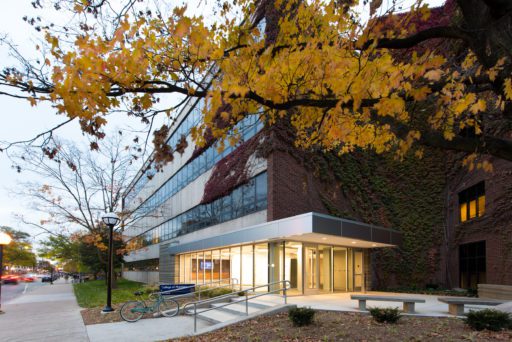
Michigan Pharmacy engaged the university’s creative team to help film their welcome and closing videos and video questions, which were used to create an engaging and fully branded experience in the Kira platform. “The incorporation of introduction and conclusion videos created a very sleek experience for our applicants,” shared Heinrich.
The entire onboarding process, from the first discussion through to the launch of the assessment, took a total of about three months.
“I was shocked how quickly we were able to get it all going, given how many different components we had in the assessment,” shared Heinrich. “I credit that to how responsive and engaged the Kira team was.”
“Whatever components we wanted, whatever changes we wanted to make, our Client Success Manager was always quick to respond and happy to help.”
Discover what schools thought about their experience with Kira Talent
Increasing efficiency to connect with applicants
“Through Kira, our process has become more efficient,” shared Heinrich. “In terms of coordination, it’s more efficient in that I don’t have to do the manual work of organizing reviewers’ schedules and making sure that they show up on the right day at the right time.”
The on-demand nature of Kira’s Asynchronous Assessments means the college increases efficiency on the reviewing end as well. No longer needing to work around everyone’s individual schedules, Heinrich was able to assign more applicants to each reviewer, creating room in the schedule to hear from more applicants.
"Kira increased the number of students we interviewed by 53%."
With no minimum qualifying threshold for GPA or test scores, Michigan Pharmacy assesses applicants holistically, weighing cognitive and non-cognitive variables equally. Opening up the interview to more applicants has helped strengthen the school’s commitment to holistic review by enabling them to get a better look at more of their applicants prior to making a decision.
“With on-campus interviews, we had to be a lot more selective with the candidates we invited to interview, as we only had so much room in the schedule,” explained Heinrich. “This year, we had much more flexibility to invite applicants to complete a Kira assessment.”
“If our admissions committee was on the fence about an applicant after reviewing their written application, we were able to gather more data points about the applicant before making a decision,” she continued. “It helped us make more informed admissions decisions.”
Learn how Northeastern Pharmacy is using Kira to assess applicants' in-clinic skillset
Building equity into the admissions process
“Kira has allowed us to maintain consistency and fairness across our process, despite all the turbulence of the past year,” shared Heinrich.
Invested in fostering diversity, equity and inclusion in the higher ed space, Heinrich and her team were thrilled to see how the addition of Kira prioritized fairness in several different parts of the school’s admissions process.
“Kira has removed financial barriers for our applicants.”
“When we held on-campus interviews, we provided lunch, but the cost of transportation and accommodations fell on the applicants," Heinrich continued. "Kira has removed that financial barrier as well as the time-cost barrier associated with moving their classes or work schedules in order to attend the interview.”
From a reviewing standpoint, the platform has also fostered an equitable process by maintaining consistency across applicants.
Using timed video and timed written responses, Kira’s Asynchronous Assessment ensures that every applicant gets the same preparation and response time. By removing the influence of the reviewer, the platform also helps to mitigate potential biases.
“Within our old process, reviewers would often ask additional follow-up questions or clarifying questions during the interview,” shared Heinrich. “And while that’s very natural in an interview, it unintentionally invites a lot of bias into the process.”
“When reviewers ask follow-up questions, they give the applicant insight into what they’re looking to hear and give them the opportunity to expand upon their answer accordingly,” she explained. “The problem is that these follow-up questions are not consistent across reviewers or across interviews. In situations where they don’t ask the same follow-ups, the reviewer may walk away with the impression that that applicant had a less comprehensive or insightful response.”
“Our process with Kira eliminates those biases, giving each applicant the same fair shot.”
Keeping applicant schedules top of mind
With Kira, Michigan Pharmacy can offer applicants an interview that can be completed without causing any disruption to their schedules. By enabling applicants to complete their assessment on their own time, Kira removes a substantial obstacle that often prevents applicants from following through with the interview.
“In previous years, our interviews were always on Thursdays,” shared Heinrich. “If an applicant couldn’t make it on a Thursday there was a lot of work in order to figure out how to get the student to campus and interview them.”
“With Kira, students can complete their assessment at whatever time and place is most convenient for them,” she continued. “It gives our applicants a lot of flexibility.”
Engaging applicants through online experiences
“Finding different ways to engage the students is always important,” shared Heinrich. “We wanted to make sure that with Zoom fatigue and everything else, applicants had many different ways in which they could communicate with us.”
In previous years, the college leveraged on-campus events as a way to engage applicants and get them excited about the possibility of enrolling at the college.
“It was a crucial part of our recruitment process,” shared Heinrich. “So this year, we re-created the key elements online.”
Michigan Pharmacy organized and hosted several events running throughout the admissions cycle in order to capture the attention and interest of prospective applicants.
“We centred a lot of our outreach on social media and had current students host Q&As, which helped us meet the applicants where they are,” shared Heinrich.
More formal information sessions were also scheduled for applicants, allowing them to interact with the student services team, as well as current students at various stages of their degrees. “Applicants could ask questions about the student experience, covering everything from the lack of parking to what rotations are like, to how important it is to connect with faculty,” explained Heinrich.
“We were able to give applicants a glimpse of their future at Michigan, from being an applicant all the way to an alumnus” shared Heinrich. “All it took was a little creativity and a willingness to adapt our traditional events to get the most out of the online environment.”
“By taking our process online, we’re able to reach more applicants in unique ways,” Heinrich continued. “And our process with Kira allows us to engage more of those applicants in a way that’s efficient, fair and professional.”
Discover how more pharmacy programs are enhancing their admissions processes with Kira Talent