



The Faculty of Education at the University of Lethbridge offers five graduate programs, including two highly competitive counseling programs that receive 400–600 applications for just 40 seats. Historically, the admissions process relied on intensive live interviews, requiring faculty to block out weeks of time and raising concerns about potential bias in decision-making.
“We worried that decisions were being shaped by subjective impressions rather than consistent criteria,” shared David Slomp, Associate Dean of Graduate Studies and Research in Education. “That risked fairness and could impact cohort dynamics.”
Scaling holistic review with Kira Talent
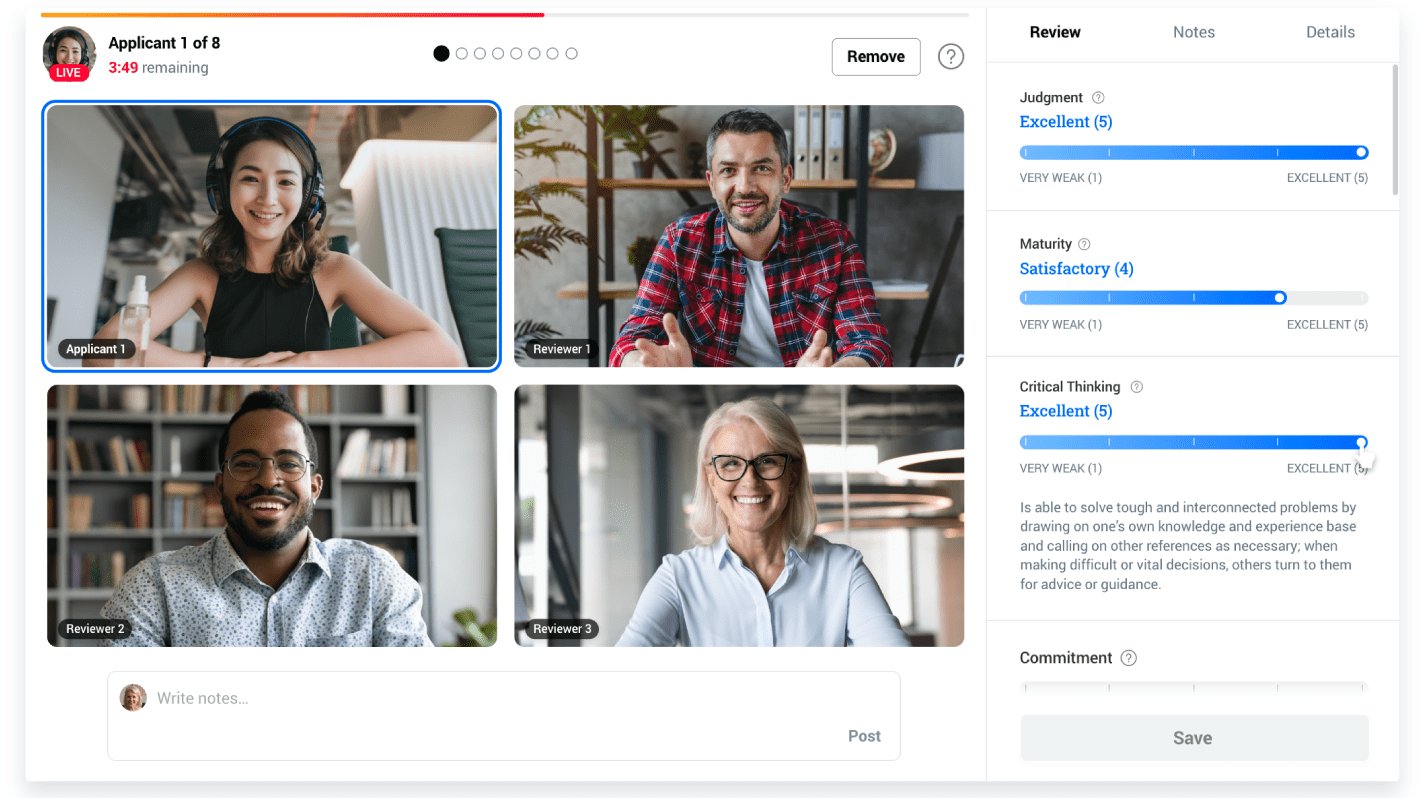
To address bias and capacity challenges, the Faculty implemented Kira Talent as the final stage of admissions for counseling programs. Applicants shortlisted through GPA and prerequisite checks complete an asynchronous video assessment in Kira, scored by two faculty members.
“We spent a lot of time building the right questions,”
Slomp explained. “It was a great exercise to clarify what evidence we’re really looking for.”
The new process engages the entire faculty rather than small subgroups, and Kira’s reporting tools help identify scoring discrepancies and calibrate reviewers. “The underlying factor determining who gets in should not be who scored the file,” Slomp emphasized. “Kira helps us make that transparent.”
Advancing diversity and accessibility
Enabling diversity was a key priority when building the new process. The team analyzed applicant data, flagged files from underrepresented groups, and reserved 10–20 interview spots for those applicants. Early indicators show a more diverse applicant pool and a slight increase in Indigenous admits.
Accessibility also improved. “We have applicants from First Nations communities and rural areas,” Slomp noted.
“Kira’s platform worked seamlessly even with less stable internet connections.”
Creating an engaging applicant experience
Applicants appreciate the chance to present themselves beyond transcripts and test scores. “They feel valued as individuals,” Slomp shared. Faculty also benefit from reduced scheduling stress and polished workflows.
“The quality of service and the platform’s polish really impressed us,” Slomp said. “It communicates professionalism to applicants and reflects well on our institution.”
Expanding a successful process
After a successful pilot, the Faculty signed a three-year contract renewal with Kira Talent. The team continues to refine its process, leveraging Kira’s reporting to automate second-round scoring and calibrate faculty reviewers.
“We’re excited to keep using the platform,” Slomp shared.
“It’s easy to work with, reliable, and helps us uphold fairness and rigor in admissions.”
Program Snapshot
- Institution: University of Lethbridge – Faculty of Education
- Programs: Master of Counseling, Master of Education in Counseling Psychology
- Applicant Volume: 400–600 per cycle
- Review Window: Two weeks
- Scoring: Two faculty reviewers per applicant, with matrix-based calibration