

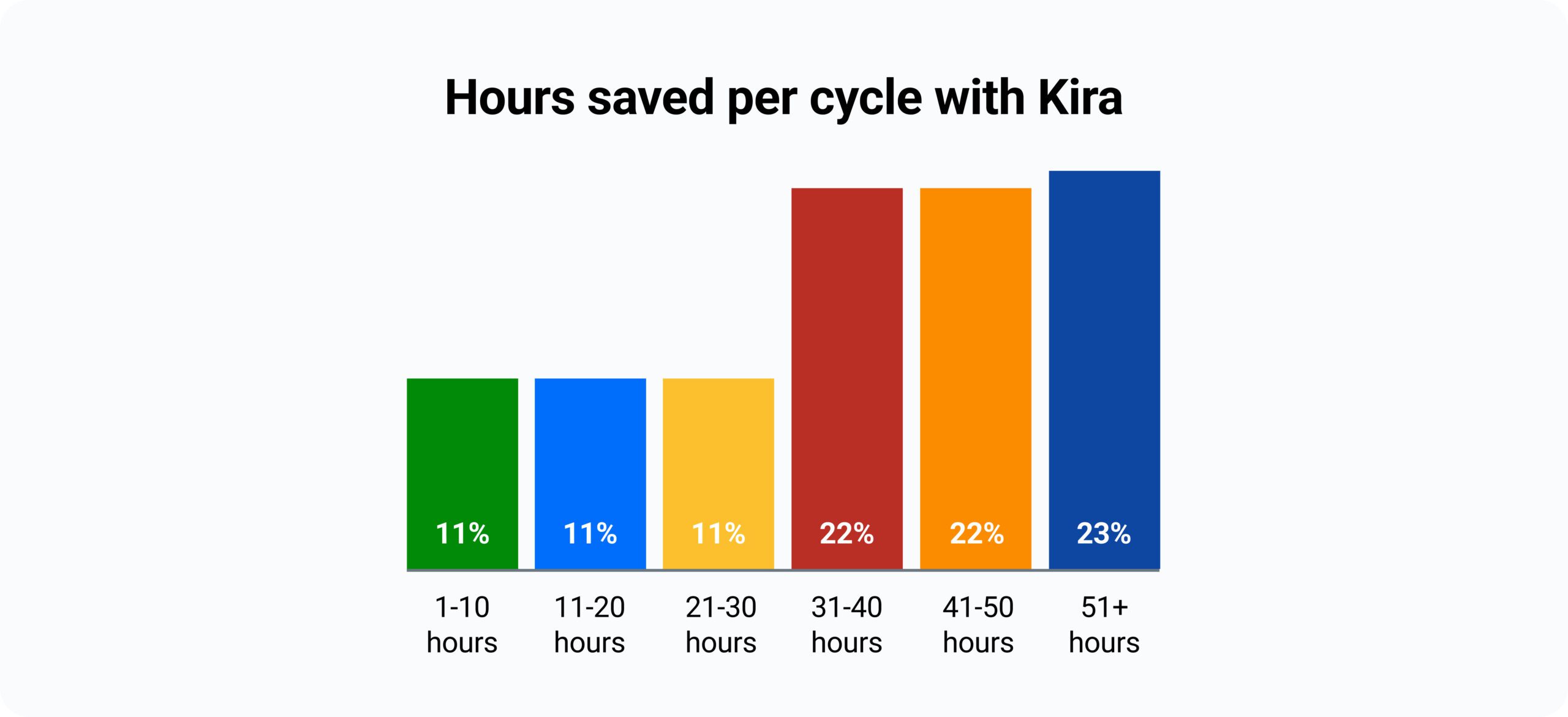
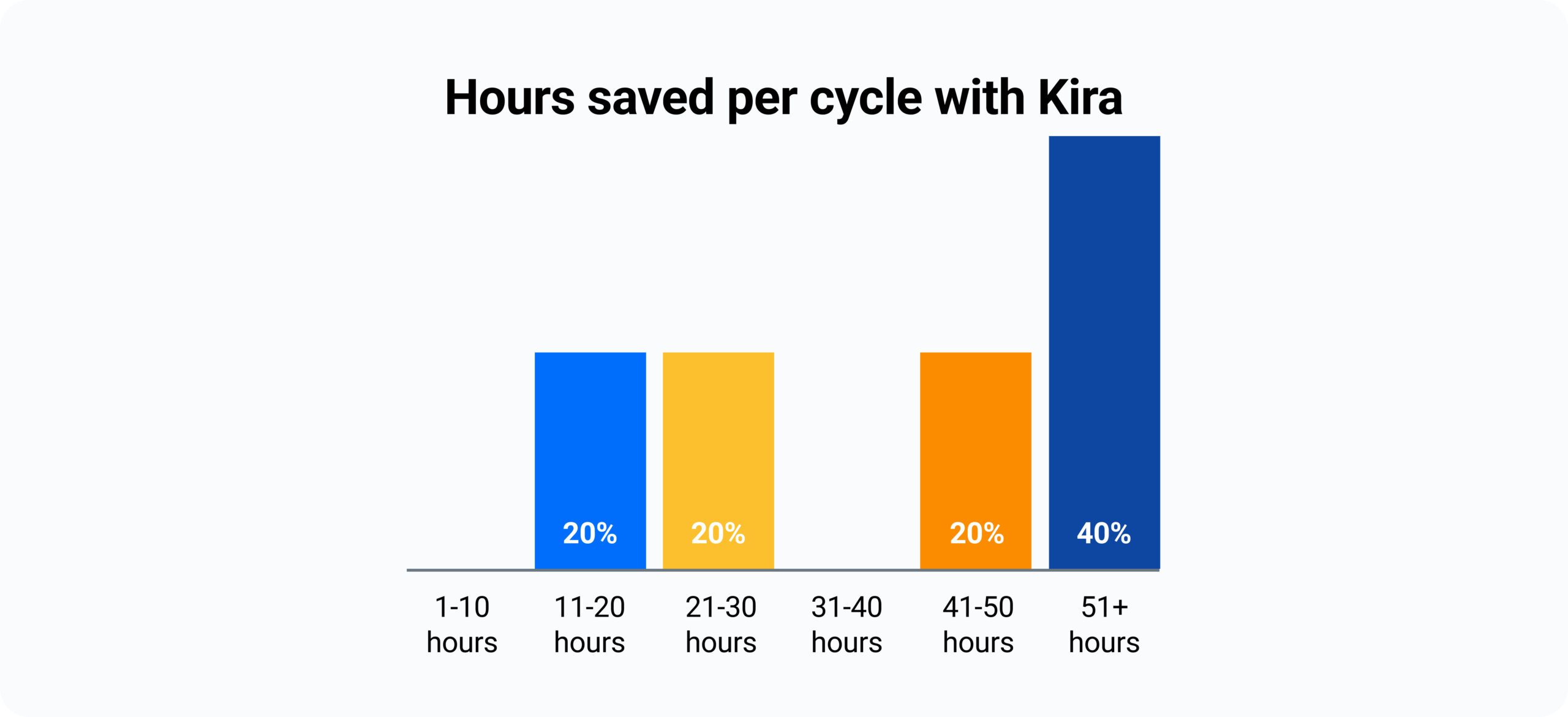
For medical schools, efficiency was top-of-mind in 2022 as admissions teams looked for ways to make the traditional final round and Multiple Mini Interviews (MMIs) more accessible to applicants and more manageable for themselves. 75% of Kira’s medical school partners cited efficiency as the greatest benefit of using Kira Talent in their admissions process, with 67% of programs saving more than 30 hours of work per cycle.
NYU Grossman School of Medicine
Learn how NYU Grossman School of Medicine increased staff efficiency 16-fold across the admissions cycle and reduced faculty commitment per day from 4 hours in-person to 1 hour virtually.
Read more
Where Kira fits in the medical school admissions process
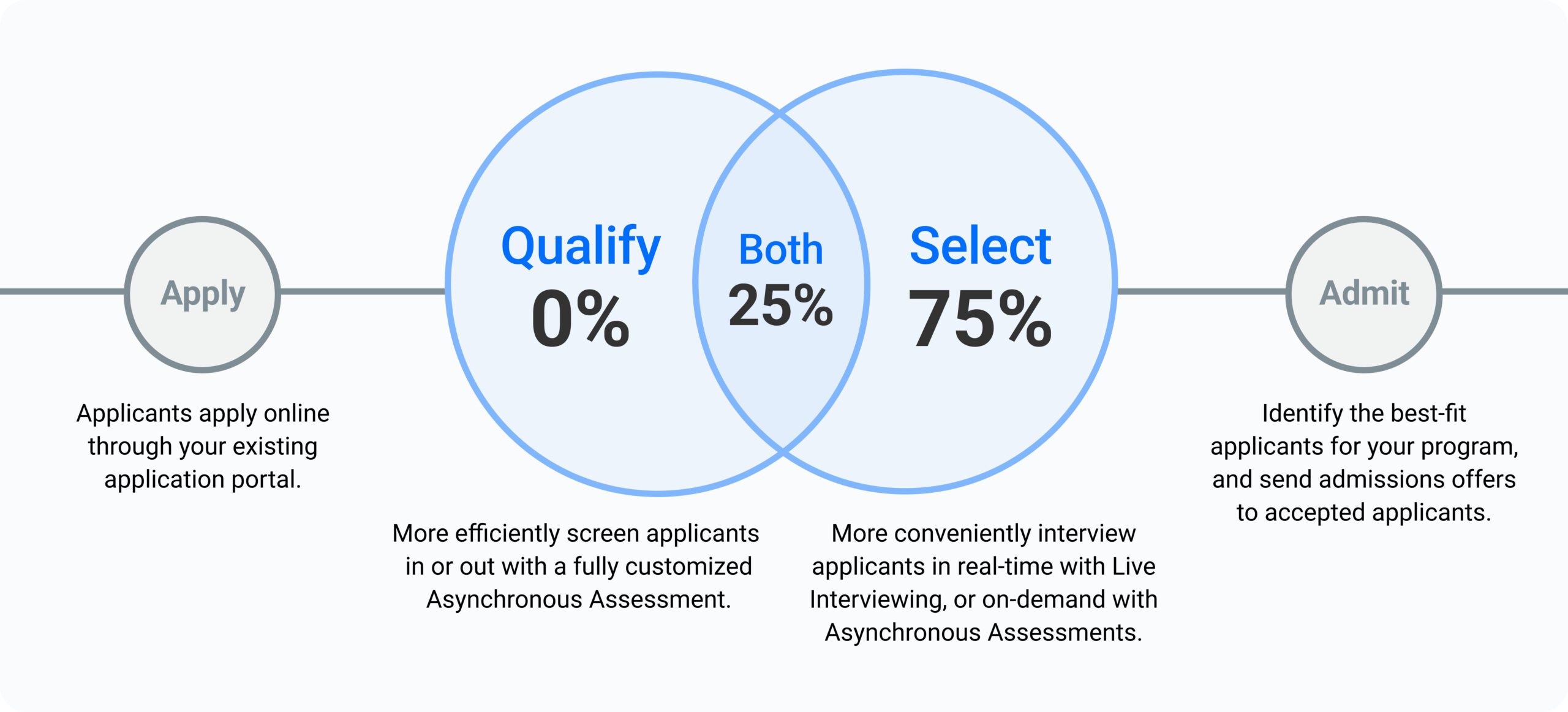
This year, most medical schools used Kira as a more efficient and convenient method of conducting their MMIs and final-round interviews. Another 25% took it one step further, creating a two-step process in Kira which allows them to pre-screen applicants with an on-demand assessment before inviting top candidates to participate in a live interview or MMI.
“The Kira platform was flexible enough to adjust to suit our process, rather than the other way around.”
- Katy Guertin-Davis, Administrative Manager at OHSU School of Medicine.
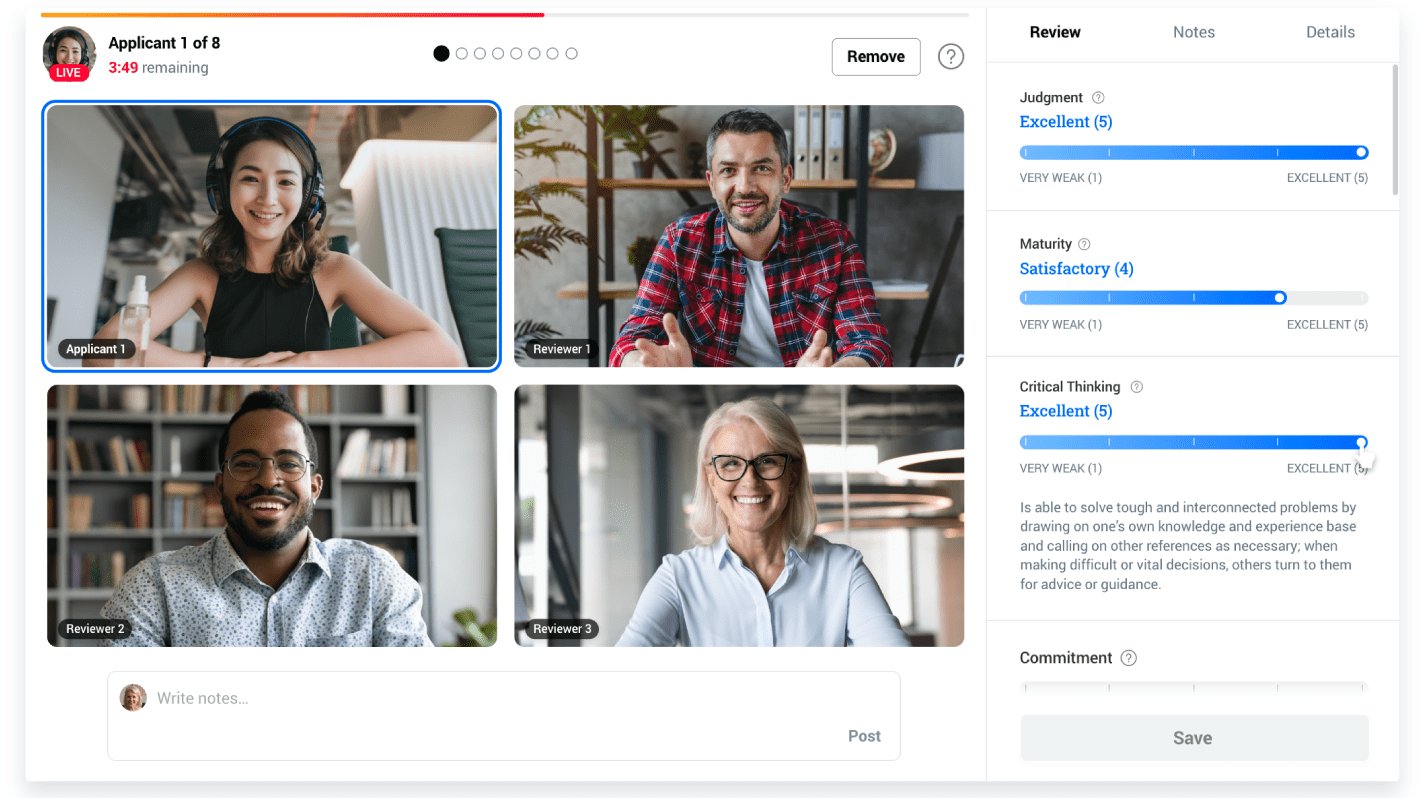
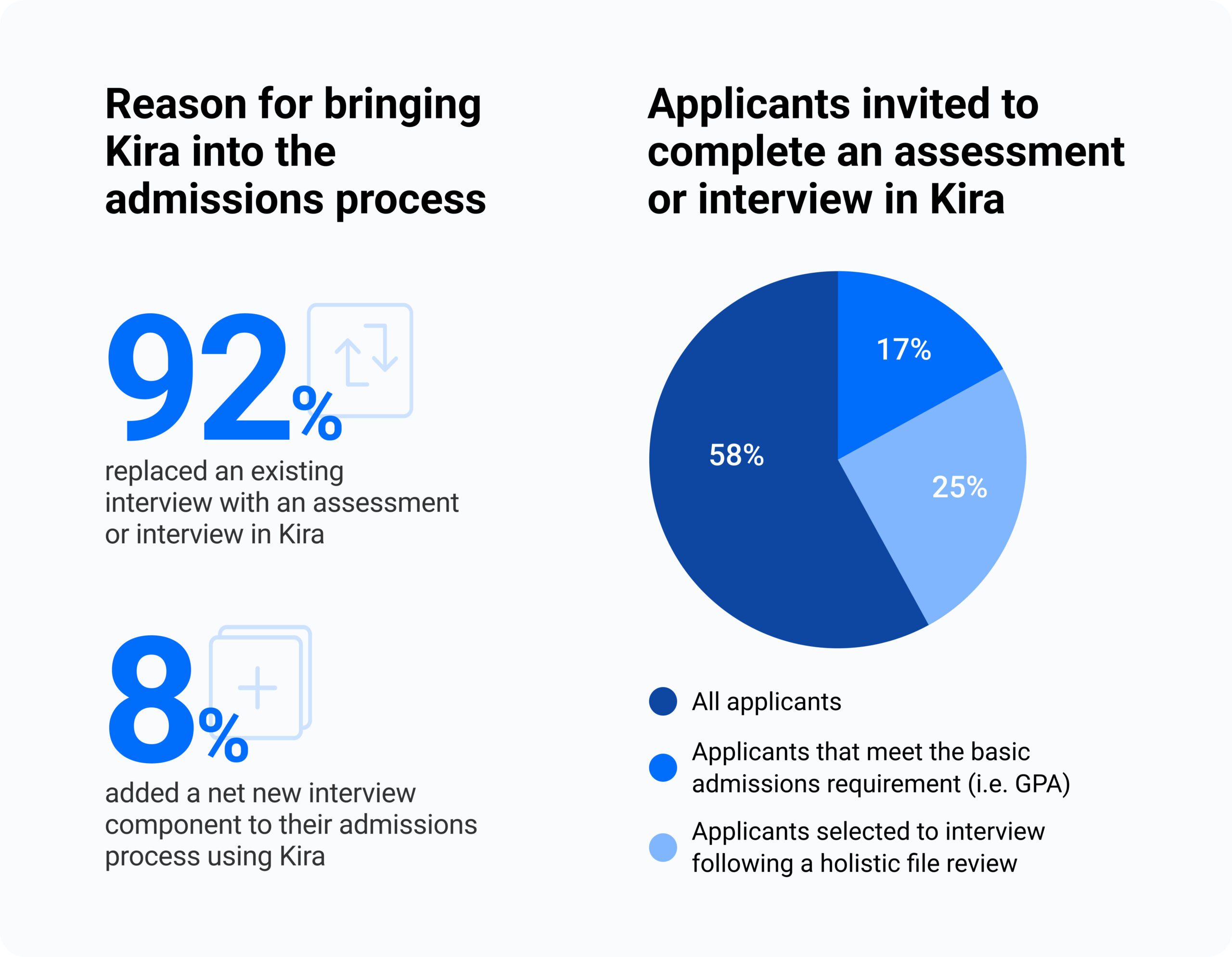
A ton of new features and enhancements added to the Kira Live Interviewing experience in 2022 made it even easier for schools to transition their traditional MMIs online. An opportunity that many admissions teams took advantage of, with 92% of medical schools on the platform using Kira to replace an existing interview.
What’s top of mind for medical schools in 2023?
 “Saving costs by replacing in-person MMIs.”
“Easy to use tech for administration, applicants and interviewers”
“Maintaining the integrity of our process as we transition it online”
Efficiency was key for pharmacy programs in 2022, with 67% of programs citing efficiency as the primary benefit of conducting their admissions interviews and assessments in Kira Talent.
In fact, 60% of pharmacy programs reported saving more than 40 hours of work per cycle with Kira.
The University of New Mexico, College of Pharmacy
Learn how UNM Pharmacy is saving over 50 hours of work per cycle while retaining a 100% interview completion rate.
Read more
Where Kira fits in the pharmacy school admissions process
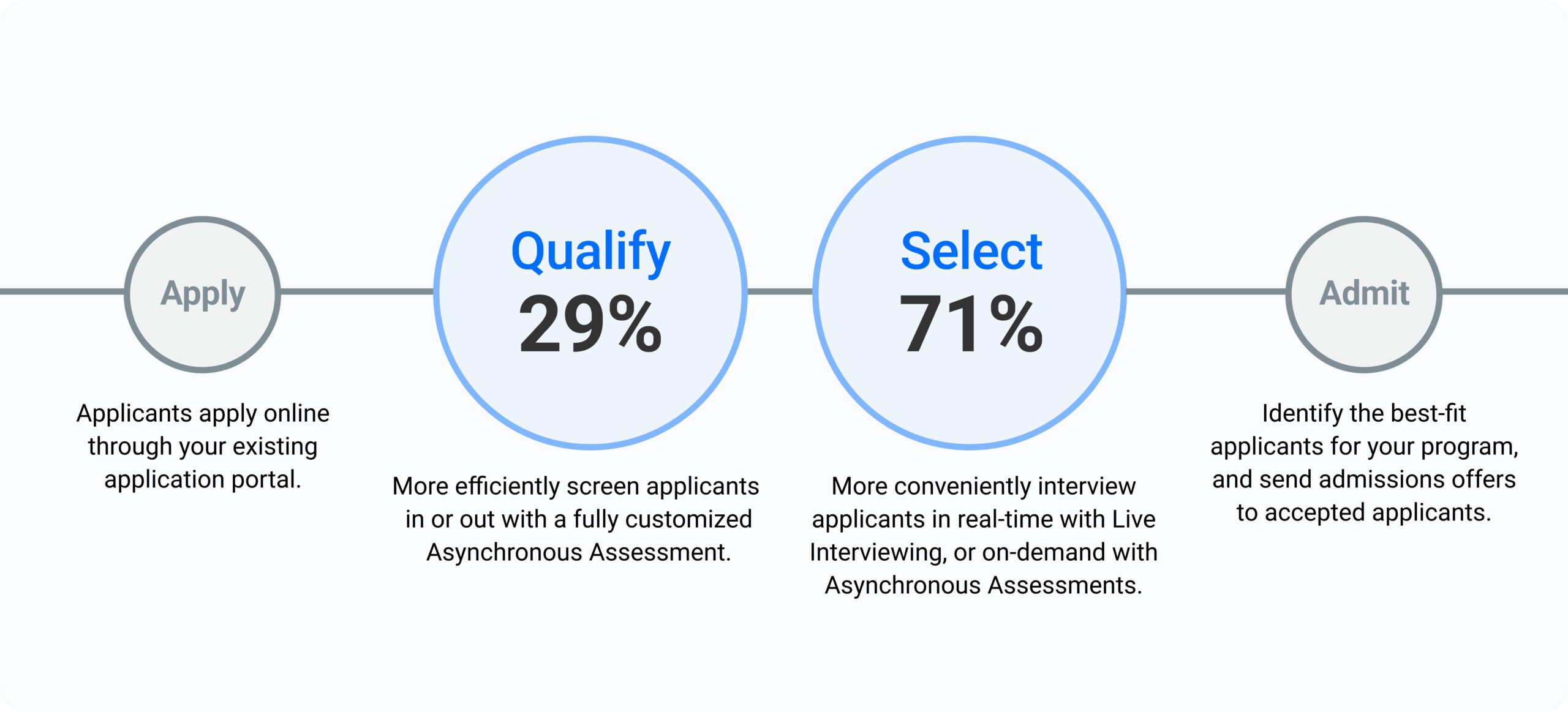
Although the majority of pharmacy programs used Kira to help select applicants for final admissions offers, what that interview or assessment looked like varied across schools. Nearly half of the programs (43%) fully transitioned their existing interview onto the Kira platform, leveraging the full efficiency and accessibility benefits of the virtual experience.
Another 42% transitioned one component of their interview onto the Kira platform while maintaining a secondary traditional interview. With this combination, these pharmacy programs can leverage Kira’s efficiency and bias-mitigation tools in their Multiple Mini Interviews (MMIs) or other structured interviews and allow for more informal connections to take place in the live interview.
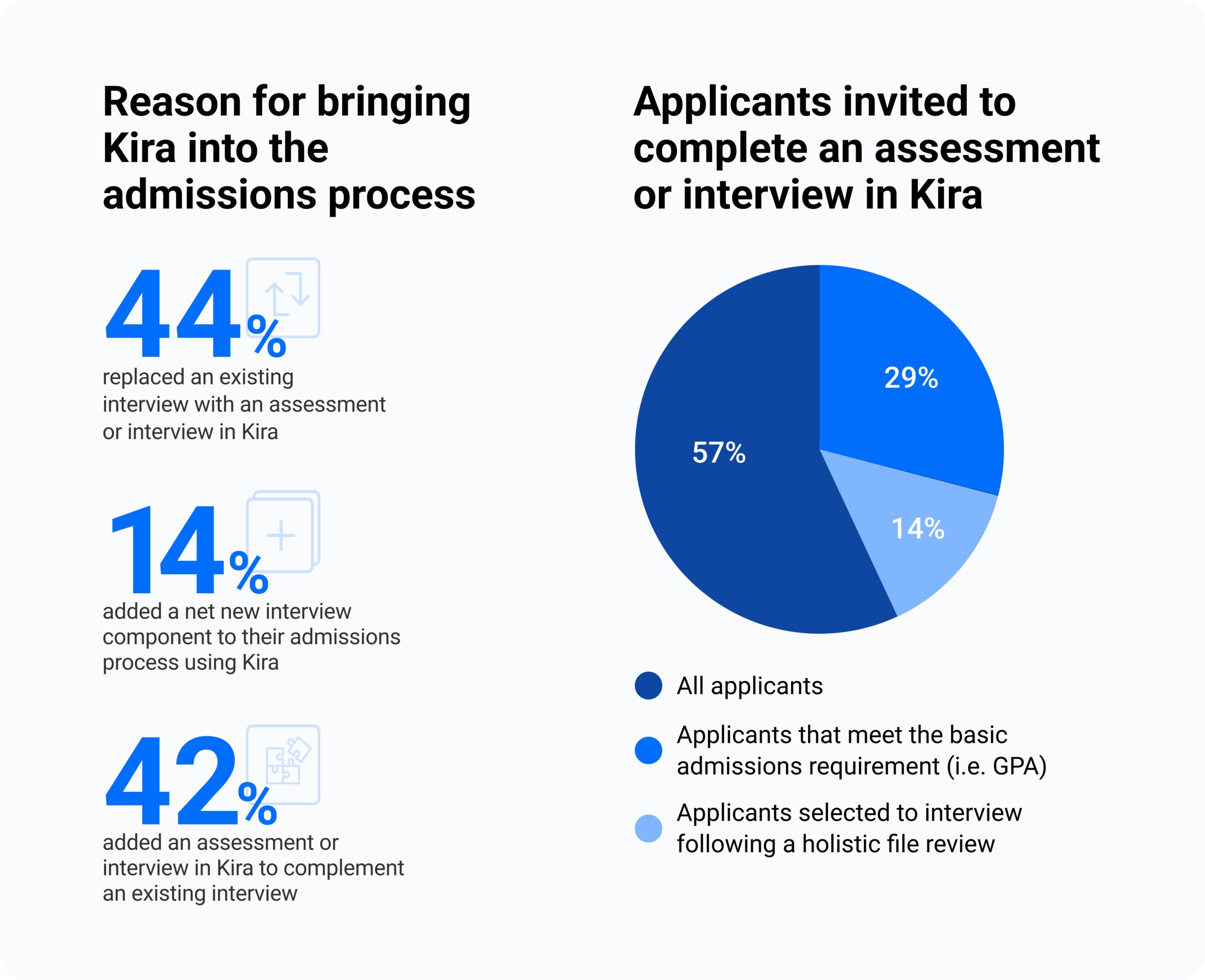
Pharmacy programs were also almost equally split on when applicants were invited to interview, with just over half inviting all applicants to complete a Kira assessment, and the rest inviting those selected after an initial file review.
“Our old process required a tremendous amount of planning and re-planning to keep up with changing needs. With Kira, it’s super simple. I know exactly when to invite applicants through PharmCAS, and I can just look at my calendar and know where all the groups are in the admissions process. It’s all nice, neat, and organized.”
- Tara Burke, Coordinator for Admissions and Financial Aid at the University of Arizona School of Pharmacy
What’s top of mind for pharmacy programs in 2023?
“Admitting students with the highest probability of success in the program”
“Enhancing our recruitment process and increasing the ease of review.”
“Delivering an objective and fair interview process, and increasing access to the interview process.”
With more than 85% of nursing programs using Kira to interview or assess all of their applicants, it’s no surprise that the majority of programs cited efficiency as the biggest benefit of conducting their admissions process in Kira Talent.
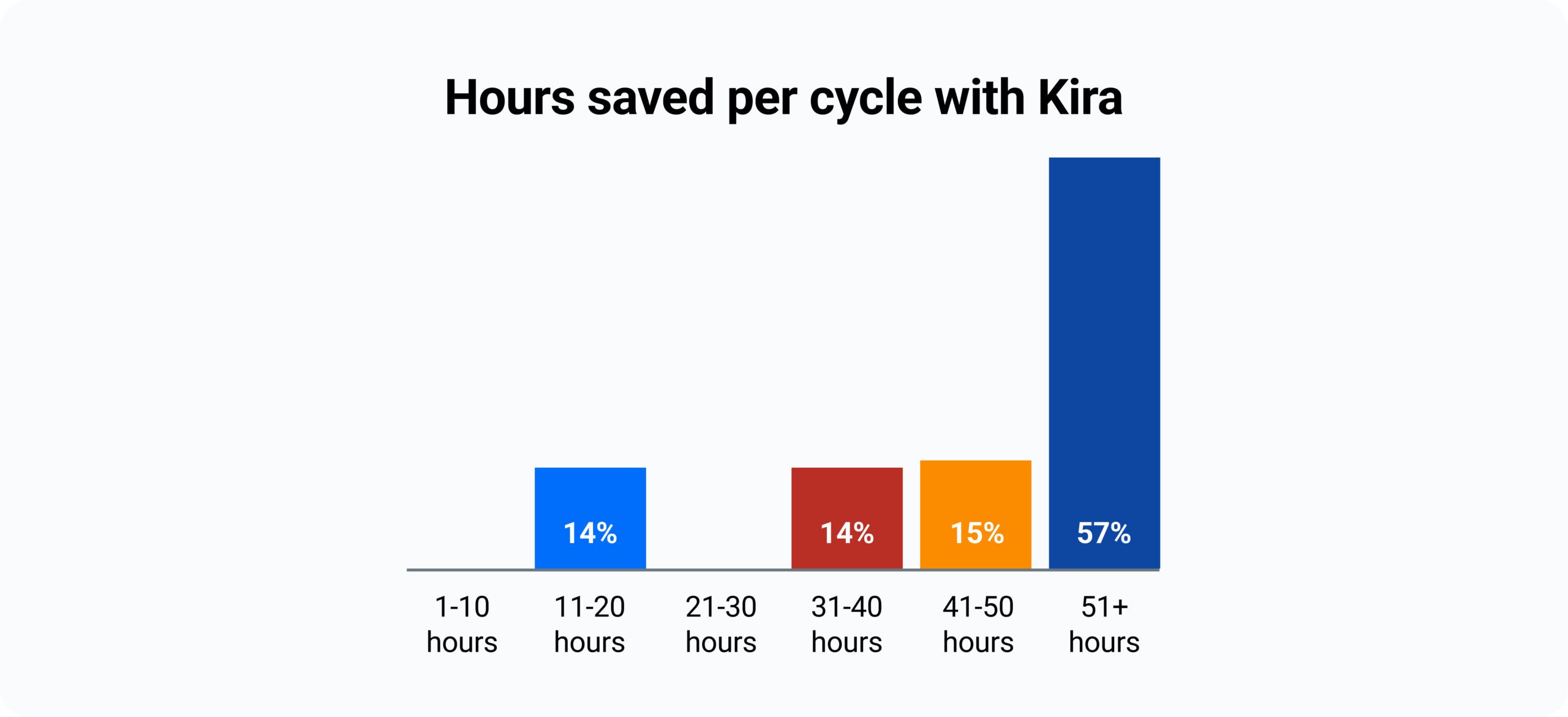
With Kira’s streamlined assessment experience, 57% of nursing programs are saving more than 50 hours of work per cycle.
University of Missouri, Sinclair School of Nursing
Learn how Missouri Nursing is saving over 200 hours in the admissions process without sacrificing their holistic admissions practices.
Read more
Where Kira fits in the nursing school admissions process
Whether they were looking to efficiently prescreen applicants or to interview finalists before making their final admissions decisions, nursing programs used Kira to gain insight into their applicant pool at various stages of the admissions process.
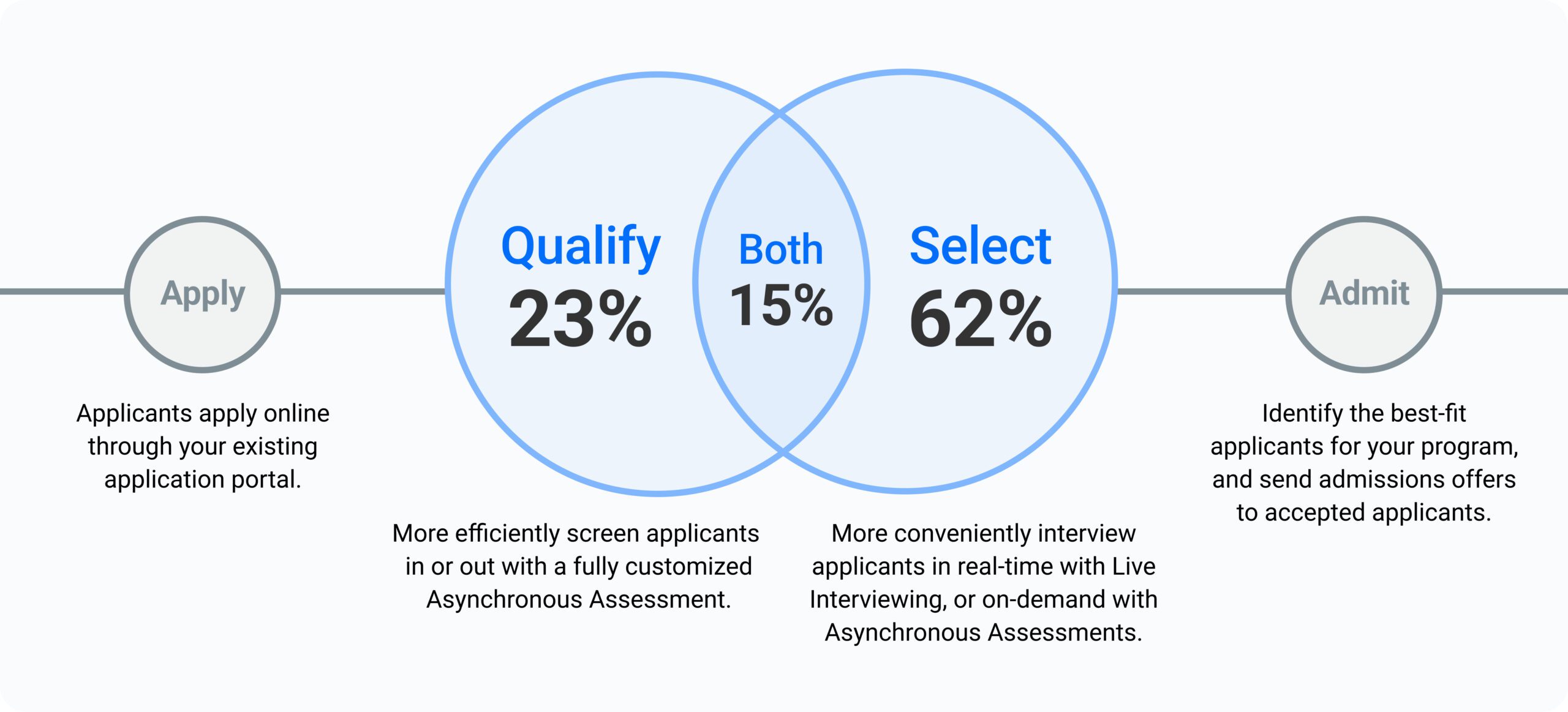
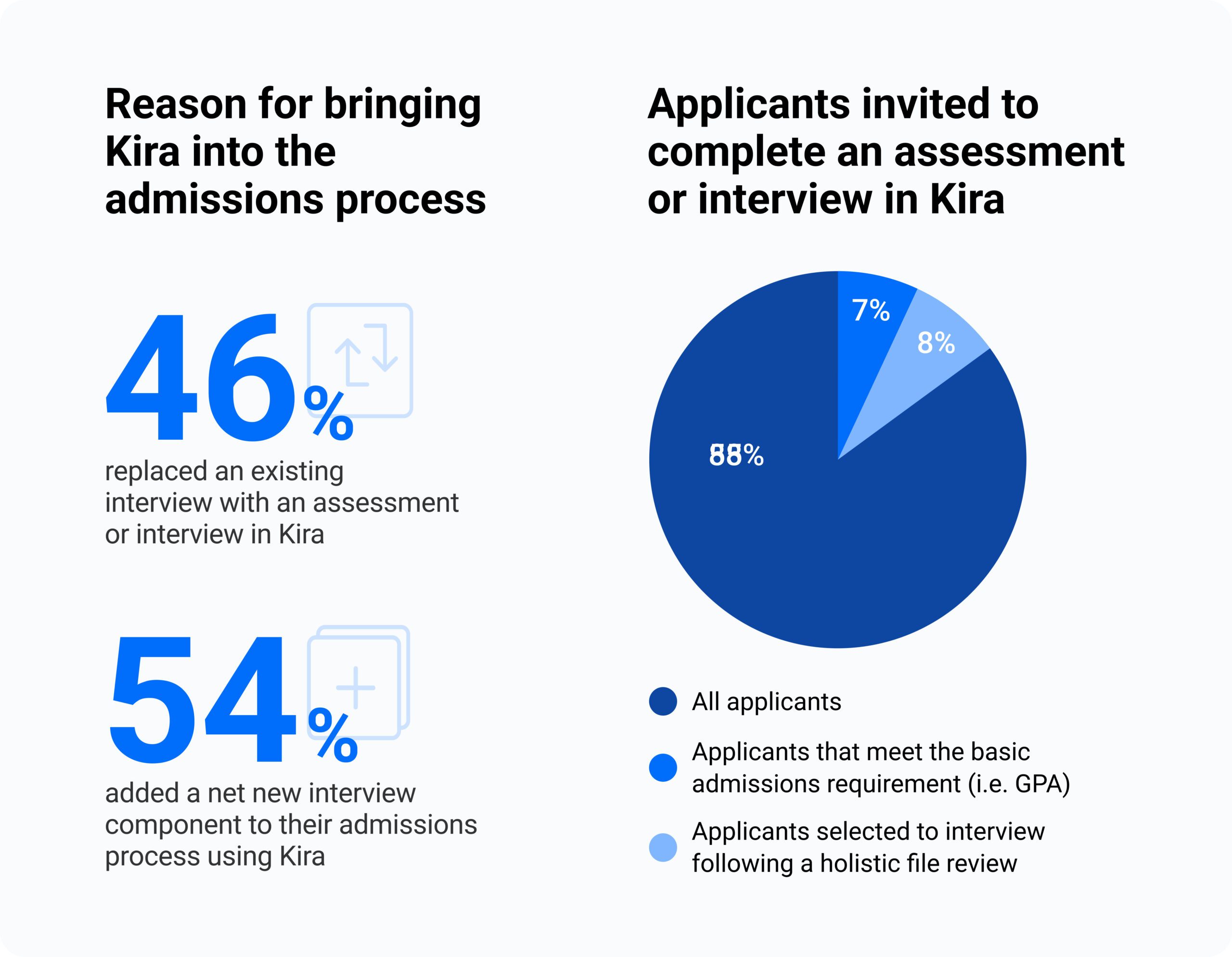
For both qualifying and selecting applicants, Kira’s ease-of-use and streamlined process helped schools increase the number of applicants they were able to interview without increasing time or work for the admissions team.
“Our reason for getting started with Kira was in pursuit of greater diversity, academic inclusion, and getting to know our applicants better. The efficiency and ease that it brought to our process was an added benefit.”
- Deanna Jung, Assistant Professor of Nursing and Coordinator of Pre-Licensure Programs at CSU Fullerton
85% of programs were able to invite every applicant to complete an assessment or interview in Kira. In doing so, these schools ensured that every applicant got an equal opportunity to showcase their skills and capabilities, helping them identify top candidates without overwhelming admissions staff and faculty.
What’s top of mind for nursing programs in 2023?
“Giving opportunities to the most qualified applicants, with the highest chances to succeed in the field.”
“Attracting and enrolling students from diverse or disadvantaged backgrounds.”
“Reducing bias in our admissions process and saving our team time.”
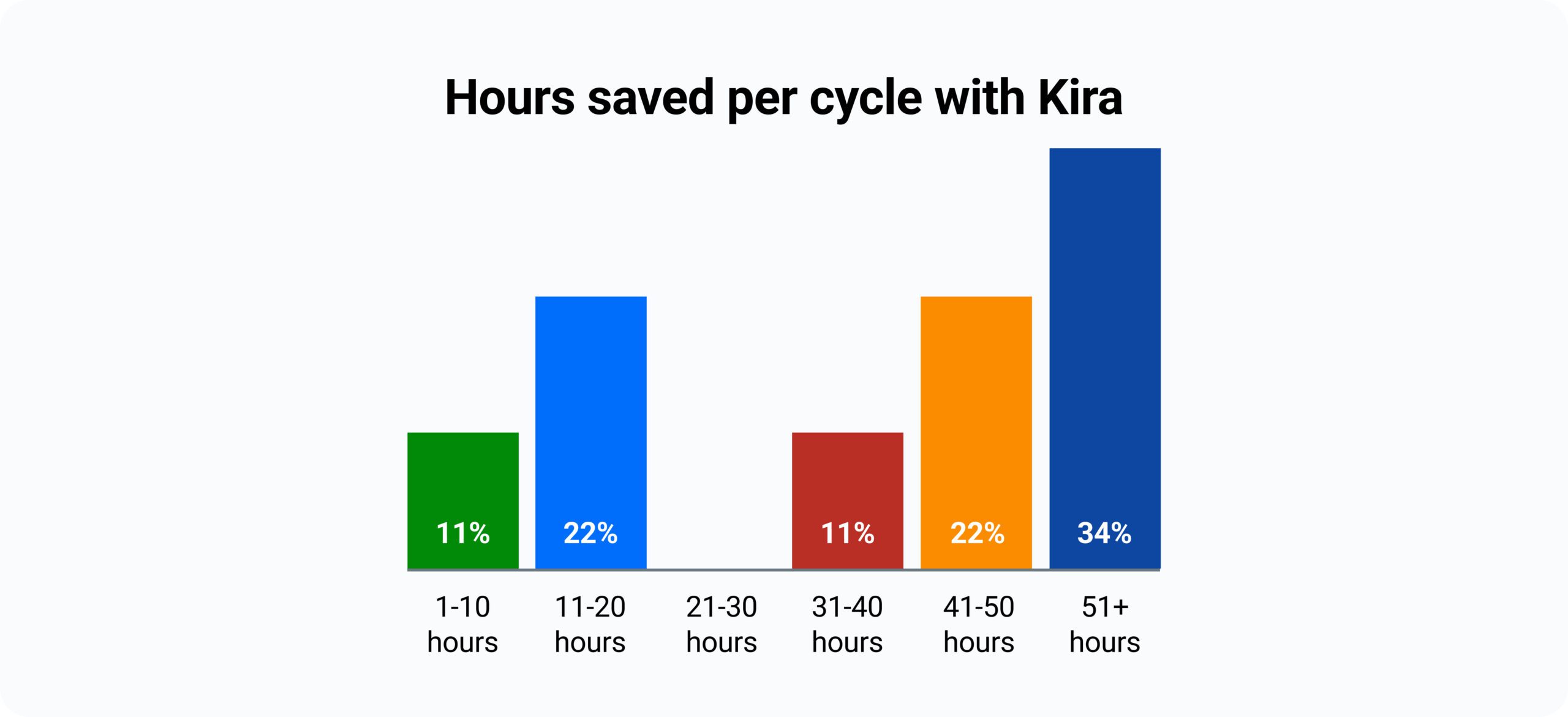
For graduate management education programs, increasing process efficiency was a key focus in 2022. 50% of programs cited efficiency as the greatest benefit of using Kira Talent in their admissions process, with 56% of programs saving more than 40 hours of work per cycle.
McCombs School of Business
Learn how McCombs reduced time spent interviewing by 30% while scaling the process to engage up to 600 more applicants per cycle.
Read more
Where Kira fits in the business school admissions process
In 2022, just over half of business schools used Kira’s Asynchronous Assessment to efficiently pre-screen applicants before inviting top candidates to a virtual or in-person interview.
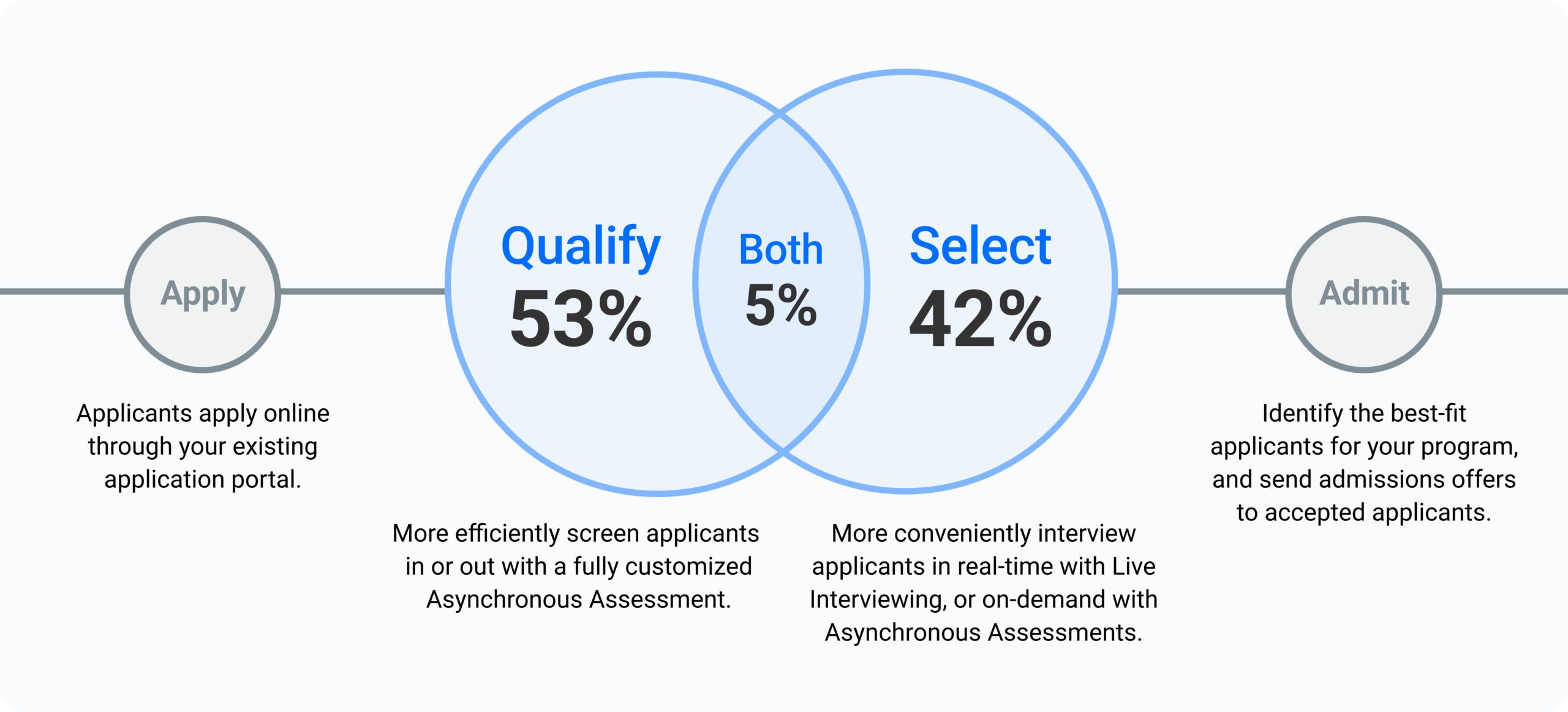
The other 47% used an on-demand assessment, Live Interview, or a combination of both to evaluate candidates for final selection decisions. By helping to increase efficiencies within the interview and selection process, Kira helped business schools improve their yield by helping get admissions offers to top candidates earlier.
“With Kira, our interviewing process is far more streamlined. Without the back-and-forth of scheduling, we’re able to interview candidates much more quickly. This is obviously great for the candidate’s experience with Imperial. They’re not waiting weeks for us to get in touch with them.”
- Amy Duckworth, Director of Admissions at Imperial College Business School
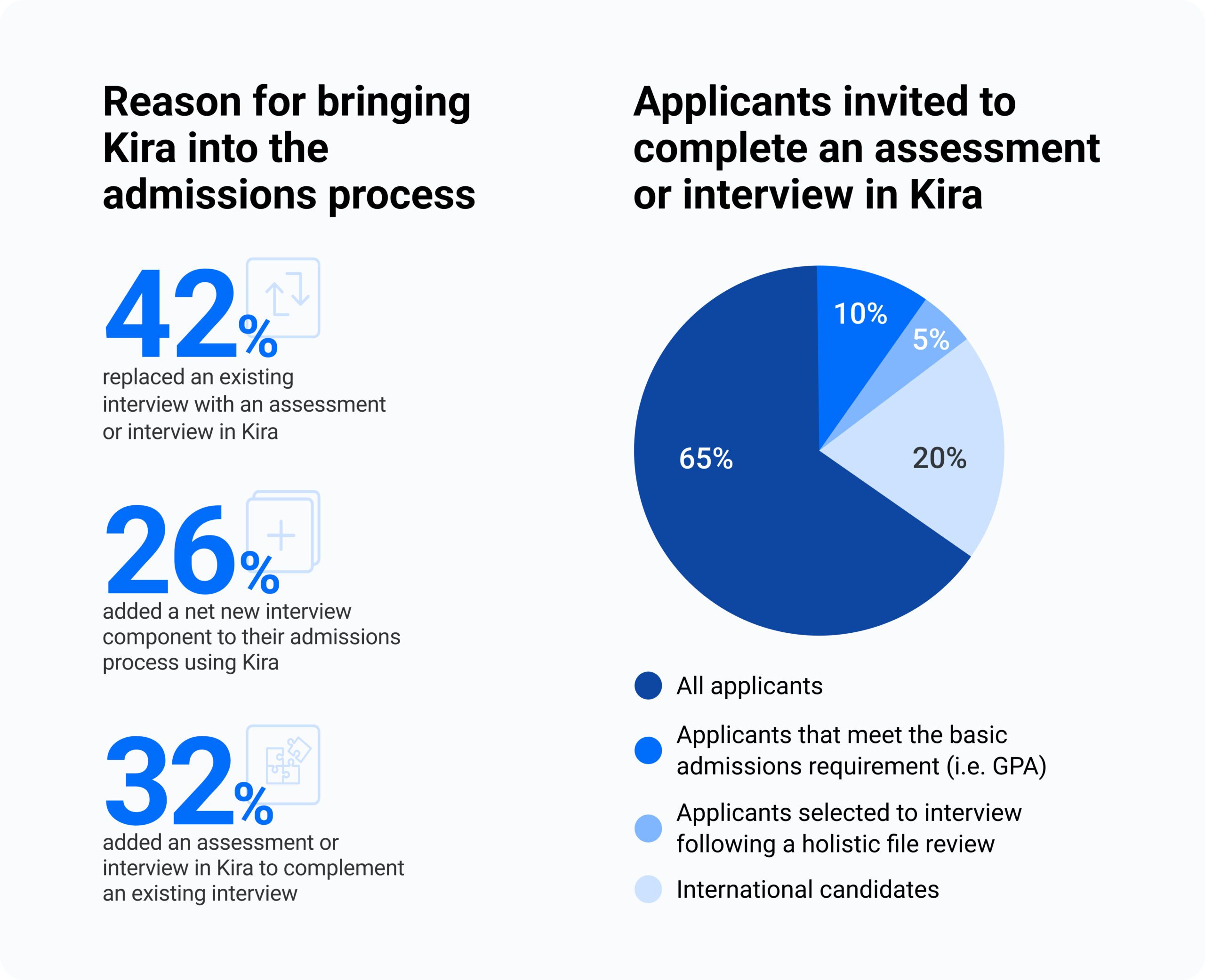
65% of graduate management education programs were able to efficiently scale their admissions processes with Kira to where they had the capacity to interview all of their applicants. For another 20%, Kira offered a convenient method of meeting and assessing international applicants without having to juggle time zones or schedules.
What’s top of mind for Business Schools in 2023?
“Getting the right applicants for our program.”
“Saving time in our admissions process.”
“Gender balance and diversity.”
“Providing a positive candidate experience in our admissions process.”
When the Occupational Therapy Doctorate (O.T.D.) program at the University of Vermont (UVM) launched in 2022, becoming the first occupational therapy degree program in the state of Vermont, it set a new standard of innovative and accessible education for Occupational Therapy (OT) students.
Well-situated in the University’s College of Nursing and Health Sciences, UVM OT received a $5.75 million grant from the US Health Resources and Services Administration (HRSA) to build state-of-the-art classrooms and laboratories to put the school at the forefront of OT education.
“The funding provides us with an incredible opportunity to incorporate some of the latest technology in rehabilitation to build innovative labs that will benefit UVM students and the greater community,” shared the University of Vermont Occupational Therapy Program Director, Victoria Prignac.
What they needed now was an equally innovative and accessible method of attracting and enrolling top applicants. That’s when they turned to Kira Talent.
Building a future-proofed admissions process
“We are a brand-new program, so we needed an admissions process that could not only assess skills and suitability, but one that would help us market ourselves to a wide pool of applicants,” explained Prignac.
“I’ve done the traditional in-person interview process in previous roles and know how hard it is to get applicants to travel to campus, especially if you’re a new or small program, or your campus, like UVM, is outside of a major city or transit hub,” she continued.
“If we were to require that applicants come to campus, we’d be blocking out a lot of candidates who aren’t able to make the trip.”
With Kira’s Asynchronous Assessment, UVM OT is able to engage a wider pool of applicants, offering them a convenient and accessible way of not only applying, but also learning more about the brand-new program in the process.
“The timed-video responses give us a really authentic snapshot of our applicants, and likewise, the recorded video questions give us the opportunity to show off our program as applicants go through the assessment,” Prignac shared. “Kira really helps us get a better sense of our candidates, and gives our candidates a better sense of what we have to offer, so we can determine if it’s a good fit on both sides.”
“Being a brand-new program, we needed to make sure we were enrolling students who are flexible thinkers and highly adaptable in the classroom,” she continued. “For the same reasons, we needed an admissions platform that would allow us to make changes as we refine our process.”
“Kira is amazing in the level of flexibility and hands-on support that they offer,” Prignac explained. “The Kira team gave us a lot of expert guidance and ideas on what questions to ask in order to identify the competencies we’re looking for in our ideal applicant. They also gave us recommendations as to which questions would elicit a better response on video versus which would be better as written.”
“We decided on three video responses and one written response, and have seen great results within our first cohort,” Prignac shared. “As our program grows and evolves, we’ll be able to adjust the assessment to evolve and scale with us.”
Learn how other OT programs are attracting and enrolling new audiences with Kira
Gaining deeper insights on more applicants
UVM OT uses the Kira assessment to gain deeper insight into applicants after an initial file review. The convenience of an on-demand process enables UVM’s small admissions team to manage a greater number of applicants than if they were to conduct live interviews, allowing them to be more flexible with the GPA cutoffs.
“All of our applicants submit their initial application and admissions essay through OTCAS and anyone who meets the minimum GPA threshold is automatically invited to complete a Kira assessment,” Prignac explained. “For those whose scores might be a little low but their application shows a lot of potential in other areas, we invite them to complete a Kira as well to give us some additional insight.”
“There’s a lot of information that you can glean from the Kira assessment that you just don’t get from a GPA or admissions essay,” she continued. “Essays tend to be heavily edited and proof-read so they’re generally not a reliable example of an applicant’s written communication skills. With the timed-written response in Kira, applicants have a limited time to respond, so it gives us a much more authentic glimpse of their writing ability.”
“In just one cycle, we had several cases where an applicant who was just shy of the GPA threshold submitted their Kira Talent assessment and we knew right away that they were exactly the right person for our program.”
“There were also cases where applicants with a really high GPA submitted their Kira assessment and we could see that they were actually not the best fit for our program,” Prignac added. “During our short time with Kira Talent, we’ve already seen value from being able to identify those differences in applicants.”
Making holistic admissions accessible for small programs
“Kira Talent brings together the best of both worlds for me in terms of an admissions process,” Prignac shared. “Relying on the essay as a component of our holistic process never felt right to me, because there is so much about an applicant that doesn’t come across on paper. However, bringing applicants on to campus limits your applicant pool while conducting interviews online via a tool like Zoom takes a lot of organization and manpower.”
“Kira gives us more touchpoints with our applicants, creating better engagement throughout the admissions process, and allowing us to get deeper insights into our applicant pool.”
NYU Grossman School of Medicine is known throughout medical education as an innovator and a thought leader. Ranked No. 2 in the United States for research and development, the school, which counts several Nobel laureates amongst its alumni and staff, has recently garnered significant attention for its innovative approach to medical education. With a tuition-free initiative, cutting-edge three-year MD degree program, and a ‘Curriculum for the 21st Century’, NYU Grossman School of Medicine is ushering in a new era of medical education designed around the needs and values of today’s students.
These initiatives are part of the Grossman School of Medicine’s larger mission to address the scientific, social, and economic aspects of the healthcare system by using the latest technology to enrich medical education.
Re-imagining their MMI online during the Covid-19 pandemic, NYU Grossman School of Medicine saw the benefits of a virtual interview, but their process in Zoom fell far short of the ideal. For the 2022 admissions year, with pandemic restrictions lifting, some schools opted to simply switch back to their tried and true in-person methods. NYU Grossman school of medicine, however, found a better solution.
Transitioning their MMI into Kira Talent’s Live Interviewing platform, the school of medicine aims to eliminate the technical hassle of the Zoom process while still leveraging the accessibility and cost benefits of an online experience.
“Each of the two formats, virtual and in-person, has its pros and cons,” shared NYU Grossman School of Medicine’s Associate Dean for Admission and Financial Aid, Rafael Rivera.
“For us, the positives of virtual interviews outweigh the negatives.”
The evolution of admissions interviewing at NYU Grossman School of Medicine
“We started utilizing the MMI process in 2013, operating it in-person until 2020 when we shifted it online via Zoom,” shared Anne Holtzman, the Program Manager of Admissions and Financial Aid at NYU Grossman School of Medicine. “We grant around one thousand interviews per admissions cycle, so that process would have us seeing an average of 16 to 20 applicants per day, four days a week, from September to December.”
“We hosted the in-person process on our campus, booking upwards of nine rooms for the MMI, a presentation from the Dean, and a coffee hour with current students,” explained Holtzman. “While one group of applicants was completing their MMI, another group would be moving through the other events.”
“With Zoom we faced a significant challenge trying to replicate this experience,” she continued. “The platform isn’t meant for a large-scale interview format. We couldn’t run circuits concurrently, and we didn't have a timing system that would give the applicant and interviewer enough notice that their station was ending. It was a lot of time and effort for a process that didn’t provide a top-notch experience.”
“With Kira, we're able to interview more applicants than we ever have before in less time.”
Scaling the MMI with Kira
“One of the benefits to the Kira platform is its ability to allow us to scale more effectively,” shared Dean Rivera. “When we were doing in-person interviews, physical constraints — such as the size of our conference room or the number of interview stations that we had — limited the number of applicants we could interview per day. Our process in Zoom was still negatively impacted by those constraints because we couldn’t run more than one circuit concurrently.”
“Kira has allowed us to streamline the operations, improve our efficiency, and decrease our faculty, interviewer, and staff utilization.”
“We're able to interview more applicants in less time, which has allowed us to go from four days of interviews per week to two days per week,” Holtzman added.
Reducing time-on-task for their interviewers not only helps NYU reduce reviewer fatigue, it also positively impacts their bottom line.
“There's an opportunity cost for our interviewers,” Dean Rivera explained. “The hours that they spend interviewing are hours that they’re not seeing patients, doing research, or applying for grants. That has a direct bottom-line impact for the institution.”
“Kira has helped us significantly reduce the time required from our faculty by enabling us to conduct multiple circuits in parallel as opposed to just one at a time,” he continued.
“With in-person interviews, we needed faculty in the room for four hours. With Kira, we only need them online for one hour.”
Kira’s Live Interviewing platform has the capacity to host over 1000 participants at a time across multiple concurrent circuits. By automatically moving applicants through to the right stations at the right times while interviewers assess them in real-time using built-in rubrics, the time savings for NYU Grossman School of Medicine’s admissions staff were significant.
“With our old process, we needed two people in the room for 14 to 16 hours a week conducting interviews,” Dean Rivera shared. “Kira has brought that down to one person overseeing the process online for two hours.”
“That’s an almost 16-fold reduction in the number of person-hours taken up by the MMI.”
“The organization, scheduling, and orchestration of the MMI used to be a full-time, two-person job,” shared Dean Rivera. “With Kira, one person can now easily oversee the entire process with far less stress.”
The ease and efficiency of Kira’s AMP integration
Some of the real time-savings for NYU Grossman School of Medicine come from the integration of their live MMI in Kira with their existing process in AMP.
“Kira’s integration with AMP has made everything so much easier,” shared Holtzman. “We schedule our interviews in AMP and that schedule gets transferred to Kira in a single click. We conduct our interviews in Kira, and our interviewers record their scores and notes in Kira. Then, overnight the system automatically transfers all of that data back into AMP so our committee members can see everything just as they always have.”
“Our interviewers love the platform — especially our returning interviewers who have gone through the in-person interviews and the Zoom interviews.”
“When we were using Zoom, they would have to toggle back and forth between Zoom and AMP in order to record their scores, all while maintaining the screen share so applicants could view the station prompt,” Holtzman explained. “Interviewers were constantly worried that they would accidentally show applicants the evaluation page. Kira has completely eliminated that concern by offering a seamless experience for both our interviewers and our applicants.”
The pros and cons of medical school virtual interviews
“Each of the two formats, virtual and in-person, has pros and cons,” Dean Rivera shared. “For us, the positives of virtual interviews simply outweigh the negatives. An in-person admissions process carries a significant cost for both the institution and the applicant. From travel cost to accommodation bookings to the cost of taking time off of work or school, the burden on applicants adds a potential layer of inequality to the interview that is not always top of mind for schools. Add to that the various costs our school incurs in order to host an in-person MMI, and it’s clear that the virtual interview is financially better for both us and our applicants.”
“It offers our interviewers more flexibility as well,” Holtzman added. “When we were interviewing in person, interviewers would sometimes have to cancel last-minute because traffic was bad, surgery ran long, or someone at home was sick."
"Kira has mitigated so many of those factors, as they can now interview with ease from their office, from home, or from wherever they have a computer.”
For many schools, a reason to maintain the traditional in-person MMI, no matter the costs, is the opportunity it presents to bring applicants on campus where it’s easier to engage them in recruitment efforts. But, for NYU Grossman School of Medicine, that status-quo thinking is getting turned on its head. Rather, they’re evolving their recruiting and interviewing processes to align with the highest standards of diversity, equity, and inclusion in admissions.
“There are programs that will feel that the interview day is a vital part of their recruitment activities,” shared Dean Rivera. “It’s true that the structured MMI format limits the ability to have those casual conversations that help form an emotional connection with applicants, and that the virtual setup alters how a school can promote itself in the eyes of the applicants.”
“However, I would argue that we need that structure and those limitations in the interview process” he continued. “Structured assessment improves our ability to accurately predict applicant performance and helps us reduce bias in the admissions process.”
“Recruitment and assessment should not compete for time. You have limited time to assess the applicant’s suitability for your medical program — recruitment can happen separately.”
Reimagining recruitment
“In our own admissions process, we’ve taken the recruitment-focused events that we used to conduct during our in-person interview day, and we’ve recreated them online,” Holzman shared. “We conduct interviews on Tuesdays and Wednesdays and invite that week’s applicants back on Thursday when they meet with deans, faculty, and current students via Zoom. Dean Rivera holds regular office hours where applicants can connect with him virtually to ask questions about the school, and we host various informational webinars which are scheduled throughout the admissions season.”
“In the spring, we invite accepted applicants to virtual and in-person sessions which culminate in a campus visit in April,” Dean Rivera added. “This approach helps us concentrate our efforts. The first part — the interview — is about identifying who would be a good fit for our school. The second part — the recruitment events — is about showcasing who we are and forging that connection with applicants.”
Building a better applicant experience
“We sent a survey to our applicants after their interview to ask them how the day went and what they thought about the MMI in Kira,” Holtzman shared. “Several applicants had interviewed with us before so they had a direct comparison to the nerve-wracking Zoom process.”
“With Kira, our applicants were significantly more comfortable,” Holtzman shared. “They felt the platform was simple and intuitive, removing any technical stress and letting them focus on their prompts and the interview itself.”
Discover what 2022's applicants had to say about their experience with Kira Talent
A seemingly small aspect of virtual interviewing – station timing – provides a perfect example for the school.
“It used to be a big problem for us with Zoom because our MMI consists of both single and double-length stations,” Holtzman explained. “We didn't have a timing system that could give the applicant enough notice before they switched stations. As a result, applicants would sometimes get cut off mid-sentence and then would show up in the next station all frazzled and concerned that they hadn’t put their best foot forward.”
“Kira has completely eliminated this concern,” she continued. “The built-in countdown timer provides both an auditory and visual alert before the end of a station, giving applicants time to wrap up or offer any final thoughts.”
“Our faculty, staff, students, the dean, and some of the leadership who interviewed for us, they all loved the convenient and seamless experience in Kira.”
At Kira Talent, we always keep applicants top-of-mind. After all, we wouldn’t be the world’s leading holistic admissions solution designed for higher education without over 1 million applicants giving us an average satisfaction rating of 4.6/5!
Although admissions teams love the efficiency and ease that Kira brings to their process, more often than not, it’s the glowing feedback from their applicants that drives their decision to deliver their interviews and assessments through Kira Talent year after year. Discover what 2022’s applicants had to say about their experience with Kira.
What was new for applicants in 2022?
2022 brought a ton of new features to enhance the applicant experience in Kira Talent. From a revamped Live Interviewing experience to a new quantitative skills diagnostic, applicants interacted with Kira in more ways than ever this year.
Discover what new features and enhancements Kira Talent has in store for 2023’s applicants
 With all these updates, one thing remained constant. Applicants loved their experience in Kira Talent.
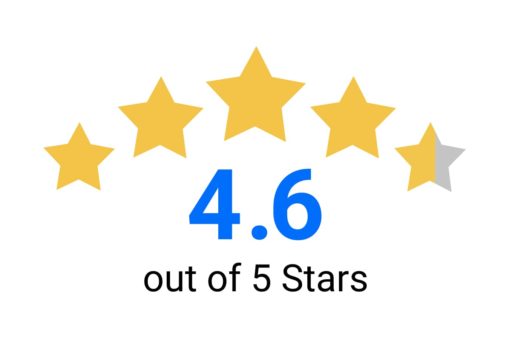
For the third year in a row, applicants gave Kira an average rating of 4.6/5 stars.
The consistency of this rating above 4.5 year after year further validates the work we do with our partner schools to ensure that applicants have an accessible and engaging admissions experience, despite the many disruptions to higher education admissions over the last few years.
In fact, only 4% of applicants said they would have preferred an in-person interview experience.
As schools decide what the future of their admissions process is going to look like, it’s this kind of feedback that makes us confident that more than ever applicants want an admissions experience that is accessible and engaging.
By the numbers
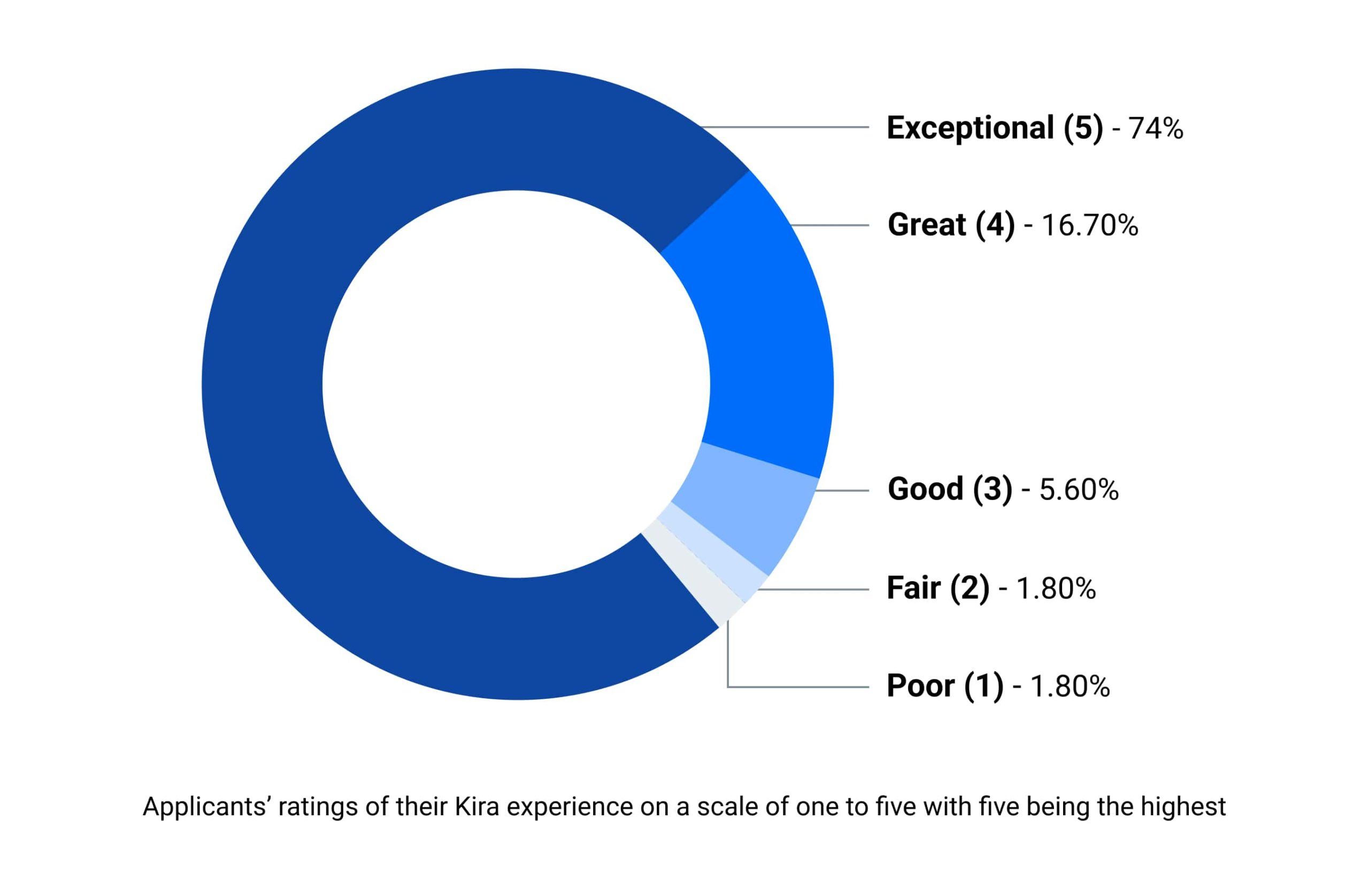
90.7% of applicants rated their Kira experience either “Great” (4/5) or “Exceptional” (5/5)
A small but mighty 0.4% increase from last year, we are so proud that as we reach more and more applicants year after year — in fact, in 2022 we surpassed 1 million applicants having completed an interview or assessment in Kira — the Kira experience continues to engage and delight them.
The average rating was “Exceptional” (4.6/5)
Another year, another “Exceptional” rating from our applicants. As we continue to evolve the platform and expand our product offerings, this vote of confidence from applicants shows us that we’re on the right track.
1.8% of applicants rated their experience as “Poor” (1/5)
This small percentage often represents our best source of inspiration for future platform enhancements and feature additions.
From enhanced privacy options to new information-sharing abilities, we’ve already added some new features to address the aspects of Kira that these applicants weren’t loving.
Learn more about the new features in Kira Talent
96.5% of inquiries were solved instantly by Charlie
What’s one of our clients’ favourite features in Kira? Our 24/7 applicant and reviewer support!
From answering general process questions to solving network snafus, our beloved Charlie the chatbot is always available to instantly answer applicants’ most commonly asked questions. And in the rare case where Charlie doesn’t have the answer? Kira’s applicant support team is waiting in the wings to ensure applicants get the help they need without taking valuable time away from your team.
Over 92% of applicants who left feedback on support rated their experience as "Great", given the options of "Great", "Okay", and "Not Good".
Another 1% increase over last year’s score, we’re thrilled that our ongoing commitment to providing top-tier applicant support is being felt by applicants.

By the comments
As always, we know that numbers on paper only offer a glimpse of the full picture. So just like we do in the admissions process, we’re giving applicants the opportunity to tell you about their experience in their own words...
Applicants loved the simplicity and accessibility of the Kira platform
Goodbye jam-packed interview travel schedule! So long, confusing list of Zoom links! With so many tasks and tribulations for them to handle during the admissions season, applicants loved that Kira made it so easy for them to share their experiences with their prospective programs.
 “This platform is so well organized! I could find all the information and materials quickly and easily.”
 “I also took the CASPer for some applications and felt that it was very rushed and stressful. Kira was much more relaxed, with adequate time to think and respond.”
“I liked that the platform wasn't too busy. The simplicity made it easy to use, and removed stress from the assessment.”
The suite of practice questions was especially appreciated…
“I thought I would be very nervous but the practice videos and writing part really helped me. Thank you Kira team!”
“I really liked the practice questions. They lightened the mood and made me more relaxed for the big thing.”
“This platform is amazing! I especially appreciated the practice questions.”
We know that interview day will always come with a little stress, but we believe that none of it should ever be process related. Year after year, applicants rave about our built-in practice module and how much it helped them minimize stress and put their best foot forward on interview day.
So was Kira’s on-hand applicant support
“I'm a student who requires extra time on this assessment, the Kira team did a great job getting that set up for me.”
“A very supportive and hands-on platform to perform interviews on.”
When your applicants are happy, we’re happy! That’s why a member of the Kira team is always on hand to help applicants with any questions or concerns they may have during their assessment process.
We even got a few cool suggestions for new features!
“I think the program should auto-capitalize after periods. Overall, the setup was really nice and easy to use, so great job!”
“The interview was great! One thing you could add is a spot for us to take quick notes during the interview while preparing the answers.”
Noted! We’re always adding new features and enhancements to the Kira platform. Comments like these help guide us toward an even better applicant experience.
Overall, applicants really loved the virtual experience
“A very good platform. No need to do it in person when you have Kira!”
“I really enjoyed doing an interview in this format. I felt calmer than in other interview settings and I loved having time to think about my responses.”
“This platform was probably one of the best interview experiences I have ever had. I hope to come across more places that use this platform.”
Comments like these are a big part of why we do what we do. In addition to making the admissions process more efficient and effective for admissions teams, we’re on a mission to improve the admissions experience for applicants by making it simplified and more accessible.
Reports from other years
Kira Applicant Experience Report 2021
Kira Applicant Experience Report 2020
Kira Applicant Experience Report 2019
Kira Applicant Experience Report 2018
Kira Applicant Experience Report 2017
If there’s one thing Kira knows best it’s how to make admissions more fair for higher education institutions. Since day one, Kira Talent has built products designed specifically to help admissions teams like yours increase process efficiency, identify the applicants that are most likely to succeed in their program, and gather the insights to help them make more defensible decisions.
So it’s hardly a surprise that that’s what we continued to do in 2022. Pulling inspiration from our 900+ global clients and each of their unique processes, we’ve added new features, from Group Stations in Live Interviewing to a universal search tool, to help make your admissions processes that much more efficient, effective, and fair.
Here are a few updates and upgrades we made to the Kira platform last year which will give your admissions process a mega boost of efficiency and ease.
Discover what’s new in Kira
- Kira en español
- Full control over applicant naming
- Pre-populate registration fields
- Anonymization of applicant names
- Bias-mitigating review made easy
- Powerful enhancements to simplify your process
- Universal search
- Manage applicants & reviewers directly in platform
- Download and upload supplemental docs in Kira
- A more robust Live Interviewing tool
- Broadcast messaging
- Group stations
- Schedule builder
Kira en español
Hola! In addition to English and French, an assessment or interview in Kira can now be delivered entirely in Spanish.
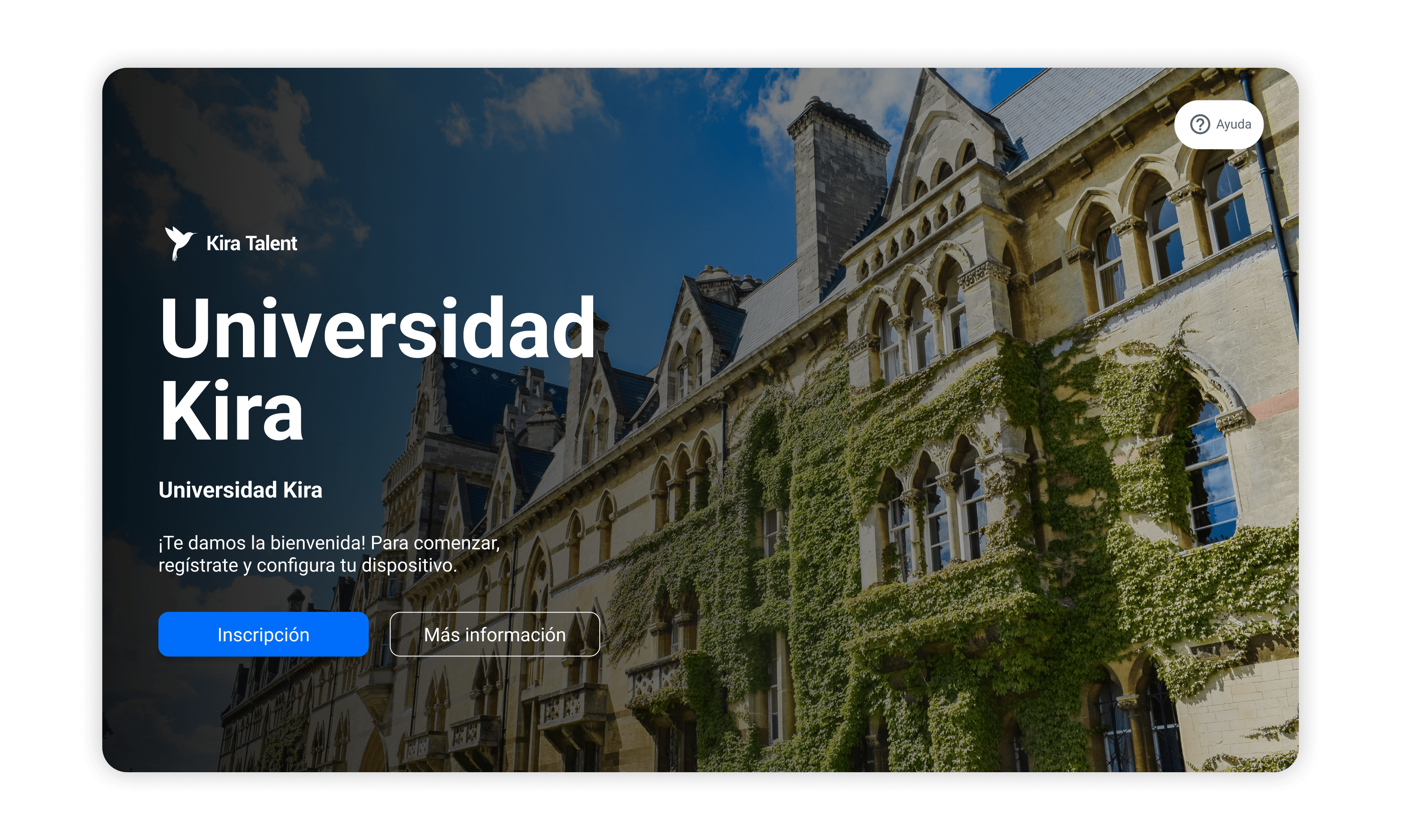
From your dedicated Client Success Manager to the platform itself, the Kira experience is accessible to your staff, applicants, and reviewers entirely in Spanish.
Want to use Kira in another language? Let us know!
Full control over applicant naming
Help mitigate bias and protect the integrity of your assessments and interviews with full control over what applicant data shows throughout the Kira Talent platform.
Pre-populate applicant names in registration fields
Ensure data consistency across your admissions process with the ability to pre-populate applicants’ first and last names on the Kira Talent registration page.
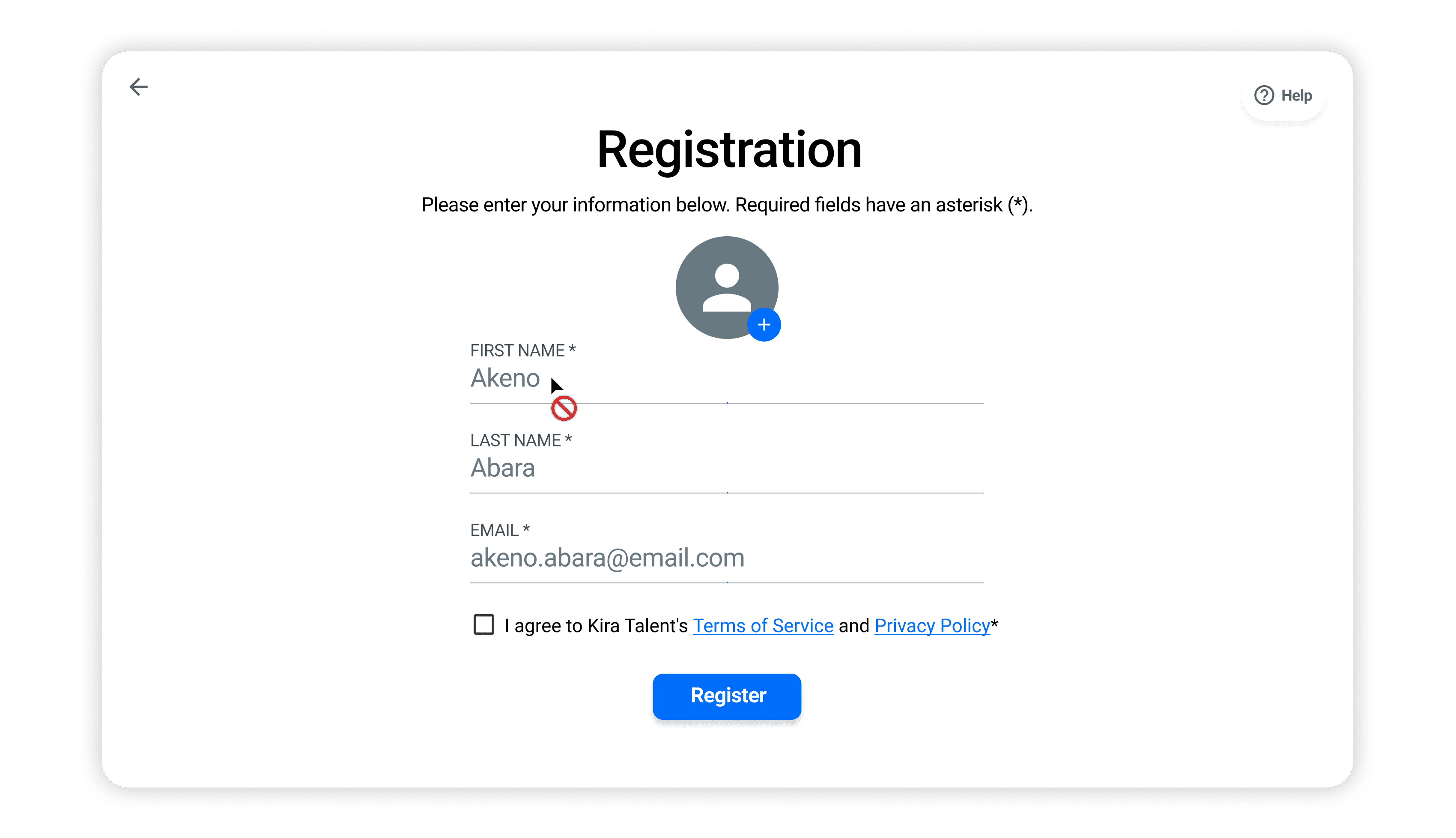
When applicants receive their personalized Kira invitation with a unique registration link via email, they’re directed to a registration page. Kira now allows you to autofill and lock the name and email fields, to ensure that those fields match the rest of their application records.
This feature removes the opportunity for error, in particular for applicants who have different legal and preferred names.
Anonymization of applicant names
Further reduce the potential for bias by hiding applicant names in your Kira assessments and interviews.
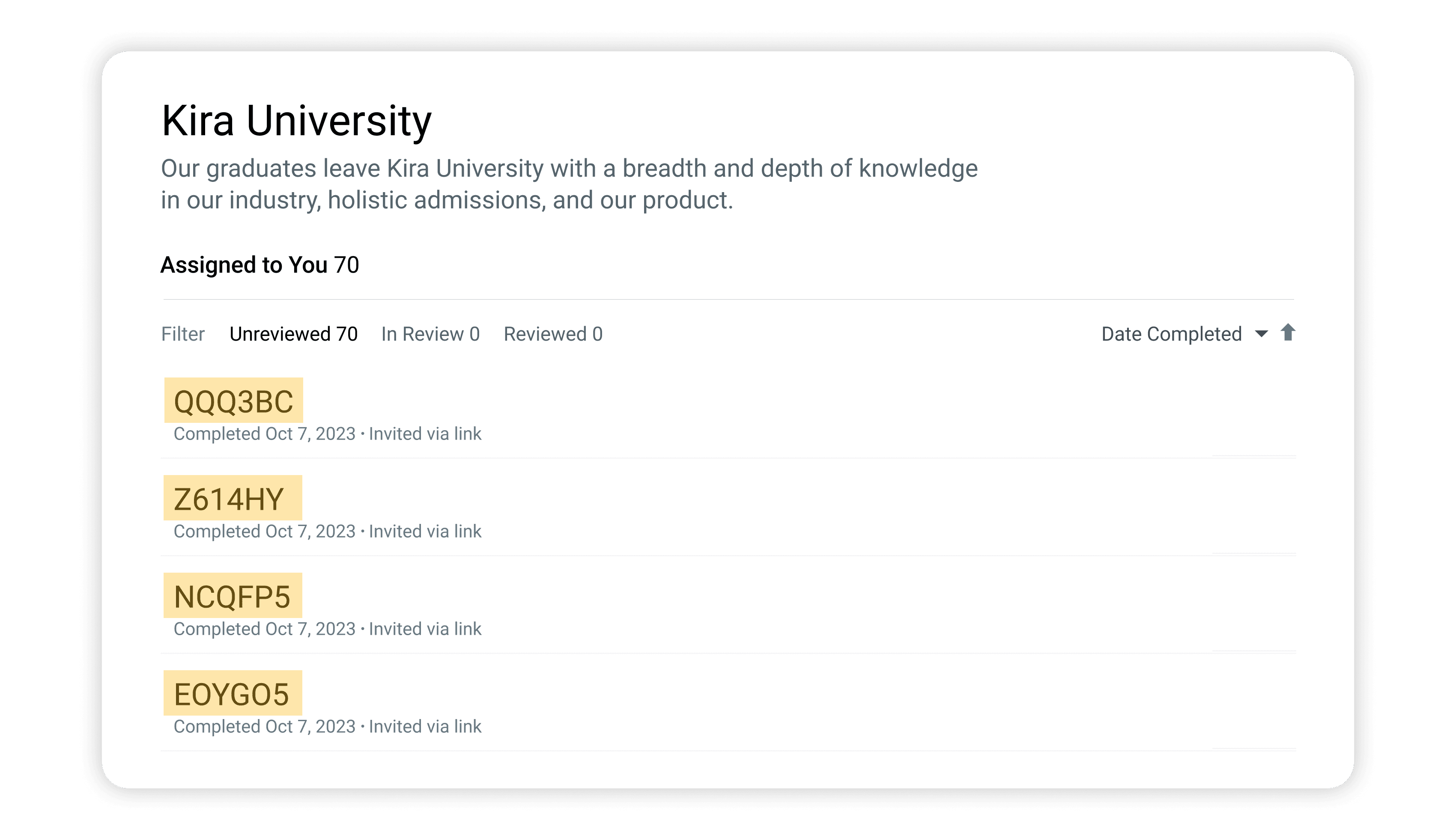
This new feature replaces the name of the applicant with a Kira ID number, unknown to your reviewers, helping them score applicants as impartially as possible.
Bias-mitigating review made easy
In 2020 we launched Horizontal Review in Kira Talent to help schools facilitate a more equitable reviewing process based around the structure of the Multiple Mini Interview (MMI) used by medical schools and other healthcare programs.
Horizontal Review helps mitigate bias in admissions by assigning reviewers to a specific competency that they assess for across a wide pool of applicants. In doing so, Horizontal Review helps improve the accuracy and reliability of scoring as each applicant is evaluated by more reviewers who are better versed in assessing that specific competency.
Want to know what Horizontal Review in Kira Talent can do for equity in your admissions process? Read the research published in the Journal of Physical Therapy Education.
Now, we’ve made it easier for admissions teams to choose a horizontal reviewing process by enabling the ability to assign reviewers in bulk. No need for spreadsheets or file uploads, Kira now offers the ability to set up Horizontal Review assignments directly in the platform with just a few clicks.

Powerful enhancements for greater ease
At Kira, we believe that good technology should make your life easier. That’s why we’re continuously enhancing our platform to make it easier for you to identify and enroll your top applicants.
Universal search
Find what you’re looking for with ease, using Kira’s universal search functionality.
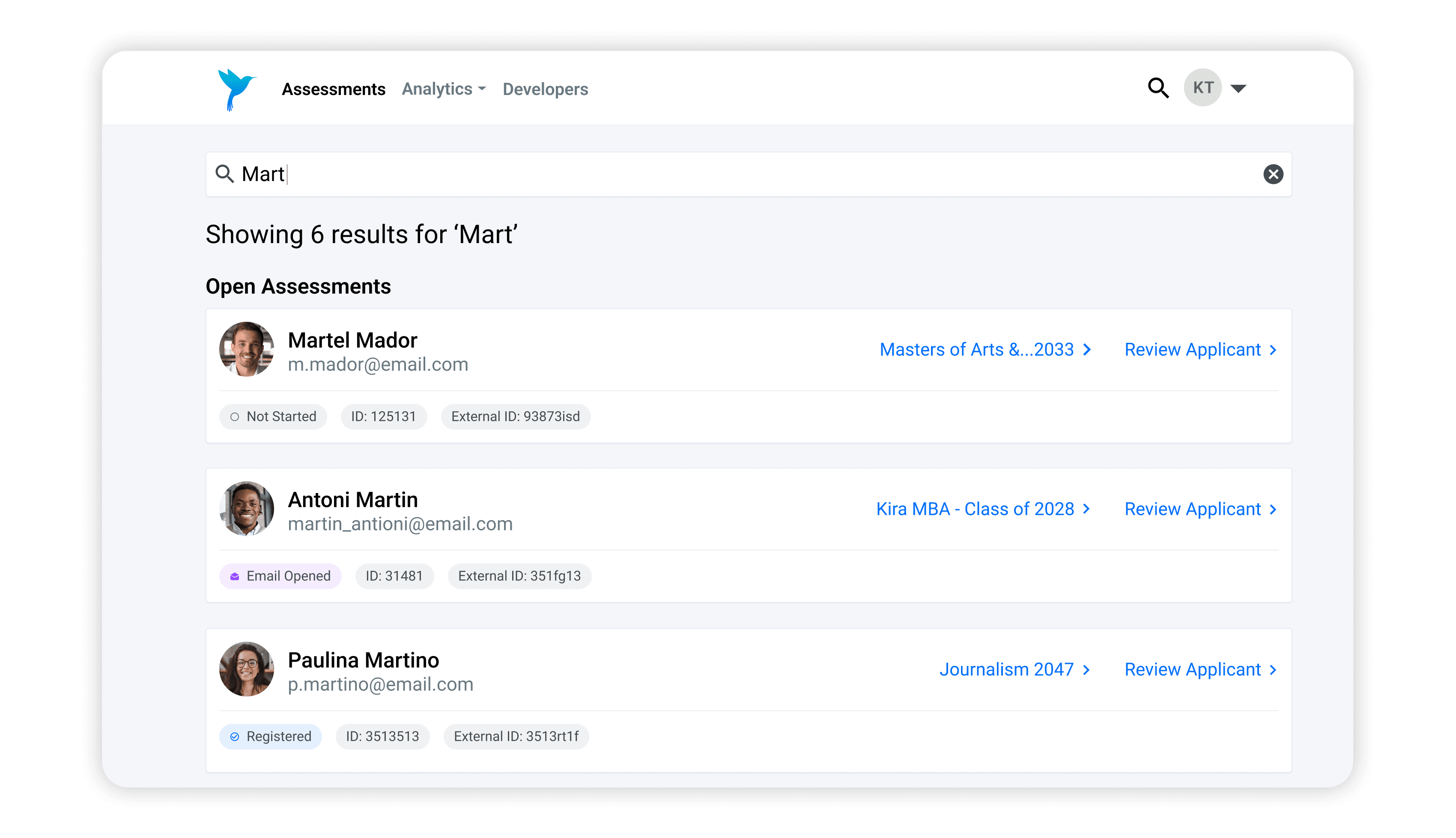
Universal Search in Kira Talent allows admissions teams to search for an applicant across all assessments in Kira. Whether they’ve applied to one program or five, their applications and assessment scores will be stored separately, but accessible to admin users simply by searching their email, helping you find what you’re looking for without scrolling through multiple assessments.
Manage applicants & reviewers directly in platform
Make changes to your assigned applicants and reviewers with just a few clicks.
You can now add, edit and delete participants directly in the Kira platform. No more spreadsheet uploads or additional steps required!
Download and upload supplemental docs in Kira
Say goodbye to extra emails and added work! Kira now offers the ability for applicants to download a document directly from Kira. In addition to our uploading files feature, this now makes it easier to share key information with your applicants prior to their Kira assessment or interview.
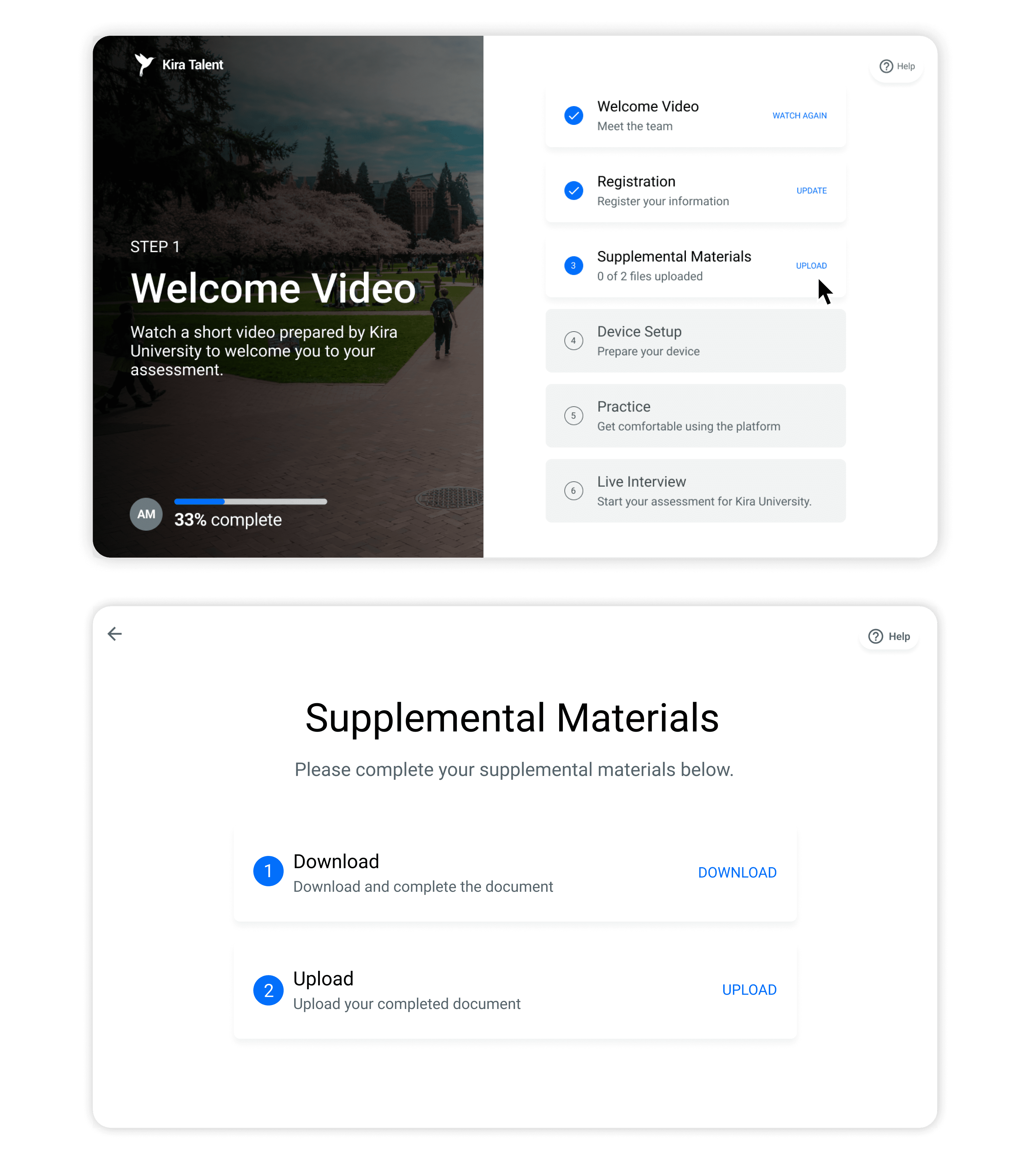
Another step in delivering an “all-in-one” experience, this feature allows you to collect supplemental essays, reference letters, and more through Kira Talent. The uploads are automatically linked to the applicant’s profile and can be pushed directly into the corresponding file in your enrollment management system.
Need to get a confidentiality agreement or additional interview instructions to your applicants? No need to send another round of emails, simply upload it to the Kira platform and applicants will be prompted to download it from their Kira registration page.
The next evolution of Live Interviewing
Tailor-made for higher education admissions teams, the launch of Live Interviewing in Kira Talent changed the game for virtual interviewing in 2021.
As more programs transitioned their in-person interviews online with Kira, we continued to live up to our ‘built for the way you interview’ promise, incorporating their requests and suggestions into development, resulting in some powerful enhancements to Live Interviewing.
Broadcast Messaging
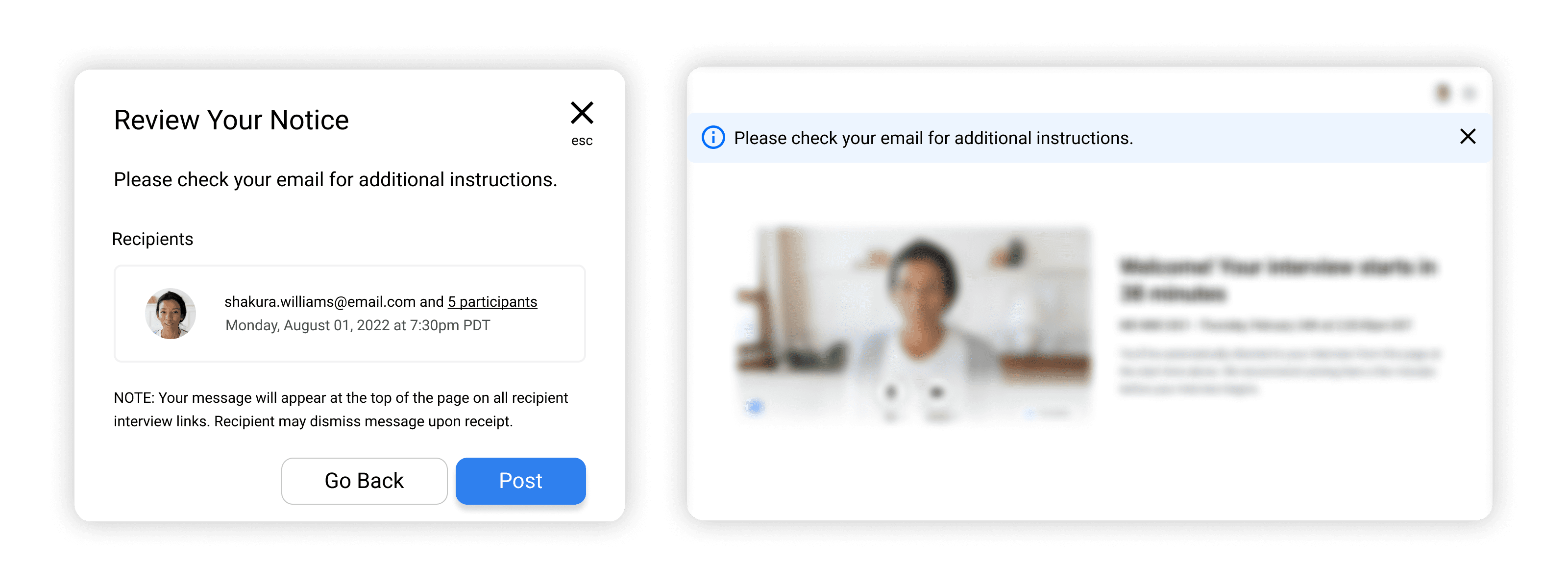
Get info out to all your applicants during your Live Interview or MMI.
Broadcast messaging in Kira Talent enables you to blast out a short message directly to participants in the Kira platform during a Live event. Whether you need to communicate with individual applicants, specific groups, or everyone involved, Kira can help make sure they get the message.
Group Stations
From one-on-one and panel interviews to Multiple Mini Interviews (MMIs), Live Interviewing offers flexible setups to reflect your traditional processes. Now, we’ve added group interviews to that lineup.
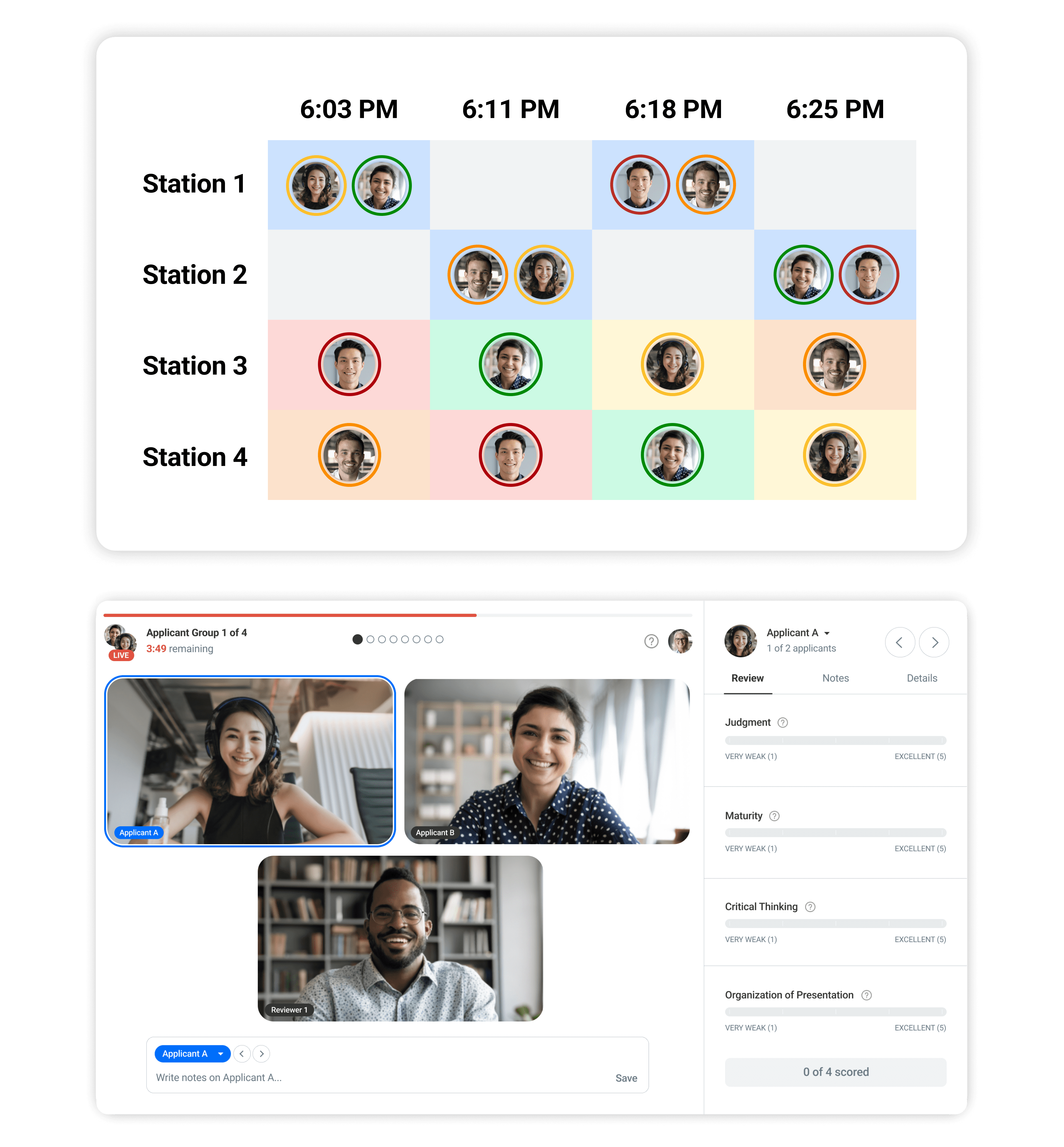
Group stations in Live Interviewing allow for more than one applicant to be in an interview room at one time. Whether you want a group of applicants to move through each room together as a unit, or you want individual applicants to come together for a single station and then continue separately for the remainder of the interview, you can build it in Kira.
Schedule Builder
Are you a DIY kind of team?
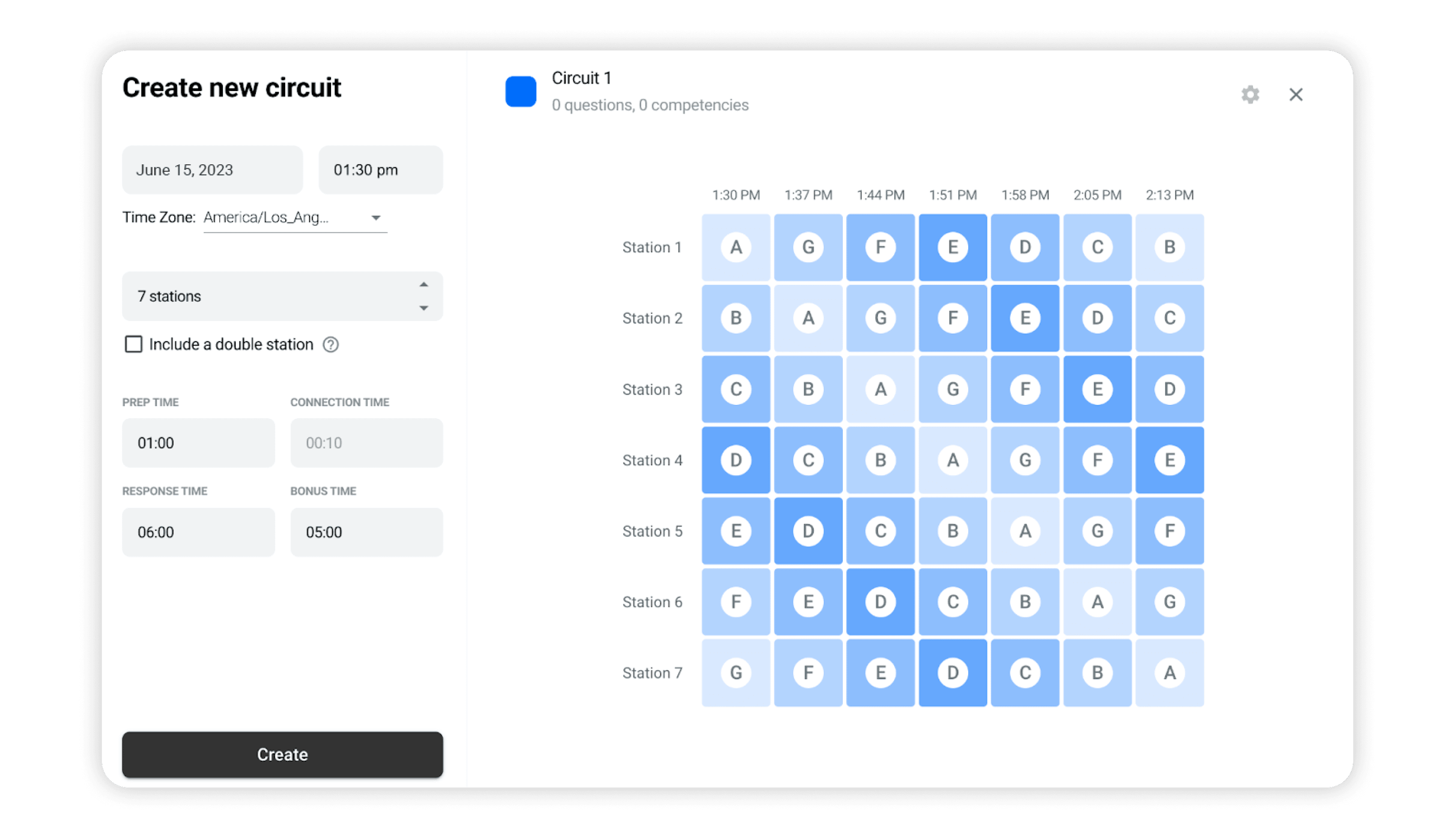
With the new schedule builder, you can take your interview schedule into your own hands and create your own Live Interviewing circuits and change participants. Once your dedicated Client Success Manager has set up an interview in Kira, you and your team can access a visual layout of the interview circuit, make changes to participants, and even create an entirely new interview circuit.
Wondering what you can expect from Kira in 2023?
Subscribe below for more updates.
Known for its collaborative learning environment and team-centric culture both in and outside of the classroom, Roseman University’s College of Dental Medicine wanted to make sure that their admissions process was able to identify the applicants who would thrive in that environment.
Although in-person interviews had worked for them in the past, a switch to a three-year program model meant increasing applications and not enough capacity to review them all.
“We were already reviewing about 2000 files a year at about 20 to 30 minutes for each file for an experienced reviewer,” shared Dr. William Harman, the Associate Dean at Roseman Dental. “That’s around 1000 hours of faculty time. We’re anticipating our applicant pool increasing to around 3500 candidates. That amount of faculty time simply becomes unsustainable.”
“We needed to find a solution where we could get better insight into our applicants earlier in the admissions process so we could reduce the faculty time on task.”
“Thankfully, Kira Talent has enabled us to accomplish that goal.”
Saving 800+ hours of faculty time
“Kira Talent helped us scale our reviewing process while also reducing faculty time,” explained Dr. Harman.
Roseman College of Dental Medicine uses Kira to screen applicants prior to the file review. By efficiently assessing applicants’ traits and soft skills earlier in the admissions process, Roseman gathers deeper insights in an efficient way and helps reduce the number of file reviews and live interviews conducted by their staff and faculty.
“We’ve gone from 2000 file reviews a year to around 450,” Dr. Harman explained.
“That translates to more than 800 hours of faculty time that we’re saving.”
“We have seen a significant increase in the efficiency of our reviewing process but we haven’t found any reduction in the quality of our students,” shared Duane Winden, the Assistant Dean for Academic Affairs at Roseman Dental. “Our class of 2022 had a 100% pass rate on the Integrated National Board Dental Examination (INDBE) and we’re looking at 99% for this coming year.”
“As our applicant pool grows, those savings will only increase,” Dr. Harman added.
Doing more with the budget you have
Although Roseman Dental’s admissions team was sold on the benefits of Kira and the time savings it would bring, they still had to find room in the budget.
“Everyone agreed that we wanted to transition our process to Kira, the last step was finding a way that wouldn’t exceed our already stretched-thin budget,” explained Dr. Harman.
With Kira’s Applicant Pay, Roseman Dental was able to cover the costs and get the flexibility they needed.
“With Applicant Pay, our applicants are able to pay for the assessment directly, rather than us incorporating a fee for it into the general application fee,” explained Dr. Harman. “And with that, we’re able to use Kira without having to pull those upfront costs from our limited budget.”
“Part of our criteria for a new admissions solution was one that would not hugely impact our budget. Applicant Pay allows us to accommodate any kind of applicant volume fluctuation without disturbing our budget,” Dr. Harman added. “This was especially top-of-mind for us as we were transitioning to our new three-year model, and didn’t have historic information to help predict application numbers.”
“Kira allows us to scale our admissions process in a way that does not impact our budget, which has made the higher-ups in the university very happy.”
Learn more about Applicant Pay in Kira Talent
Identifying applicants who align with your values
“It’s really important for us that our faculty are face-to-face with our prospective applicants and being involved in an interview process,” shared Dr. Rachel Novak, Assistant Dean at Roseman Dental.
“With Kira, they still get that contact but we’re able to really streamline the entire process and save our faculty members a significant amount of time.”
“We want to make sure that the applicants we’re considering fit with our educational philosophy and our culture,” shared Dr. Harman. “To facilitate that, we wanted to make sure that we were portraying our core values to applicants early in the admissions process.”
Using the pre-recorded marketing videos integrated into the school’s assessment in Kira, Roseman is able to share their culture, values, and team-centric spirit with their applicants.
“We really wanted to narrow our applicant group down to the people who knew about our program and resonated with our approach to education,” Dr. Harman added.
“We created a series of videos that talk about our process,” Dr. Novak shared. “Through the videos, our applicants meet all of our deans, our students, and our faculty. To underscore the fact that we do everything in teams here at Roseman, our video questions were asked by a team of our faculty members and a student. Our applicants really resonated with that.”
“With Kira, applicants were able to learn a tremendous amount about our program just by completing the assessment,” continued Dr. Novak. “They come to the final interview knowing so much more about our program and our values.”
Assessing applicants more holistically
“When we look at the future of admissions, I believe we’re moving towards a more holistic approach,” shared Dr. Harman. “So when we were looking at innovating our admissions process, the logical step was to start getting more holistic information on our candidates.”
Prior to Kira, Roseman’s faculty and admissions team simply didn’t have the capacity to interview each candidate in person.
“When you have thousands of applicants, you can only get to so many,” explained Dr. Novak. “Your class gets filled and some of those applicants who were never seen just get lost in the pile.”
“With Kira, every single applicant that reaches our minimum DAT and GPA metrics is invited to complete an assessment,” she continued. “Instead of seeing only a small fraction of our applicants, this allows our entire applicant pool to be evaluated holistically.”
Maintaining CODA certification
Conducting holistic review across their entire applicant pool helps Roseman Dental support diversity in their program.
“Diversity is very important in dental education,” shared Dr. Novak. “Our next evaluation for the Commission on Dental Accreditation (CODA) is next year, so we wanted to make sure our process could be defended as fair and inclusive while showing that bias is controlled as much as possible.
“Kira has been really helpful with that,” added Winden. “They walked us through the processes that are built into the platform to mitigate bias in the reviewing process and ensure that each applicant receives a fair evaluation.”
“Through its inherent accessibility to applicants, Kira helps ensure that we have a diverse group of reviewers reviewing our applicants.”
“We know that that’s one of the best ways to support the enrollment of diverse students,” Winden continued.
“I believe CODA is going to be very impressed with the nature of this initiative,” shared Dr. Harman. “Because we have such a range of people involved in the development of this Kira project, it's a very broad-based initiative and we think that’s going to be very useful in the accreditation process.”
The future of dental admissions
“We are on the precipice of a transformation in the way that we do admissions,” shared Dr. Harman. “The de-emphasis on standardized tests means that we need to come up with better ways to evaluate applicants that do not rely heavily on DAT and other test scores.”
“At Roseman Dental, we’re excited about that future,” Dr. Harman continued. “With Kira, we have been able to make our admissions process more accessible, reducing costs for our applicants because they won’t be travelling to a school that they don't match with, and providing them with a convenient way to interview. On the admissions side, we’re making better admissions decisions that are based on a holistic view of applicant fit. It’s another step towards the brave new world of admissions.”