

The University of New Mexico (UNM) College of Pharmacy has a 75-year history of serving their diverse in-state student population. As the only college of pharmacy in the state of New Mexico, UNM Pharmacy has built a strong reputation amongst the local students for delivering quality education through a tight-knit classroom and campus environment.
Having applicants feel that sense of community throughout the admissions process has been top of mind for UNM Pharmacy since the beginning.
“We used to do everything in-person,” shared Krystal Ward, Assistant Dean for Student Affairs at UNM College of Pharmacy. “We had an all-day event with presentations, tours, and interviews which lasted around 6 hours. When the COVID-19 pandemic hit, we moved that process to Zoom.”
But while the convenience of the online format was greatly appreciated by applicants, the long days in front of a computer weren’t giving them the warm sense of community that UNM Pharmacy is known for.
“Once we were able to come back on campus, we knew that we needed to find a way to still offer the convenience and accessibility of the online experience,” explained Ward.
“Kira gave us a way to evolve our process, allowing us to maintain the core components that are important to our mission and vision as a school, while continuing to offer applicants a more convenient experience.”
An inside look at UNM Pharmacy
UNM College of Pharmacy is among the smaller pharmacy programs in the United States, enrolling around 60 students per class, for a total student body of approximately 250.
“We have around 100-110 applications per cycle and we usually interview 70-80 of those applicants,” shared Ward. “As we’re the only pharmacy school in the state of New Mexico, our primary purpose is to serve the in-state student population, but each year we also receive a small number of out-of-state applicants.”
Although small, UNM’s classes tend to be very diverse, with many first-generation students enrolled in the program. With these applicants in mind, it is important to UNM Pharmacy that their admissions process is streamlined and easily accessible.
“We had just wrapped our admissions cycle right before the COVID-19 pandemic hit,” Ward shared. “At that point, it was an all-day event which lasted around 6 hours. Students would come to campus, they’d watch presentations, they’d do a traditional interview with two members of the admissions committee and finally, they would take part in a 5-station MMI, and a 30-minute writing exercise.”
In 2021, the college of pharmacy moved that process to Zoom.
“It was the same process, but recreated using Zoom breakout rooms,” Ward explained. “In order to make it work, we had multiple accounts running on Zoom and several people managing the movement of applicants in and out of breakout rooms.”
“But in the fall, I attended a webinar where I learned how the University of Michigan College of Pharmacy had optimized their admissions process with Kira, and I discovered what it could do for our admissions team,” Ward continued. “Up until then, we had essentially resigned ourselves to the fact that the online process was what it was with Zoom, but all of sudden we saw an opportunity to hone in on the aspects that we liked in the online process and create an overall experience that was so much better.”
Not settling for a 'good enough' admissions process
After submitting their application and letters of recommendation through PharmCAS, applicants are screened by the UNM Pharmacy admissions team to check if they meet the minimum GPA and prerequisites,” explained Ward. “Applicants who meet or exceed those requirements are automatically invited to interview.”
Discover how Kira integrates seamlessly with Liaison’s CAS
At UNM Pharmacy, an invitation to interview includes participating in a traditional two-on-one interview, a 30-minute writing exercise, and a 5-station Multiple Mini Interview (MMI).
“We brought MMIs into our process in 2017,” shared Ward. “It’s a great method for equitable interviewing as applicants rotate through different stations, each with its own standardized question or prompt. Because of the structured nature of the interview, the MMI helps us ensure there’s a consistent experience for all applicants, and it helps us mitigate bias in our admissions process.”
“The downside of the MMI is that it does typically put a large time burden on the admissions team to pull off,” Ward added.
“Kira showed us a world where we could maintain the integrity of our MMI, but deliver it in a way that was more convenient and efficient for our faculty, applicants, and admissions team.”
The flexibility to deliver interviews the way you want
“With Kira, we had the option of delivering our MMI either live or asynchronously. Being that one of our primary goals was to make this as convenient as possible for applicants and interviewers, the asynchronous method really captured our interest.”
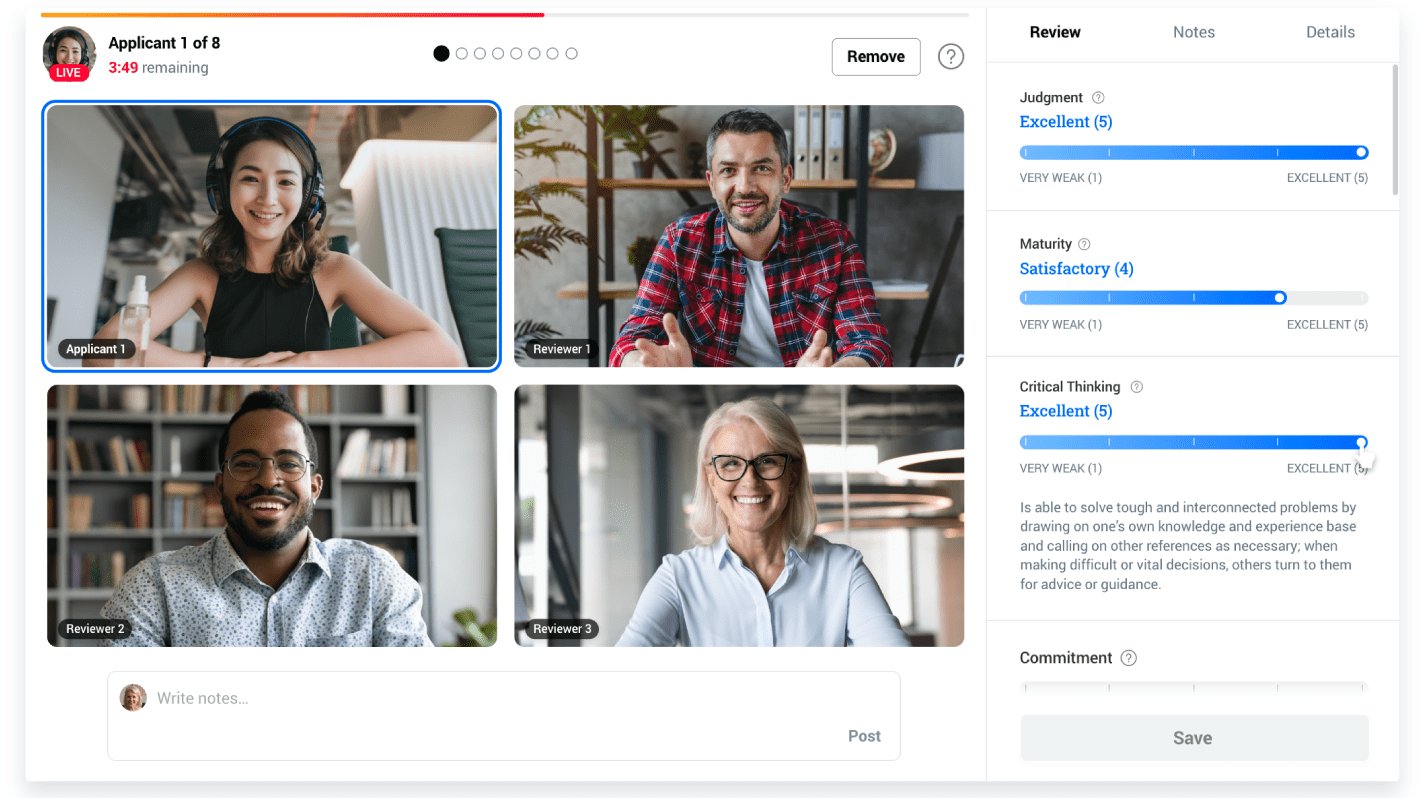
With an asynchronous MMI in Kira, applicants still move through stations in the same way that they would during a traditional MMI, only the questions are delivered by video recordings made by the school's own faculty and staff, and the interview can be completed on the applicant's own schedule. By assigning reviewers to assess specific stations, Kira’s horizontal reviewing functionality ensures that each applicant is still being seen and evaluated by a diverse set of reviewers.
“With the asynchronous method in Kira, we’ve been able to maintain that consistency, but everything is much more efficient, more convenient, and much more accessible for our reviewers as well as our applicants,” explained Ward.
“Kira Talent provides us with a flexible platform that works for our established process, rather than making us adjust our process to fit the platform. Other video interviewing vendors just don’t offer that.”
Keeping applicants more engaged throughout the process
By keeping their two-on-one interviews in-person but transitioning their MMI and written exercise into a Kira Asynchronous Assessment, UNM Pharmacy has strengthened their interview attendance rate.
“Making the Asynchronous MMI in Kira due one week before our interview day has saved us a lot of headaches,” shared Ward. “Prior to Kira, we had a lot of last-minute cancellations on our interview day. Having applicants complete the MMI online the week before lets us know which students are committed to the admissions process and which students we needed to reach out to and check up on.”
“This year with Kira, we had zero no-shows on interview day. We didn’t have to adjust schedules last minute and we didn’t have any gaps for our interviewers.”
Securing buy-in for a new process
“Bringing Kira into our process was actually one of the easiest sells I’ve ever had to do,” shared Ward. “Our board is involved in the reviewing process so they saw right away what a benefit it would be to be able to run the MMI on-demand and have applicants and reviewers complete the assessments on their own time.”
That has been the focus of the overwhelmingly positive response that UNM Pharmacy’s admissions team has received from their reviewers.
“Being able to review applicants on their own time, whenever it’s best for them, means that reviewers are not only more willing to volunteer, but we’re also ensuring that applicants are being fairly evaluated,” explained Ward.
“What we were more nervous about was selling the new process to our applicants,” she continued. “But where we anticipated we might get pushback, we actually got a ton of positive feedback.”
UNM Pharmacy’s applicants found that Kira offered them a more comfortable atmosphere in which to interview, giving them an opportunity to truly put their best foot forward.
“I’ve been looking at the feedback from our students and many of them mentioned that, with Kira, they were able to ensure that they were in the right headspace and they could focus on answering the questions,” explained Ward. “Kira also helps them get a feel for our school, so when they come to campus they already have a sense of the program and are excited about the opportunity to study here.”
Gaining a new partner in holistic admissions
“Even with all of those benefits, I still think that Kira’s biggest differentiator is their team and the service they provide,” shared Ward.
Kira assigns each program a dedicated Client Success Manager who provides hands-on assistance in designing, building, and running the interviews and assessments.
“They essentially became another member of our admissions team,” said Ward. “Starting with creating and refining our questions, we were able to simply describe what qualities we were looking for in applicants and Kira had a whole bank of questions which we could pull from.”
“Although we had been doing the exercises for years, having Kira’s expertise has really enhanced the responses that we’re getting from applicants,” she added.
Ward estimates that the UNM Pharmacy admissions team saved over 50 hours by switching to Kira Talent.
“When I consider the time it took for our team to set up a traditional MMI and manage all of the stations, that 50 hours is honestly a lowball estimate,” she clarified. “Whatever questions myself or my staff had, Kira was quick to respond and offer clarification or make whatever changes we wanted.”
“Having that level of dedicated assistance saved us easily another 50 hours by not making us figure out the ins and outs of the platform.”
“We lost a member of our admissions team right before the cycle started and I don’t know how we would have gotten everything done if it weren’t for Kira,” Ward explained.
For the University of Texas Health San Antonio School of Nursing virtual interviewing is hardly a new concept. In 2017, the university decided to change the way they evaluated applicants for admissions. Where their previous process focused on traditional metrics, such as GPA and test scores, UT Health San Antonio Nursing’s new holistic admissions process incorporated holistic elements, including an in-person interview, in order to generate a broader assessment of applicants’ abilities.
However, when the first cycle saw many applicants declining the invitation to interview, there was a significant decrease in diverse applicants enrolled in the program, and the admissions team knew something had to change.
“My first directive when I joined UT Health San Antonio Nursing was to find a platform that would allow us to conduct our interviews online,” shared Henry Cantu, Director of Admissions and Special Programs. “That’s when I discovered Kira Talent.”
In the 3 years since switching to Kira Talent, the school of nursing has seen a 62% increase in the number of Hispanic and Latino students who enrolled in graduate programs.
With an approximately 90% interview completion rate in Kira Talent, UT Health San Antonio Nursing has experienced first-hand how a process that is more accessible to applicants can increase engagement and keep the school top-of-mind for applicants.
Learn more about how:
- UTHSA increased diversity in graduate and undergraduate nursing programs
- What UTHSA reviewers and applicants thought of Kira Talent
An inside look at UT Health San Antonio Nursing
Offering ten graduate-level programs, including a post-masters DNP and a Ph.D. in nursing science, and two undergraduate-level programs, the school of nursing at UT Health San Antonio receives nearly 1000 applications per year and enrolls just over 500 students.
With their old process, UT Health San Antonio Nursing offered admissions based entirely on traditional criteria such as GPA, test scores, and prerequisites.
“In 2017, our faculty and admissions team voted to begin using a more holistic approach in our evaluation and review of applicants,” Cantu shared.
By gathering multiple data points and assigning weights to each component of the application, the school of nursing generates an overall application score that provides a more comprehensive view of an applicant's abilities and potential.
Using NursingCAS (Centralized Application Service), the admissions team collects applicants’ initial applications as well as supporting documents such as official transcripts, test scores and letters of recommendation.
“What we’re looking for in that initial application screening is for applicants to have met our minimum admission requirements in terms of GPA, test scores, etc.,” explained Cantu. “Once we’ve completed that initial review successful applicants are invited to interview.”
Reducing barriers for applicants
For the first cycle under the new holistic process, applicants were invited to attend their interviews in-person and on-campus.
“We quickly discovered that it’s not only very difficult to find faculty who could commit the time required to participate in the in-person interview process, but that applicants were actually declining our invitation to interview because of the travel requirement,” Cantu shared.
“In hindsight, this makes a lot of sense,” he continued. “In addition to paying for the travel, hotel, and everything else involved needed for the trip, many of our applicants are working nurses so it’s difficult for them to take time off work.”
“We found that we were losing some very good applicants as a result of our in-person interviewing process.”
A loss that was notably affecting the diversity of the nursing school’s candidates.
“We saw a significant drop in diverse students admitted to the 2017 cohort,” explained Cantu. “We credit that entirely to the challenge of travelling to campus for an interview.”
“That’s when we decided to move our interviews online,” he continued.
“Here we were, building and investing in a holistic reviewing process, in the hopes of engaging and enrolling more diverse students and the format through which we were delivering the interviews was actually creating a barrier for them.”
Creating opportunities for a more diverse range of applicants
“Once we implemented Kira Talent, we immediately saw the impact that it had, not only on the number of diverse applicants who were applying and completing their interviews but also on the number of diverse students who ultimately enrolled in our programs,” Cantu shared.
Between the fall of 2018 and the fall of 2020, UT Health San Antonio School of Nursing saw a 62% increase in the number of Hispanic and Latino students enrolled in their graduate programs.
“We are in a part of the country that has a large Latino population and prior to Kira that demographic was not proportionately reflected in our student population,” Cantu explained. “We’re very excited to see that those numbers have gone up each and every year since we implemented our interviewing process with Kira Talent. That has been a huge benefit and a huge impact for us.”
Seeing the success of the holistic admissions process within the graduate programs, the school of nursing decided to replicate it in their undergraduate admissions process.
“It didn’t take long to see a similar effect with our undergraduate cohorts as what we had seen with our graduate cohorts,” shared Cantu.
“Within the first two years, we saw a 28% increase in Hispanic and Latino students and a 5% increase in multi-racial students enrolled in our BSN programs.”
“Being that our primary goal with implementing a holistic admissions process and bringing Kira Talent into our process was to increase diversity in our programs, we are exceptionally pleased with these numbers,” Cantu added.
Creating a better experience for faculty and reviewers
“When we first raised the possibility of moving towards this holistic process, we faced a little trepidation from our BSN faculty,” Cantu shared. “Many of them were more comfortable with the idea of in-person interviews and wanted to implement the holistic process in that format.”
“But after speaking with our graduate faculty and hearing how pleased they were with the Kira Talent platform they were won over.”
Instead of having reviewers commit a whole day for interviews, UT Health San Antonio gives them two weeks to evaluate and score the asynchronous video assessments.
Discover how Missouri Nursing saved 200+ hours by transitioning their interviews onto Kira
“Our graduate faculty had a huge influence on our undergraduate faculty being able to visualize what Kira could bring to our admissions process,” Cantu continued. “They value the fact that they can do that on their own time, instead of having to block out dedicated hours on campus.”
Although UT Health San Antonio initially saw similar trepidation from their applicants, they’ve since found that applicants favour the process over in-person formats offered by other programs.
“What I hear every year directly from our applicants, is that they find the Kira platform to be very user-friendly,” shared Cantu. “The technology is easy to use and it takes away the stress and anxiety that they would have during an in-person interview. The result is that they can focus more on the questions at hand and respond to the best of their ability, giving our admissions team a more authentic representation of their talents.”
“Applicants really appreciate the opportunity to share with us who they are through the Kira platform.”
Read what applicants really thought about their experience with Kira Talent
“Since day one, the whole Kira team has provided a level of support that is so valuable,” expressed Cantu. “They’ve been very available, not only to me, not only to our faculty but also to our applicants. It gives us confidence in our interviewing process knowing that, whenever a question might arise, we can rely on that level of responsiveness and support from Kira.”
2021 was a year of evolution in admissions. Shedding 2020’s quick-fix solutions — and the challenges that came with them — admissions leaders shifted their focus to tools and techniques that will set their process up for success in years to come. It’s that focus on long-term planning that brought more schools than ever to Kira Talent this year!
Whether it was their first or fifteenth cycle with Kira, discover what admissions teams thought of their experience.
- The Kira enhancements that clients loved this year
- By the numbers - Overview
- By the numbers - Programs
- Reports from other years
The Kira enhancements that clients loved this year
In 2021 Kira introduced a real-time video interviewing solution. Together with our client-favourite Asynchronous Assessment, Live Interviewing in Kira Talent transforms virtual interviewing from a quick-fix pandemic solution into a new era of refined, innovative and professional admissions experiences.
Read more about the evolution of Live Interviewing in Kira Talent
By the numbers | Overview
As admissions leaders continued to evolve their processes and reimagine admissions to better attract and engage new generations of applicants, we are proud that they’re choosing Kira to deliver this vision.
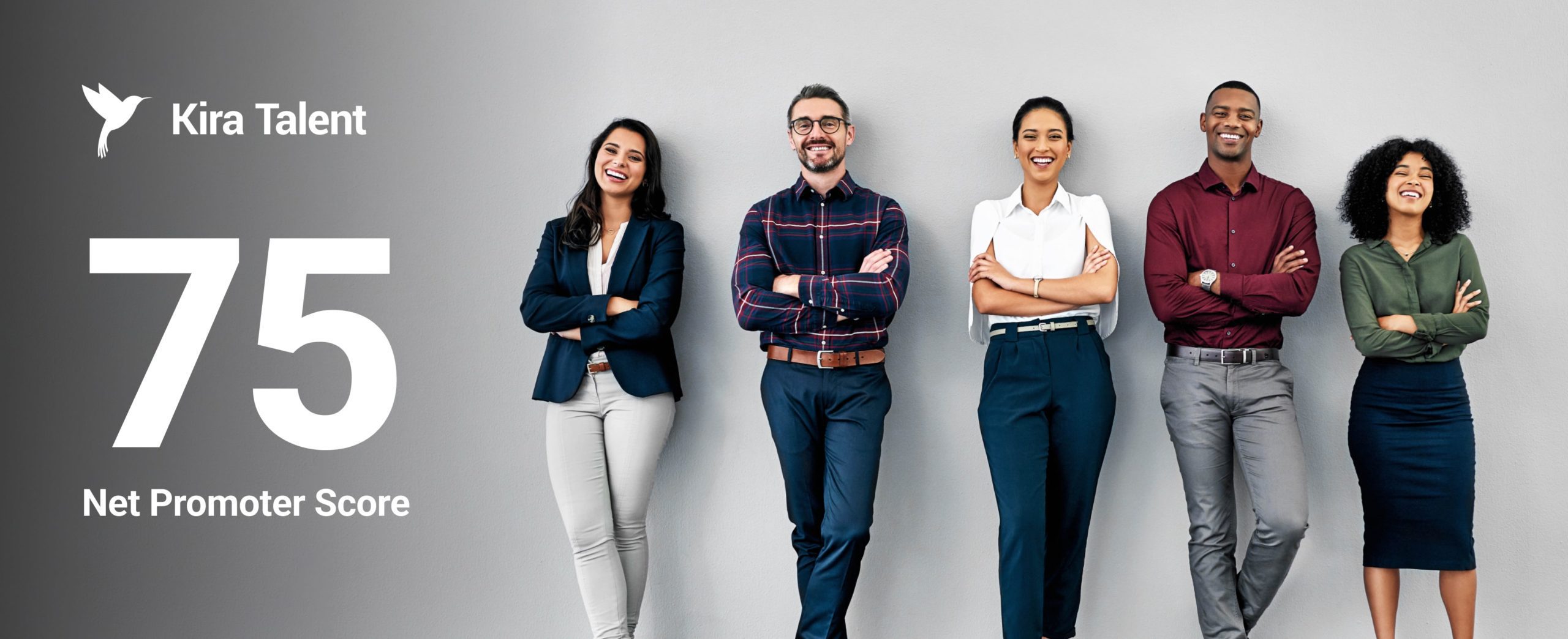
With a Net Promoter Score (NPS) of 75, Kira scores higher than titans like Apple (NPS 68) and Tesla (NPS 43)!
However we know a single score can’t tell the whole story, so we’re letting our clients explain what aspects of the platform provided them with the most value this year.
63.9% of schools replaced an existing interview with Kira Talent.
Efficiency was a key focus for admissions leaders in 2021 — 38.7% of our partner schools named efficiency as their top reason for using Kira Talent. By providing features such as streamlined scheduling, built-in structured rubrics, and integrated score pairing, Kira is helping admissions teams eliminate repetitive manual tasks and build a more efficient admissions process.
Although a desire for a more efficient admissions process was the focus for the broader education admissions space in 2021, we wanted to parse out the nuances across different disciplines.
 Programs:
- Business
- Medicine
- Nursing
- Pharmacy
- Dentistry
- Veterinary Medicine
- Health Sciences
- Law and Humanities
- K-12
By the numbers - Programs
—
Business
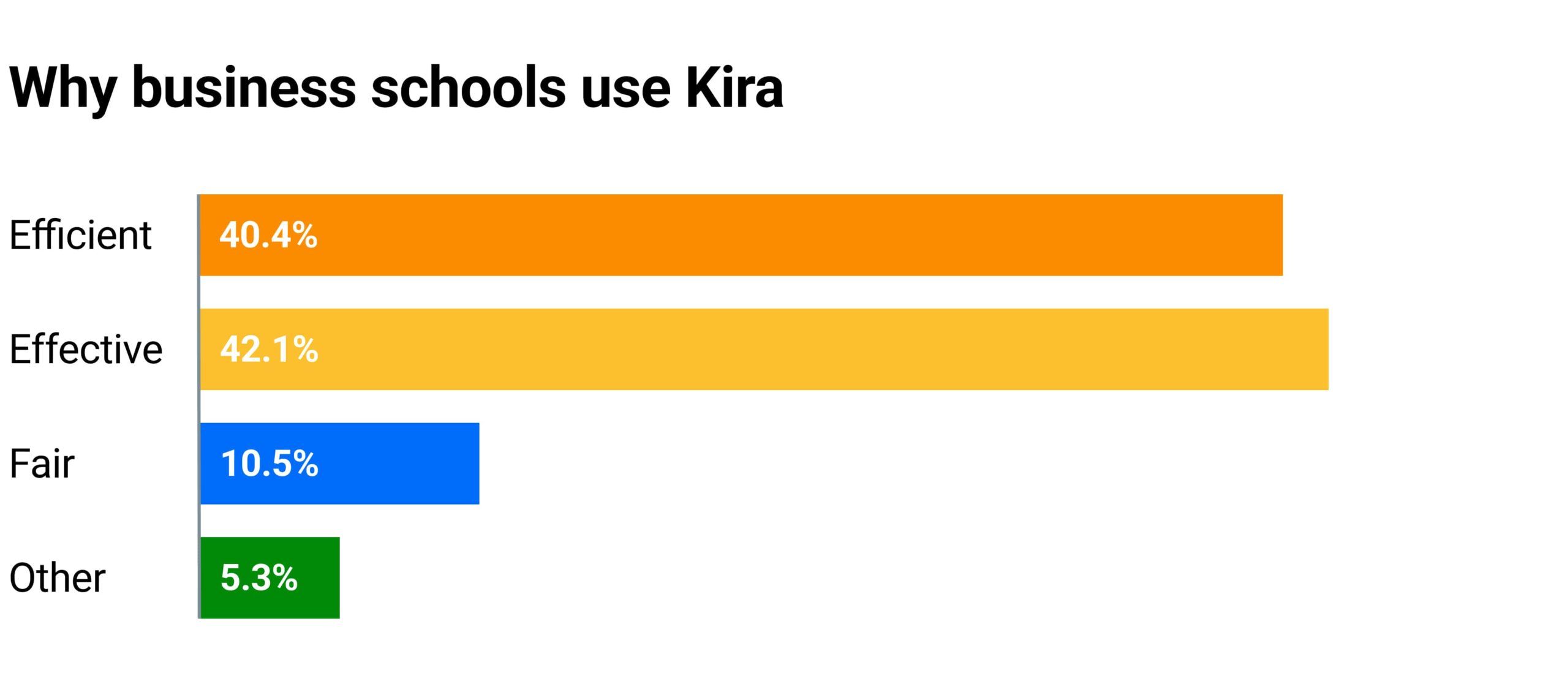
Although efficiency almost tied for the top spot, it was effectiveness where business schools really saw Kira’s value this year. From screening in applicants to engaging international candidates and determining scholarships, Kira Talent helped business schools identify and enroll their best-fit applicants.
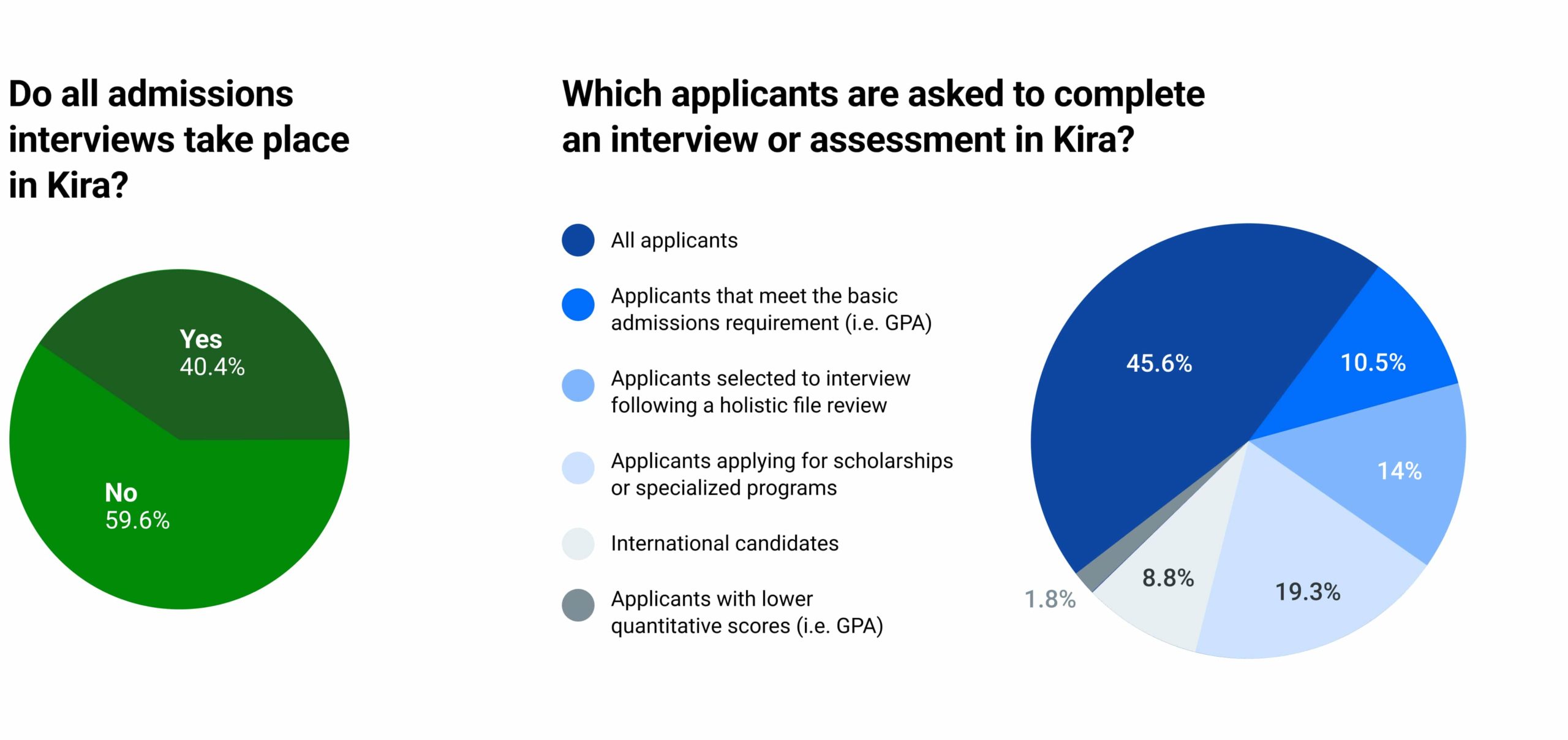
Most business schools used Kira’s Asynchronous Assessment to efficiently pre-screen applicants before inviting top candidates to a virtual or in-person interview. This year, 8.8% of Business Schools conducted both their pre-screening and selection interviews in Kira.
Learn more about how Kira Talent works for business schools
What’s top of mind for business schools in 2022?
 “Attracting and enrolling top candidates into our school”
“Offering a stable process for our staff and applicants”
“To continue refining the questions and tools we use to assess candidates' soft skills”
“Making the admissions process as smooth as possible for applicants and staff”
Medicine
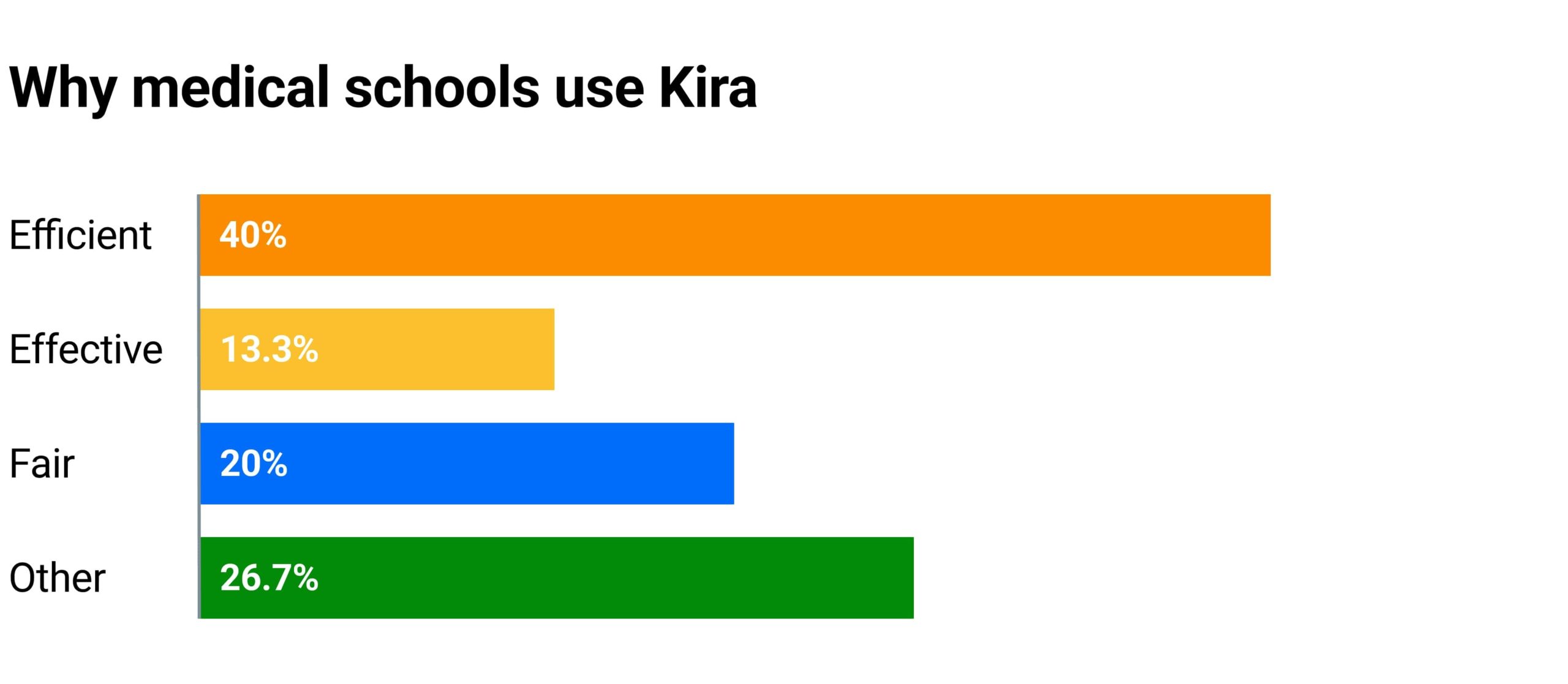
Efficiency was what set Kira Talent apart from other platforms in the eyes of medical schools this year. Whether it was Live Interviewing’s streamlined scheduling and automatic transitions or the flexibility of an MMI conducted asynchronously, Kira made it easy for medical schools to deliver successful MMIs in less time.
Learn more about how Kira Talent works for medical schools
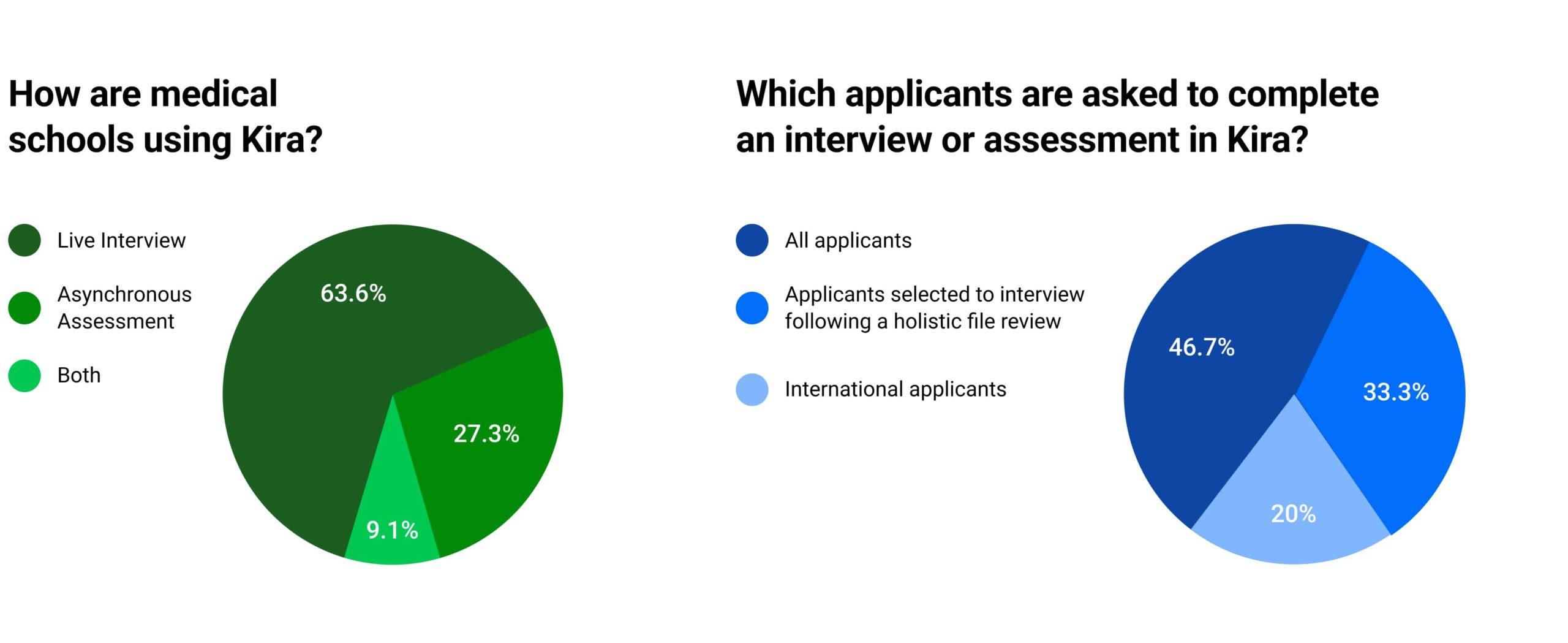
With the launch of Live Interviewing in 2021, programs can now run their MMI, panel or 1-1 interviews conveniently and with confidence on a platform trusted to power MMIs for top US and Canadian medical schools.
Discover how Live Interviewing is changing the game for medical school admissions.
What’s top of mind for medical schools in 2022?
“Constraints on interviewer/rater time and availability.”
“Creating a more accessible process while maintaining the mission and integrity of the program.”
“Maintaining deadlines and improving on last year’s CaRMS performance.”
Nursing
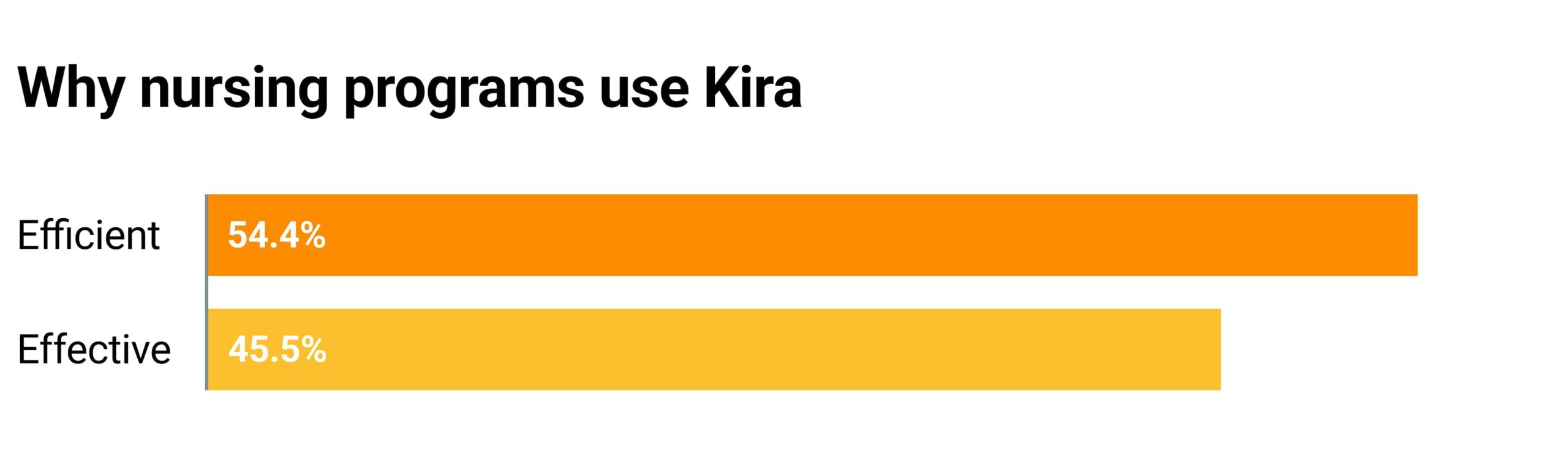
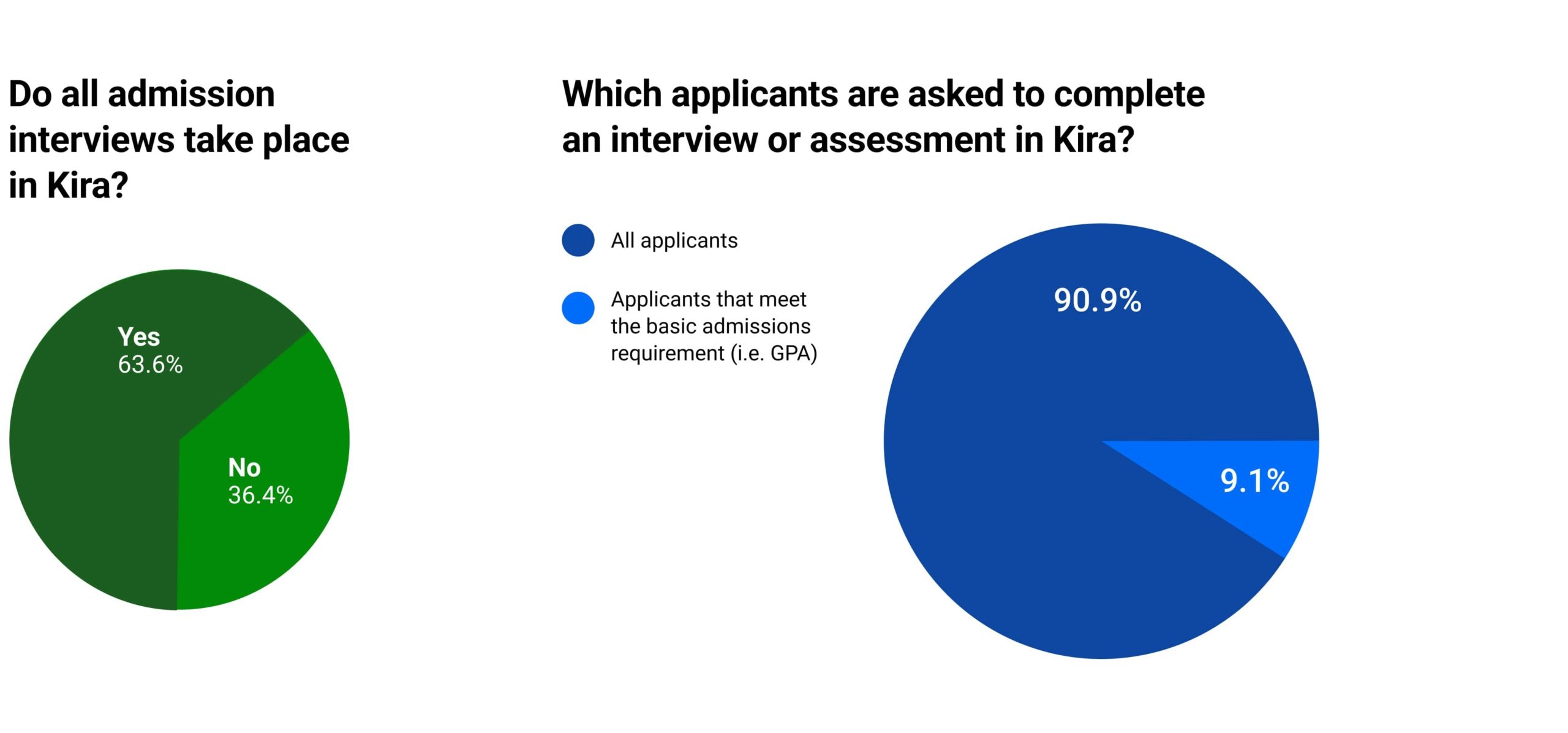
With over 90% of nursing programs using Kira Talent to interview or assess all of their applicants, it’s no surprise that efficiency was the favourite amongst nursing admissions teams in 2021. It’s also why the majority of these programs chose to transition their entire interview component online, hosting all of their admissions interviews in Kira.
Learn more about how Kira Talent works for nursing programs
What’s top of mind for nursing programs in 2022?
“Training our faculty so that they all review in a consistent way”
“Evaluating the admissions review process to increase efficiency and enhance effectiveness.”
“Accessibility of interviews for applicants and continuing to utilize a holistic application review process.”
Pharmacy
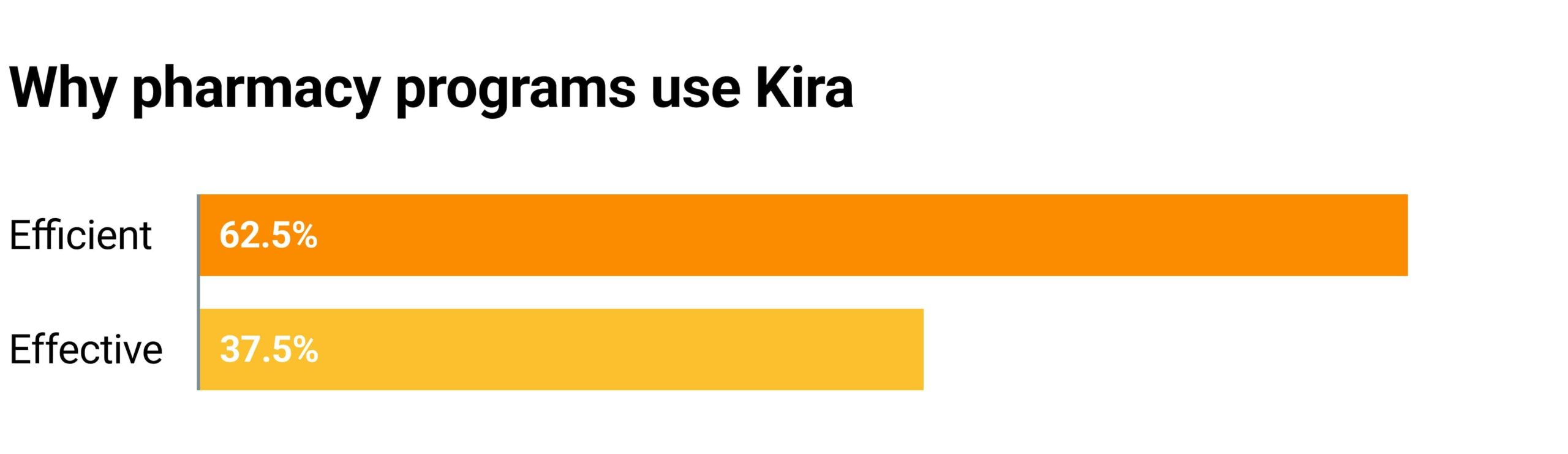
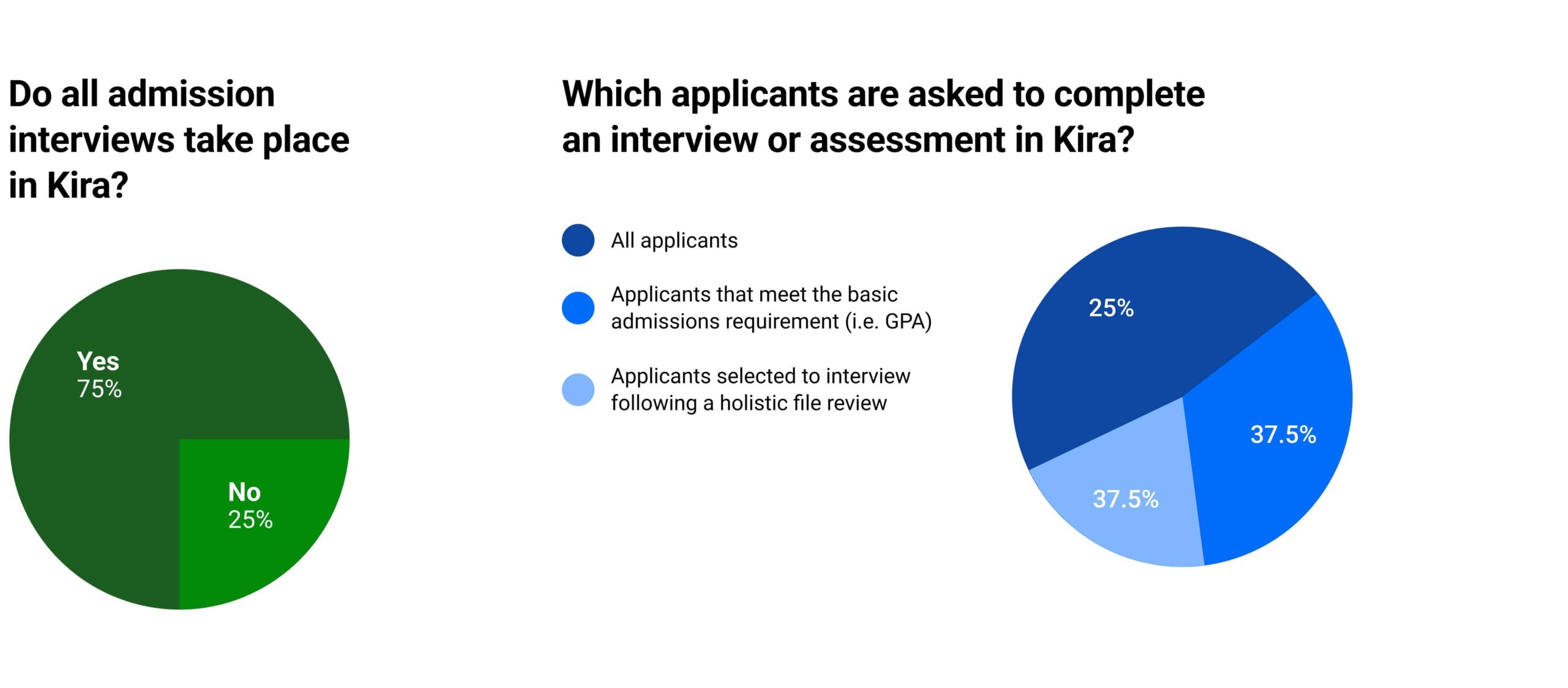
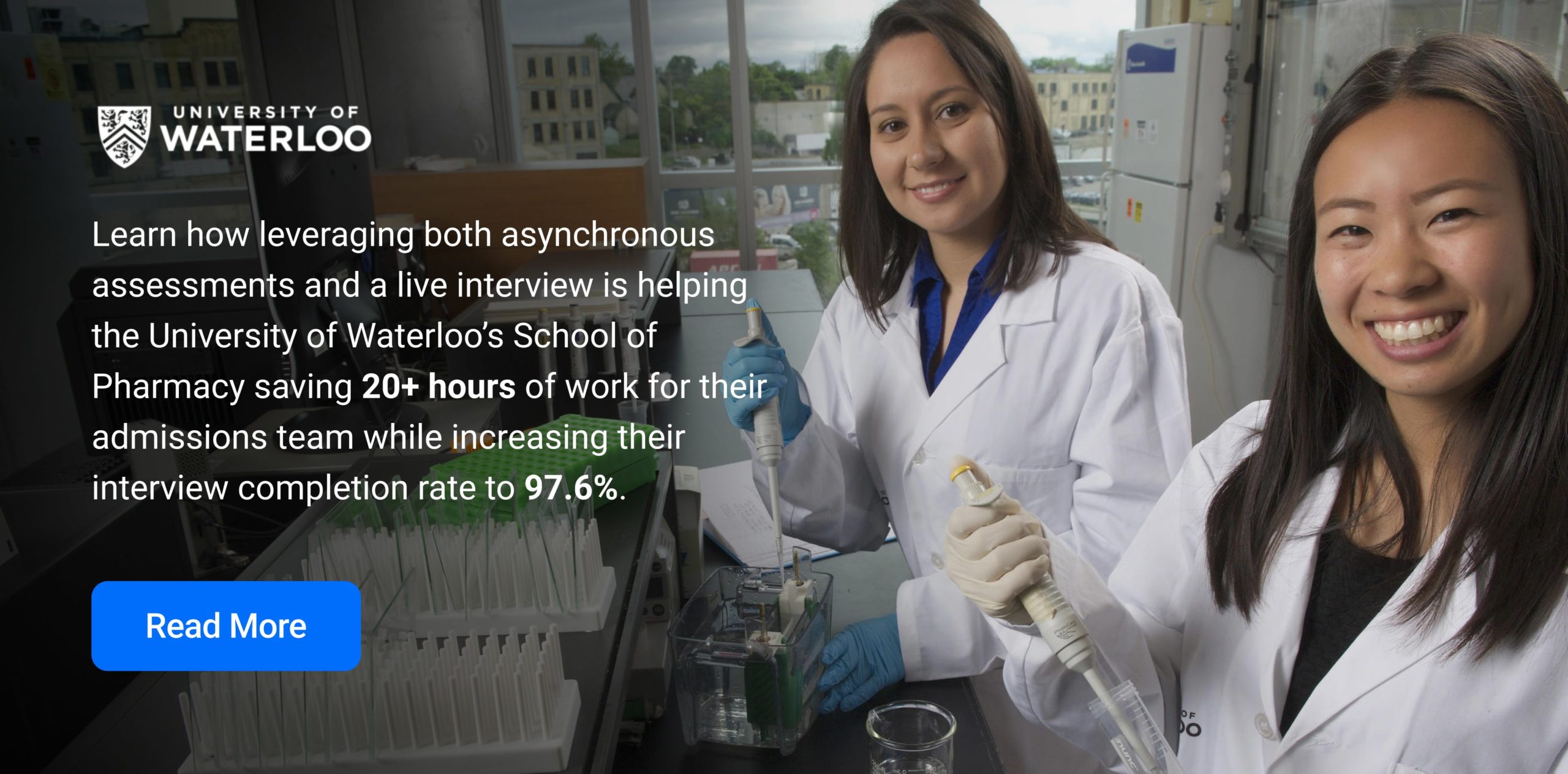
For pharmacy programs, efficiency was key in 2021. Whether they were identifying top candidates through an assessment to screen applicants in or out, conducting a final interview before sending out acceptance offers, this year’s pharmacy programs used Kira Talent to add value at various stages in the admissions process. In fact, 75% of those schools used Kira to conduct all of their interviews, and in one case that saved a school more than 20 hours of work within their 2021 admissions cycle.
Learn more about how Kira Talent works for pharmacy programs
What’s top of mind for pharmacy programs in 2022?
“Increasing enrollment”
“Ease of process for admissions”
“An equitable process, safety, and a great experience for applicants”
Dentistry
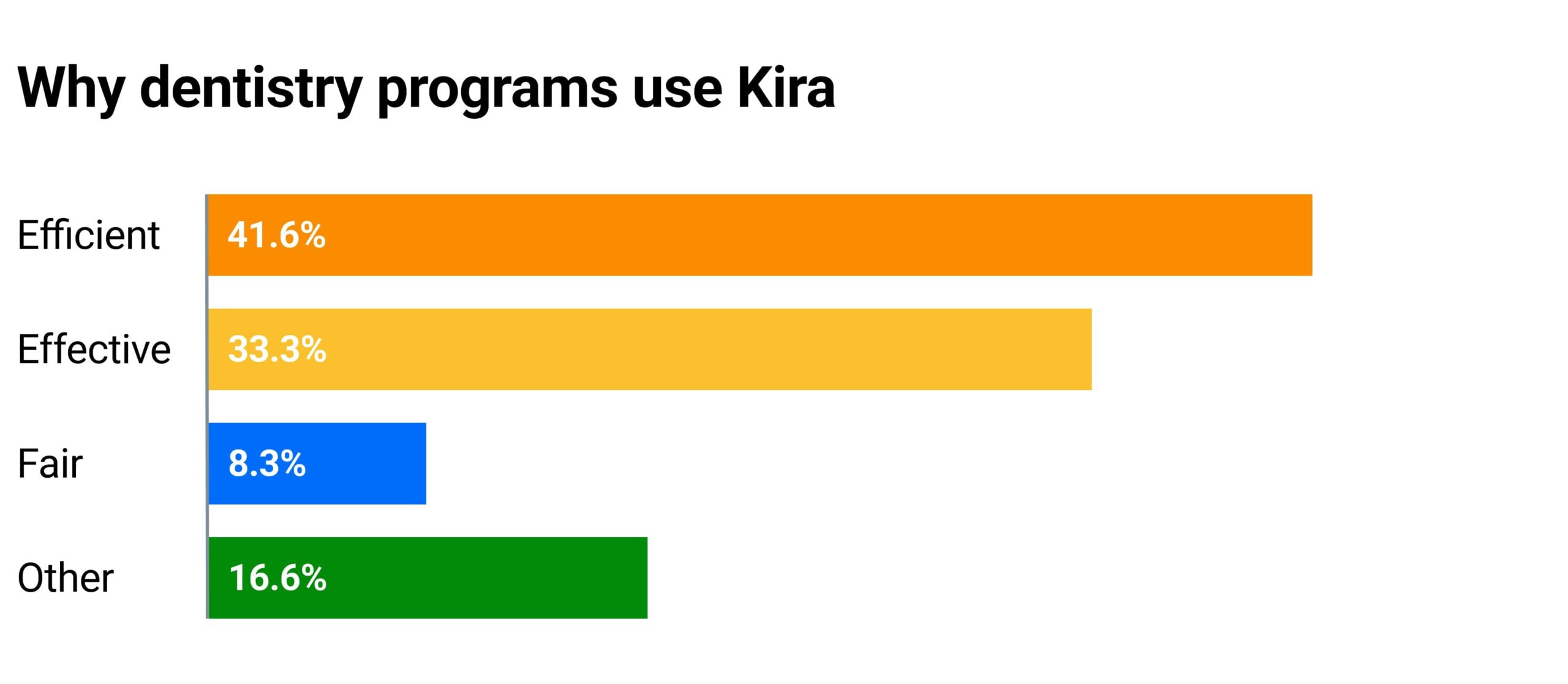
Efficiency was the top reason that dentistry schools used Kira Talent this year as the majority of schools chose to engage applicants through an on-demand assessment.
Learn more about how Kira Talent works for dentistry programs
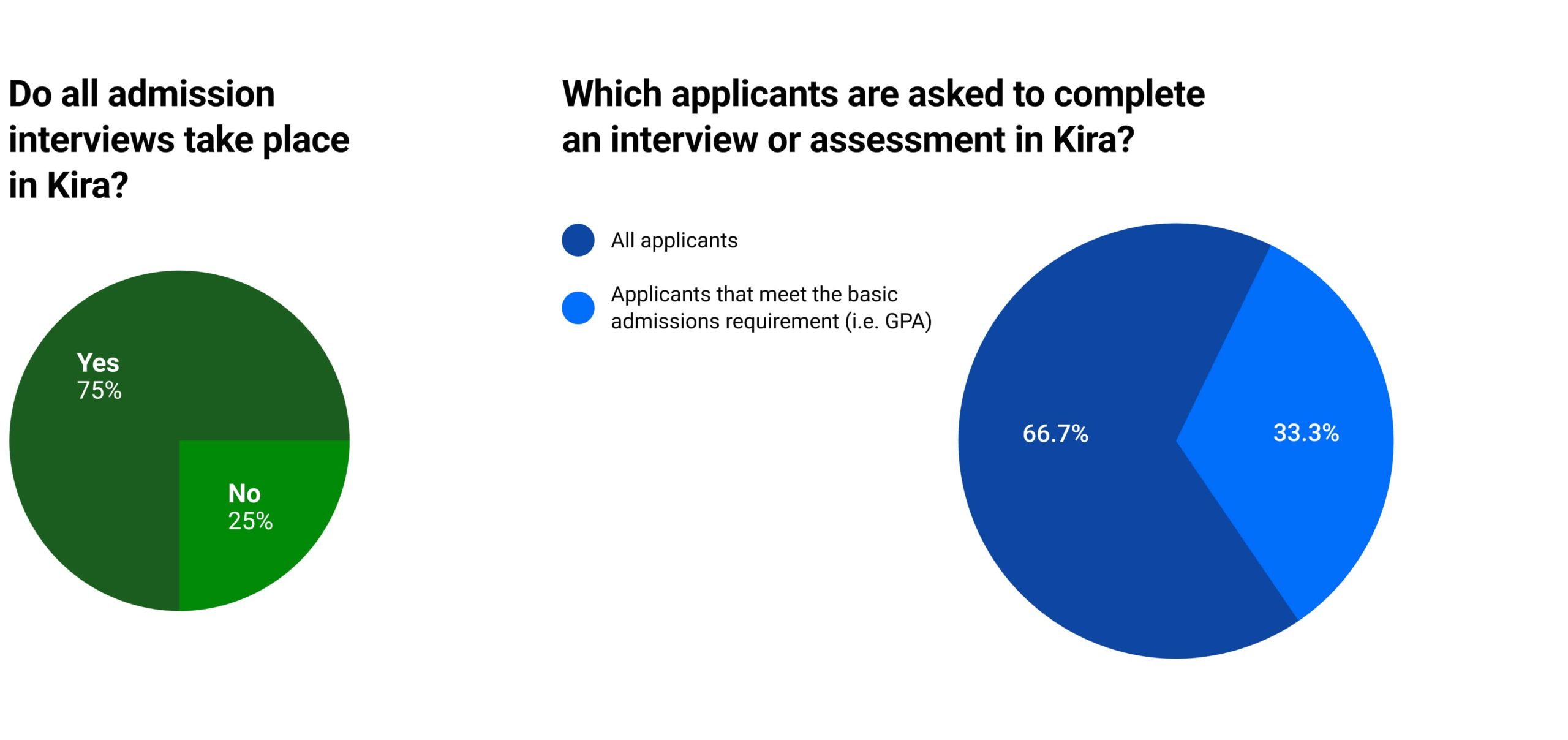
With 75% of dentistry admissions leaders having transitioned all of their interviews onto the Kira platform, the majority are using the added efficiency to offer every applicant the opportunity to interview and show their strengths in a more comprehensive way.
What’s top of mind for dentistry programs in 2022?
“Recruiting the best candidates possible”
“Creating stability for applicants as we continue to navigate the COVID-19 pandemic.”
Veterinary Medicine
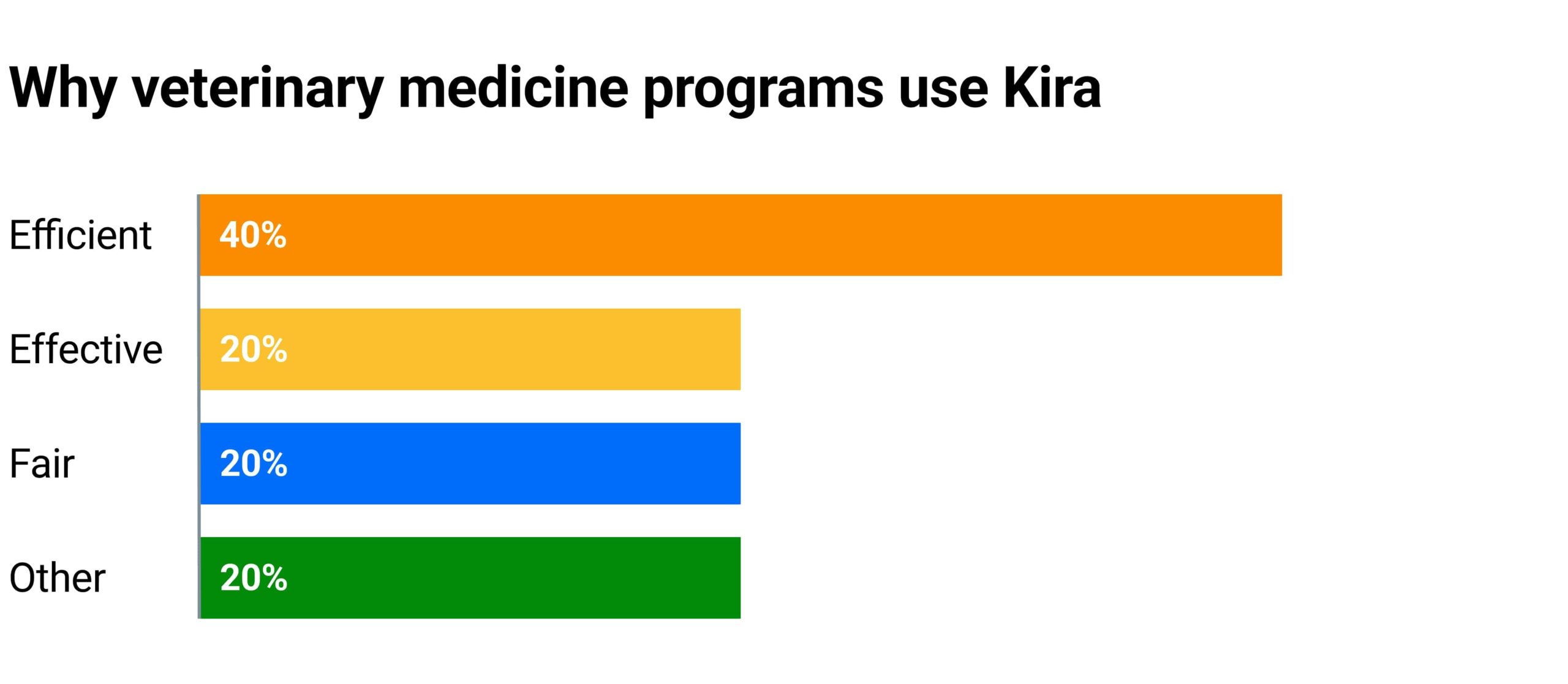
Efficiency was top of mind for veterinary medicine (vet med) programs in 2021 as 80% of them used Kira to replace existing interviews and create a more streamlined process for admin and applicants.
Learn more about how Kira Talent works for veterinary medicine programs
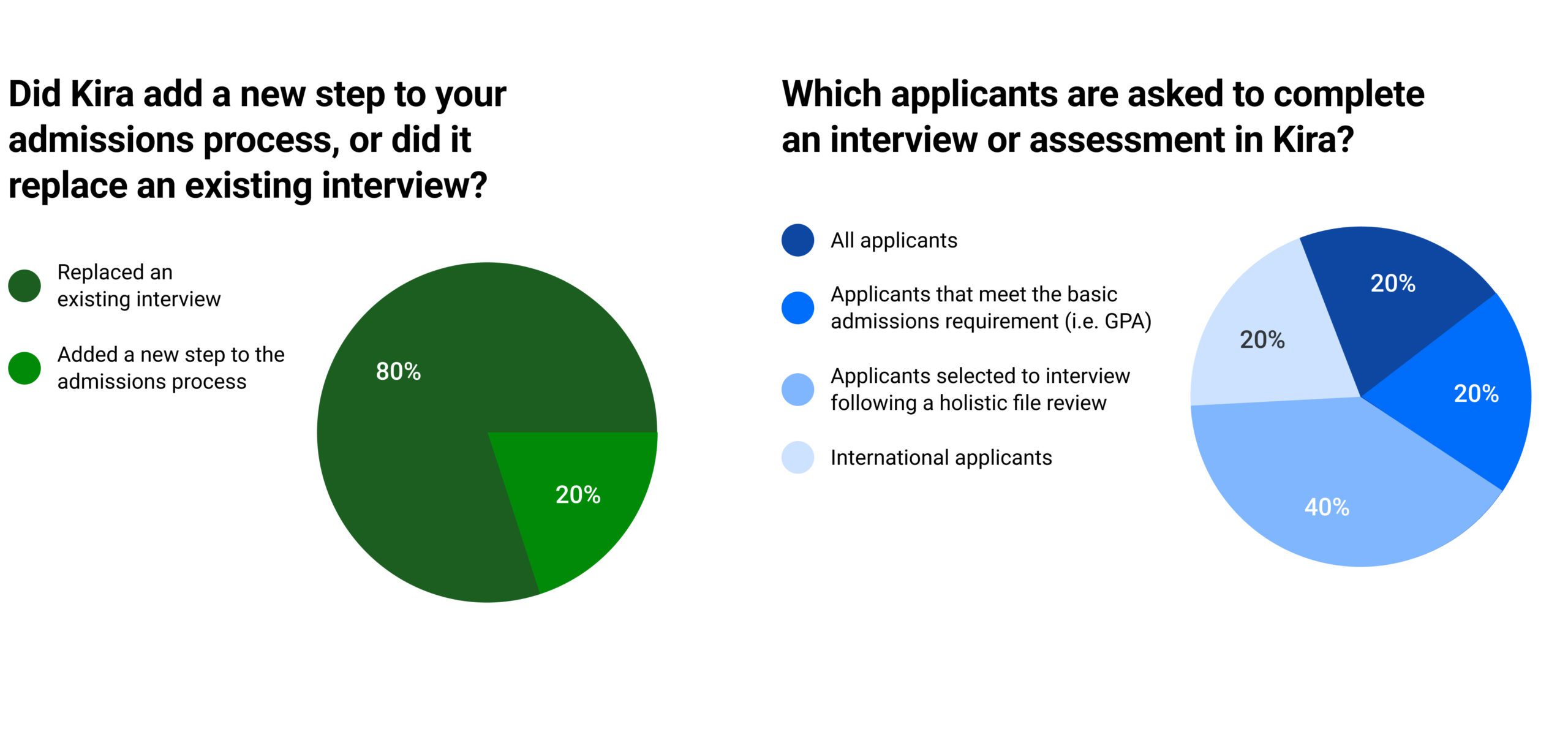
Vet med programs used Kira Talent to enhance their process in many different areas in 2021. Whether they were engaging all their applicants, creating connections with those applying from abroad, or getting deeper insights into top candidates, Kira’s customizable platform fit exactly where their process needed it to.
What’s top of mind for vet med programs in 2022?
“Efficient and flawless system that does not require time that we don’t have.”
“Accessibility for our international students to undertake selection assessments.”
Health Sciences
Other health science programs – physical therapy, physician assistant, optometry and midwifery, to name a few – had a smaller representation in Kira and were grouped together.
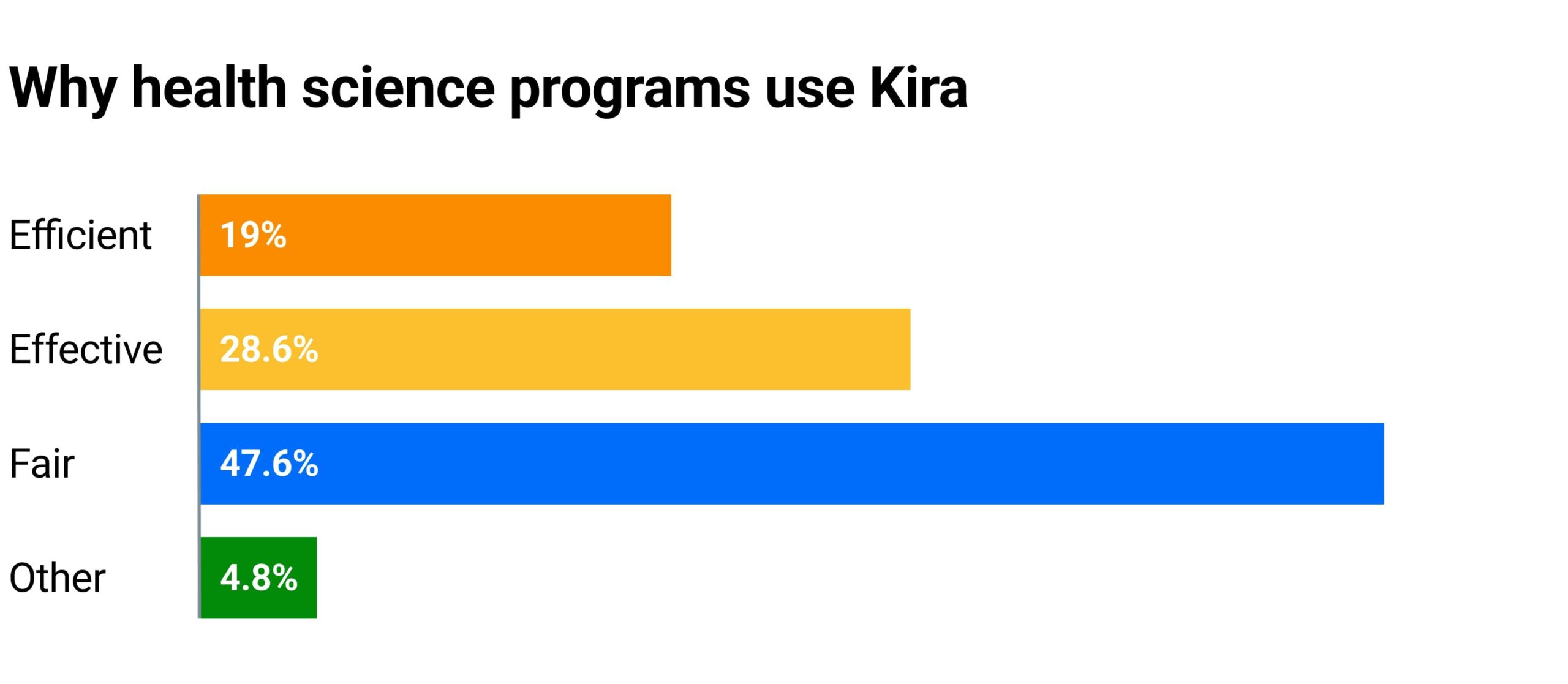
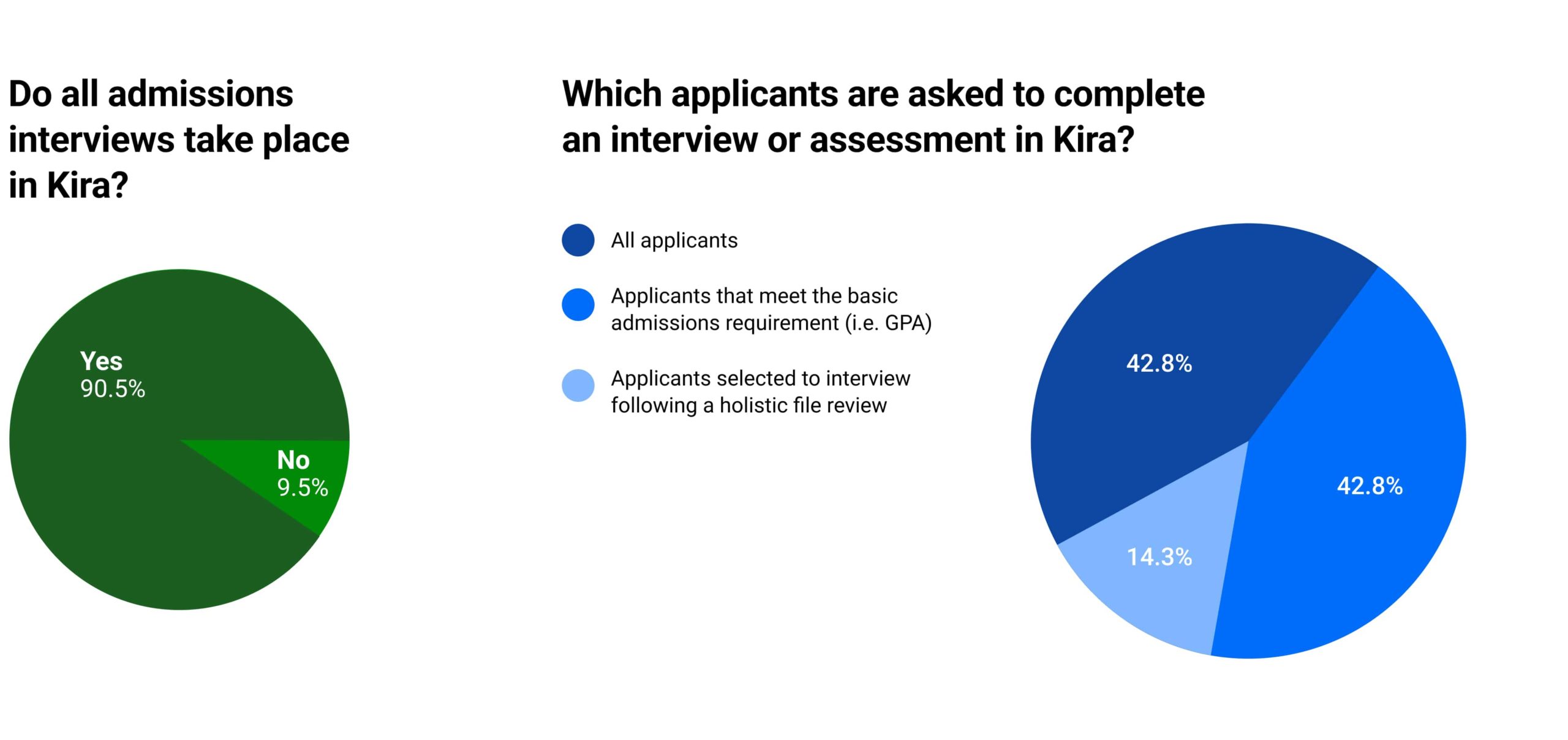
Creating a fair process was the main focus for health science programs in 2021. Whether it was through a structured asynchronous assessment or a live MMI, 90.5% of health science programs hosted all of their interviews and assessments in Kira Talent. Supported by structured rubrics and horizontal reviewing functionality, Kira helped them ensure that the interviewing experience is consistent across all applicants.
Learn more about how Kira Talent works for health science programs
What’s top of mind for health science programs in 2022?
“To expand the diversity of our reviewer pool.”
“Strengthening our commitment to holistic admissions best practices.”
“Maintaining organization and efficiency in our admissions process.”
Law and Humanities
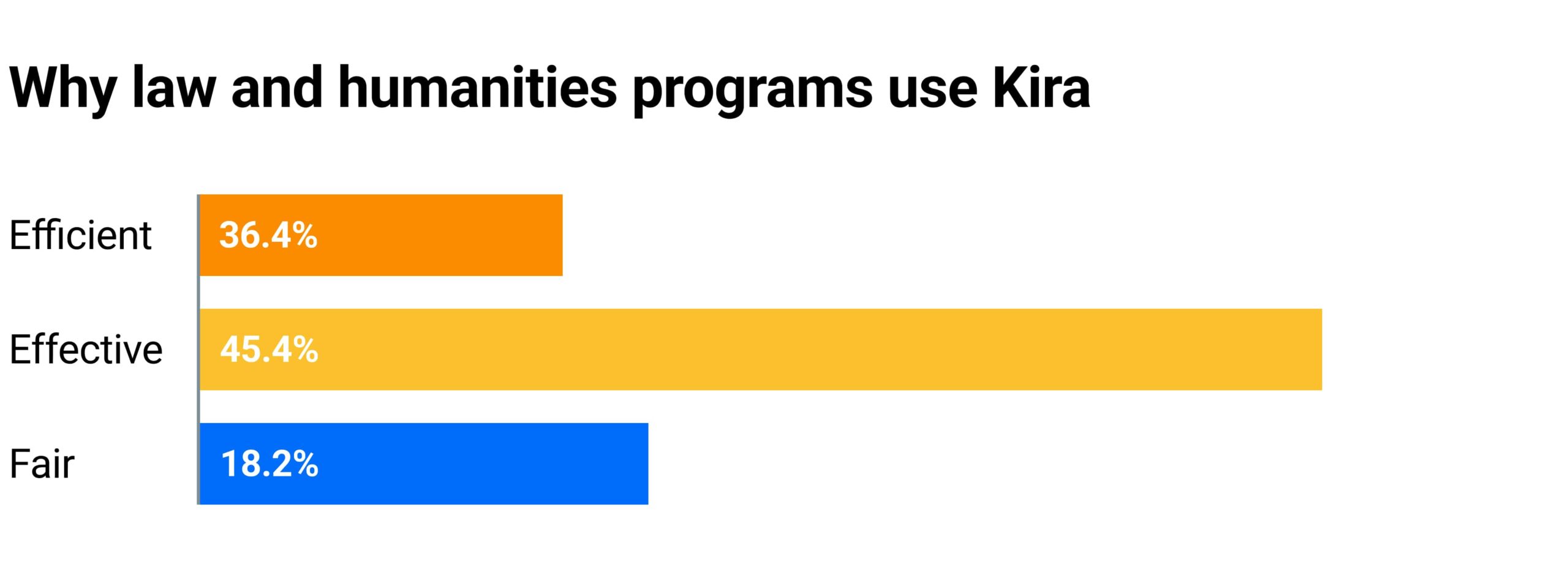
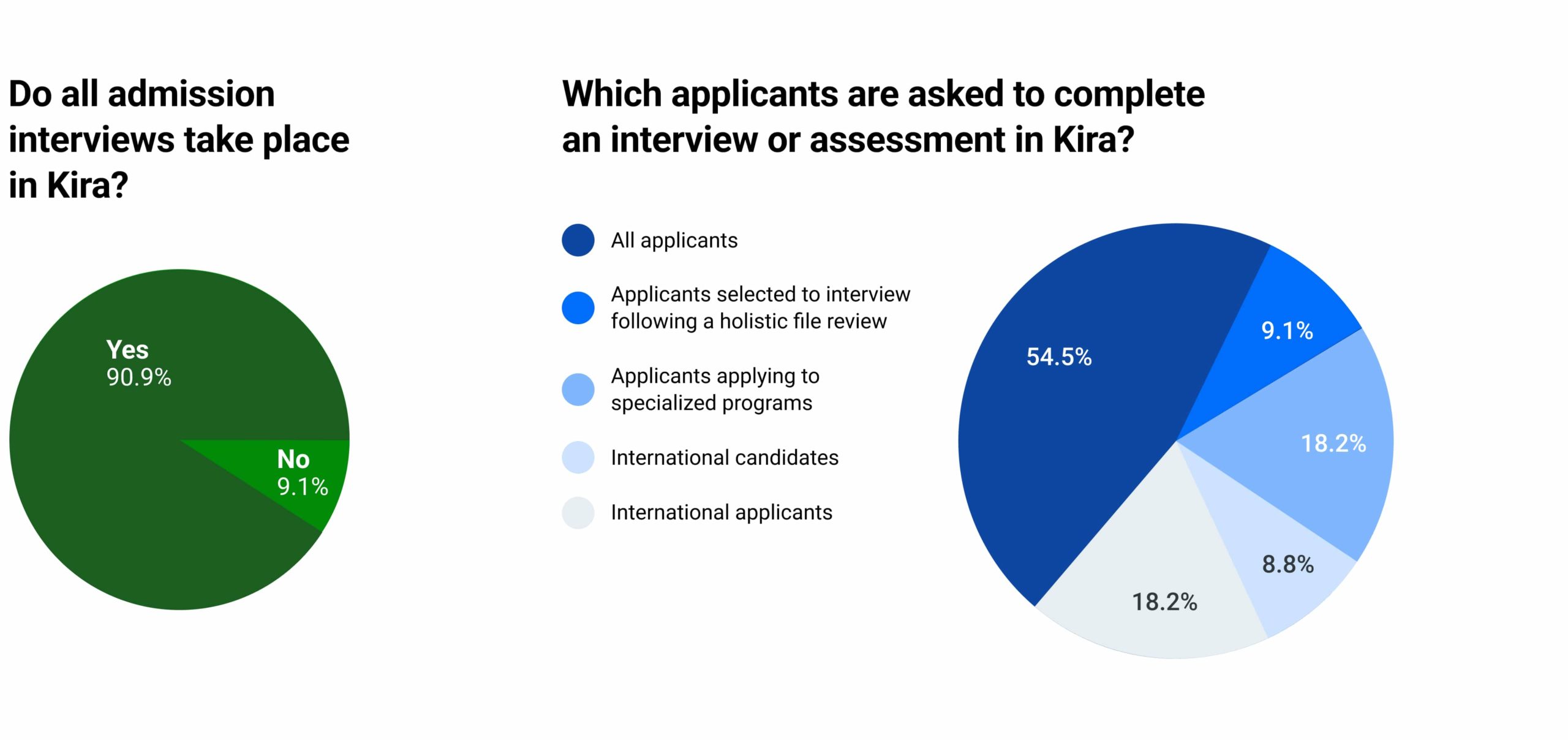
The majority of this year’s law and humanities programs are using Kira to replace an existing interview that wasn’t delivering the value or efficiency they needed. Naming effectiveness as the top benefit delivered by Kira Talent, over 90% of the programs conducted all of their admissions interviews in Kira in 2021.
What’s top of mind for law and humanities programs in 2022?
“To increase the number of qualified applicants to our programs.”
“Adding a qualitative assessment tool in lieu of standardized test scores”
K-12
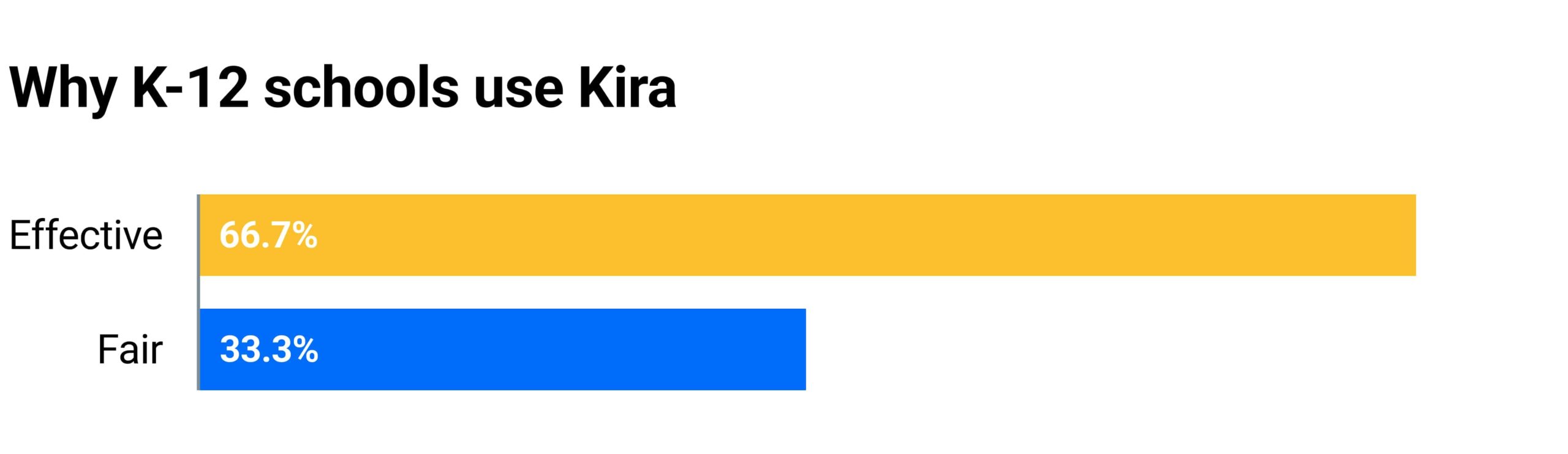
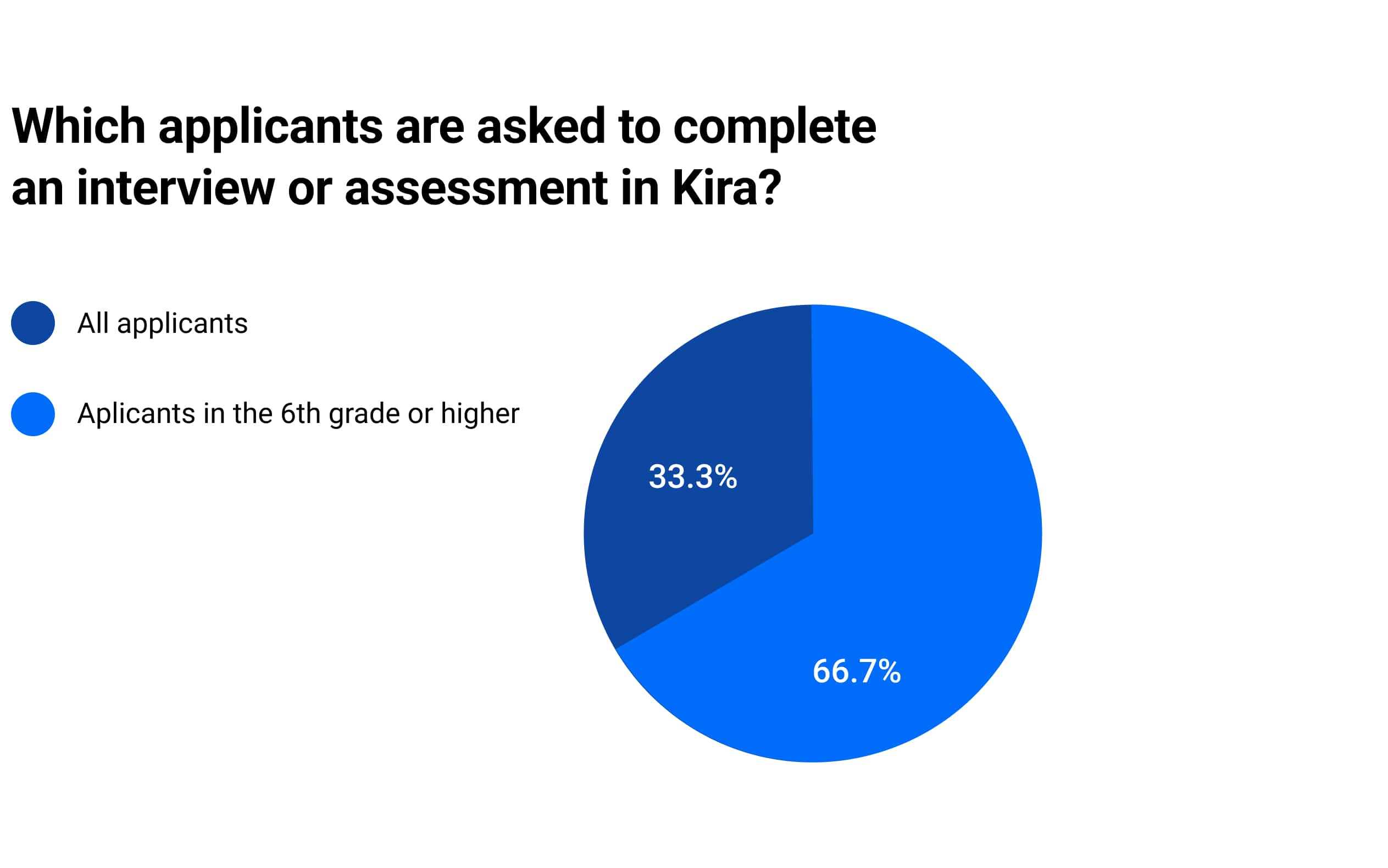
For 2021’s enrollment managers, Kira’s ability to effectively engage and assess young applicants' character and communication, while ensuring they meet a standard of fundamental skills, is by far the most important benefit of the platform. By allowing applicant families to complete the assessment when and where is most comfortable for them, Kira Talent helps our K-12 partner schools reduce the stress on applicants and their families, and gives students the opportunity to put their best foot forward.
What’s top of mind for K-12 schools in 2022?
“Maintaining a stable admissions process for families.”
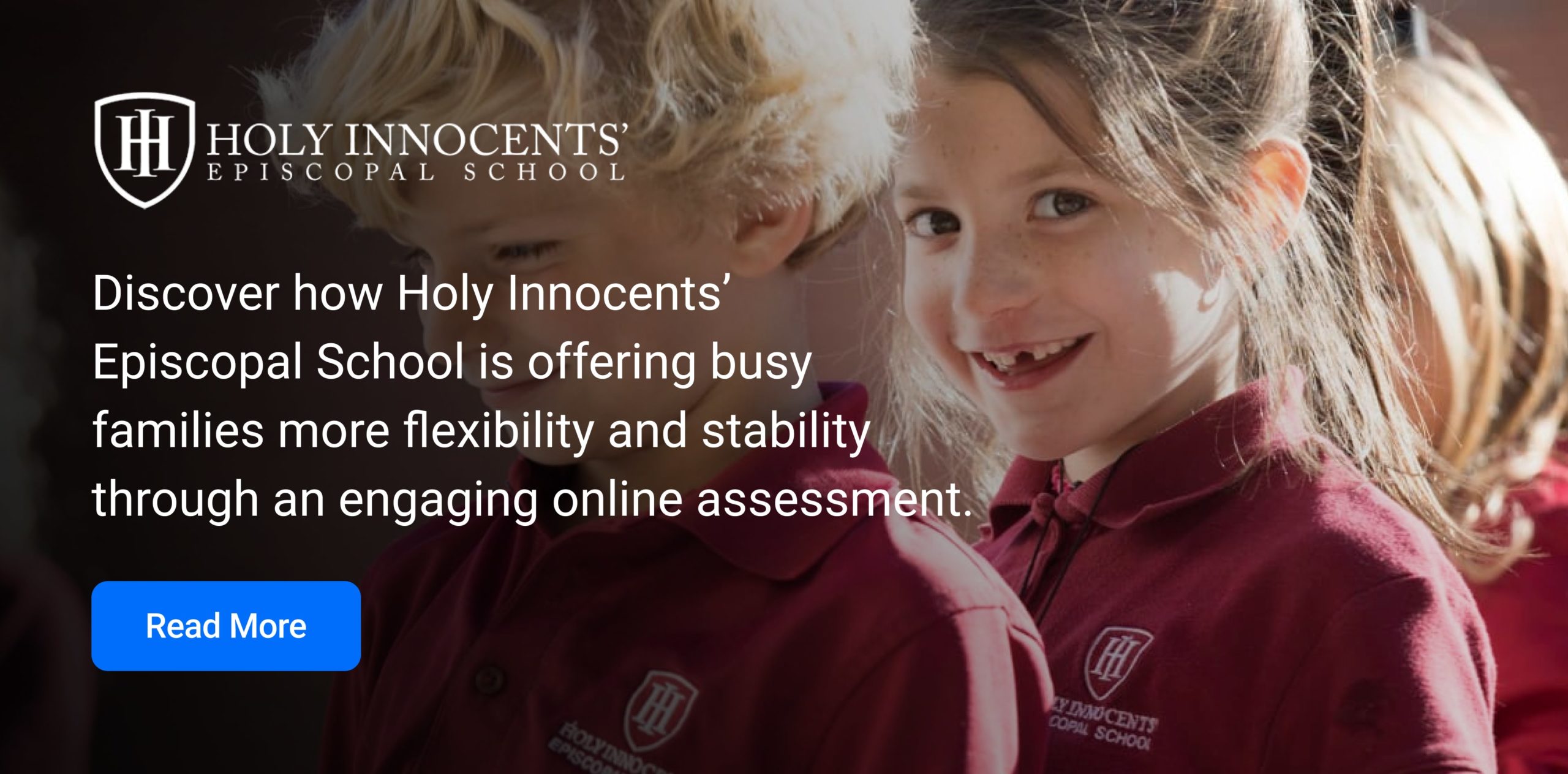
“Offering busy families the flexibility they need during the interview process.”
Click here to learn more about why we publish this data and how we collect and use client feedback
Reports from other years
Kira Client Experience Report 2020
“When COVID-19 hit, we kept waiting — like a lot of other schools — for things to go back to the way they were,” shared Dr. Angela Sullivan, Director of Admissions at the University of Alabama at Birmingham (UAB) Heersink School of Medicine. “Then we finally realized that, in order to deliver the kind of experience our applicants are looking for, we needed to go virtual.”
Like many medical schools, the UAB Heersink School of Medicine has iterated their MMI process several times in recent years. After trying to recreate a traditional MMI on Zoom, the admissions team soon discovered that using off-the-shelf tech for such an intricate process created more problems than it solved. From demanding DIY tech support, to scheduling challenges, to a year’s worth of lost data, UAB quickly realized that they could be getting so much more out of their interviewing process — if only they had the right tool.
With specific criteria in mind, UAB’s admissions team reviewed four different virtual interviewing solutions. In Kira Talent, they discovered a platform that could deliver their MMI online, while maintaining the precision and integrity inherent to the format.
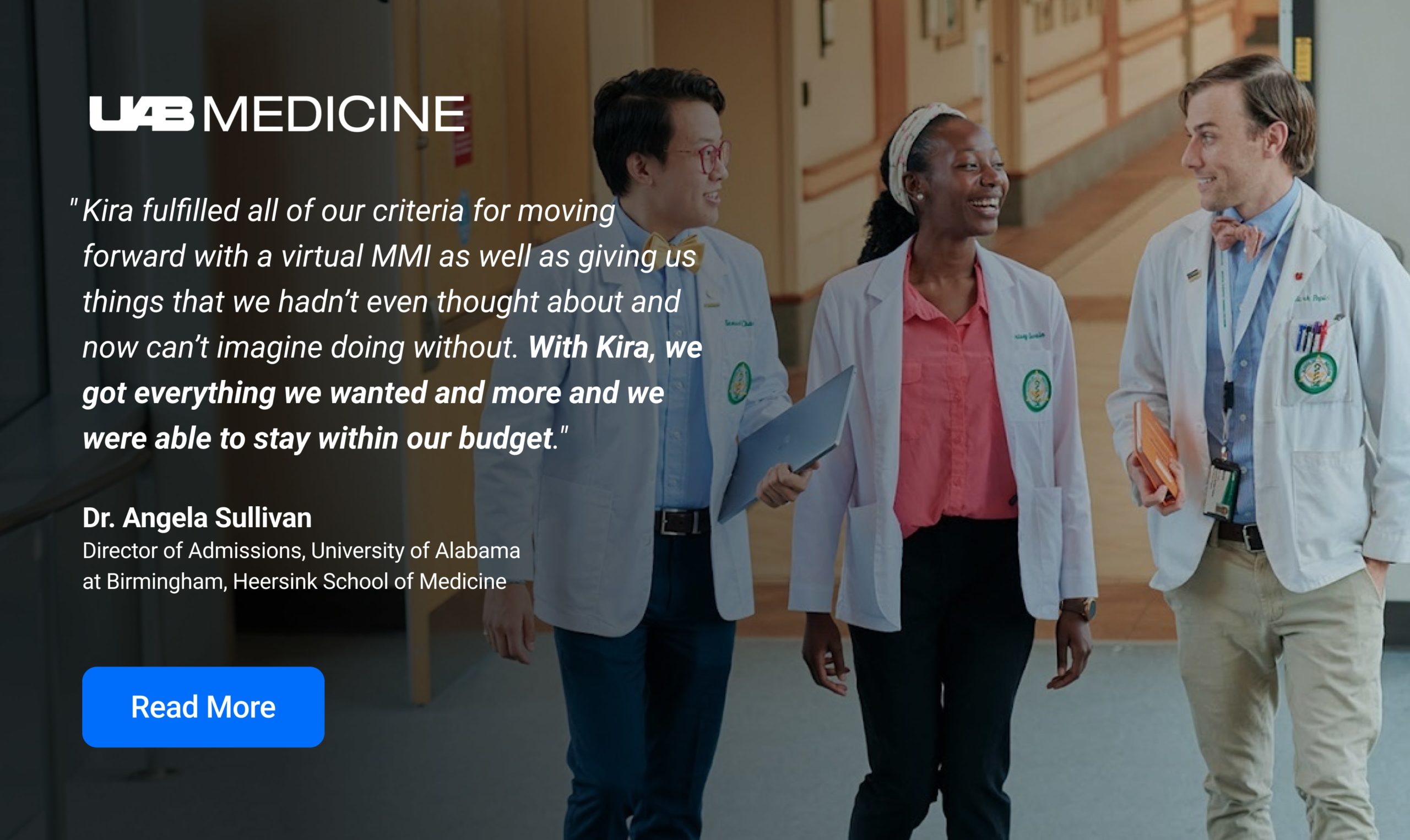
“Fulfilling all of our criteria and offering us benefits we hadn’t even thought of and now can’t imagine doing without, with Kira we got everything we wanted and more — all within our budget.”
How Kira fits into UAB Medicine’s process
Each application cycle, UAB Heersink School of Medicine accepts around 186 students across nine programs including a permanent care track, combined MDPHC, and several combined graduate programs.
Using AMCAS to gather applications, those who meet the minimum requirements are automatically sent a secondary application request which includes letters of evaluation. From there, successful applicants move through a screening process before being invited to interview.
“This application flow is happening constantly throughout the cycle,” shared Amanda Bosque, Program Coordinator at UAB.
Sending out enrollment offers on a rolling basis — from early decisions in October all the way through the last interview day in March — UAB’s admissions team is engaging with applicants throughout most of the year. “In this way, we can get applicants through the process a little quicker,” Bosque explained.
That efficiency was especially important in 2021 when the school saw a 26% increase in total applications. “There was a significant difference in total application numbers from 2020 to 2021, aligning with the increase we saw happening nationally for medical schools,” shared Bosque. “That increase translated to our interviews.”
“In years past, we typically interviewed around 485 applicants. With Kira, we were able to conduct 576 interviews — all in less time.”
Evolving the MMI for a new era
Achieving this streamlined process is the product of three years of evolution in UAB Medicine’s interviewing process.
“Historically, we would have nine Multiple Mini Interview (MMI) stations and one traditional 20-25 minute interview,” explained Dr. Sullivan. “In 2020 that all changed. We moved our process online with Zoom. That’s all we had, so that’s what we went with.”
“With Zoom we just weren’t able to run our interviews the way we wanted to,” she continued. “Recreating our nine station process was impossible, so to make it work we created a modified MMI. Instead of nine individual stations with one rater and one applicant, we had two raters with a single applicant as they went through three stations.”
“This was absolutely not ideal,” Dr. Sullivan added. “We just could not figure out how to reasonably run nine full MMI stations on Zoom.”
Approaching the 2022 cycle, UAB’s admissions team realized that the only way to move forward was to invest in an admissions interviewing tool that could deliver the same components of their traditional interview day in a virtual format.
Learn more about Kira Talent for medical schools
“We reviewed four possible solutions to conduct a virtual MMI,” shared Dr. Sullivan. “In addition to transitioning back to a nine station MMI, we laid out several other criteria. We knew that if we could find something that fulfilled our checklist, we would be really excited about it."
UAB Heersink School of Medicine’s platform criteria:
- Reestablish the integrity of the MMI
- Host simultaneous interviews
- Offer robust customization
- Support with a full-service solution
Reestablishing the integrity of the MMI
“With hundreds of applicants across nine different programs each moving through nine MMI stations, the data we produce from a single interviewing cycle is substantial,” shared Dr. Sullivan. “We look at this data every single year as part of our enrollment management process.”
A key focus of UAB’s process review centred around ensuring that the interviewing process is equitable.
“It’s really important to us to know whether our stations are affecting our applicants in adverse ways,” explained Dr. Sullivan. “For example, we’ve gotten rid of a station because there was significant data showing that applicants in certain categories were not performing as well.”
“Underrepresentation in medicine or in certain medical programs is something we’re very concerned about. We want to make sure that we’re not inadvertently putting certain groups at a disadvantage. Consistently reviewing the data from our interviewing process is one of the ways in which we’re working to remedy that.”
By switching to a modified three-station MMI in Zoom, UAB Medicine lost a whole year of data.
“We can’t compare that data to other years because it was such a different format,” Dr. Sullivan explained. “So having lost this data over the past year was a huge deal for us.”
With Kira's Live Interviewing, UAB has been able to transition back to a nine-station MMI format and has gotten back those important validity markers they were missing.
“We very briefly talked about sticking with what we were doing and keeping the modified MMI through to 2022,” Dr. Sullivan added. “I am so glad that we didn’t do that.”
Streamlining with simultaneous interviews
“When we were in person, there were at least two, and up to five different events going on at one time,” shared Dr. Sullivan.
A nine station MMI, 25-minute one-on-one interviews, an office of diversity and inclusion presentation, and various student panels were all happening simultaneously.
“With Zoom that just wasn’t possible,” Dr. Sullivan explained. “Not only was the juggling of multiple meetings and breakout rooms an onerous task, but with so much happening, Zoom would get really slow and the experience would get diminished or disrupted.”
Being able to have simultaneous interviews — on a platform that could handle the capacity — was a key factor in UAB’s decision to conduct their interviews with Kira.
“By moving back to simultaneous interviewing on the Kira platform, we’ve shortened our interview day by two hours.”
“It’s made it a lot more friendly for any parents who needed to get their kids off to school and then join the interview,” added Dr. Sullivan. “But mostly that time was taken off the end of the day so that both applicants and reviewers truly only needed to dedicate a half-day for our interviews.”
Learn more about Live Interviewing in Kira Talent
The flexibility of robust customization
“The other component that has really been a huge win for us has been the robust customization options that Kira offers,” Dr. Sullivan shared. “It’s one thing to talk about it when you’re trying to decide whether to purchase a product, but having actually lived in it this past year, you can feel the difference.”
Across the school’s nine different programs, Kira helped ensure that UAB Medicine was delivering a consistent interviewing experience while still allowing for personalization to suit the unique needs of each program.
“For example, one program needed two interviewers for each applicant,” explained Dr. Sullivan. “We simply told our Client Success Manager (CSM) and she took care of the adjustments for us. Another program didn’t want the closing video to play at the end of the interview, and again, we simply made the request and our CSM made the changes for us.”
“Having that level of platform customization, and also the level of highly personalized support from Kira meant we could spend less time managing the details of interviews and more time focusing on the overall admissions process.”
Saving time with a full-service solution
“There were quite a few aspects we struggled with when we had interviews in Zoom last cycle,” shared Bosque.
With hundreds of applicants and even more reviewers, each needing a unique set and sequence of interview links, scheduling was one of the most significant challenges with the Zoom process.
“Any time we had an applicant that cancelled or an interviewer that we had to replace, it was a lot of work on our end to move those people around and sort out that timing,” Bosque explained. “Because of that, my time last year was solely dedicated to interview logistics. Given the small size of our team, that was a really big depletion of resources for us.”
Another draw on UAB’s time came from managing technical support in-house. From poor network connections to camera and microphone problems, another member of UAB’s admissions team was focused solely on helping participants troubleshoot technical issues.
“We only have four people on our admissions team, so with one person dedicated solely to DIY tech support and one person dedicated to managing the links, that left only two of us to handle the rest,” shared Dr. Sullivan. “I can’t stress enough how much easier Kira has made that entire experience.”
Get insights into how other programs are using Kira — and where they see its value — in the Kira Client Experience Report
“With Kira, we estimate that we save over 30 hours from not having tech-check meetings alone.”
“To ensure that our participants felt prepared for their Zoom interviews we implemented what we called ‘tech checks’,” she explained. “At a minimum, we were hosting two tech checks each week, one for applicants and one for interviewers. However, with many of our interviewers and raters being physicians or med students, they just weren’t able to get to those tech checks. So realistically we were hosting three or four tech checks each week so that 30+ hours is probably grossly underestimated.”
“It got a little bit ridiculous,” she added, “but you do what you have to do to make sure that your people are comfortable.”
With Kira, ‘tech checks’ are built into the platform and are offered asynchronously, allowing participants the ability to confirm that everything is working as many times as they like, without any assistance from the admissions team.
Now, with Kira Talent, Bosque can get back to helping her team engage their applicants.
“Not having to schedule infinite tech checks each week, not having to reorganize and reschedule breakout sessions when there were cancellations or substitutions were needed — all of this has made our process Kira stress-free and hassle-free,” Dr. Sullivan shared. “Our team really did the best with what we had before, but it is not what we’re meant to do.”
“Having that full-service operation behind us allowed us to get back to what we’re really here for, which is to engage and assess the applicants.”
The future of admissions for UAB Medicine
“We are a four-campus institution at UAB, meaning we have campuses in Huntsville, Tuscaloosa, Montgomery, and Birmingham,” Dr. Sullivan shared. “With Live Interviewing in Kira, our faculty and students on all four campuses are able to engage in our interviewing process, which means that we now have actual representation of our university in our admissions process.”
“That benefit hadn’t honestly occurred to us, but it has been felt and mentioned by our staff and students, as well as higher leadership.”
The increased accessibility of UAB Heersink School of Medicine’s admissions process has also been felt by applicants.
“With our virtual admissions process we are no longer forcing applicants to make a decision on their schooling based on whether they can afford to travel to an interview or not,” Dr. Sullivan explained. “Instead, we now host visiting days for accepted students.”
Discover what applicants have to say about their experience with Kira Talent
“There’s something very different about visiting campus on interview day compared to visiting when you’re already admitted,” she continued. “Not only does this relieve that cloud of interview stress that can cast a shadow over the visit, but the ability to afford a trip to campus doesn’t affect an applicant's ability to apply.”
“As many schools try to decide whether or not to stay virtual going forward, that’s a significant factor and is part of the reason why so many of us have decided to stay virtual."
Read more case studies on how leading schools are setting their processes up for future success
While 2021's applicants are pursuing a wide variety of professions, from medicine to business to engineering, there is one thing they all have in common: they are trailblazers.
From fully remote to various styles of hybrid, 2021 saw schools redefining what the future of higher education will look like, from admissions to in-classroom instruction. This year’s applicants were the first to showcase their passions and talents through these new processes.
That’s why this year’ s applicant experience report is more important than ever. Seeing an almost 20% increase in applicants, more interviews and assessments were completed in Kira in 2021 than ever before. And with the launch of Live Interviewing, these applicants also had the opportunity to interact with their interviewers and evaluators in brand new ways.
Whether they were experiencing the Kira platform through our new live video interviewing, or our applicant-favourite Asynchronous Assessment, discover what the applicants of 2021 had to say about their experience with Kira Talent.
What was new for applicants in 2021?
This year Kira brought a whole new way of interviewing to our clients. Purposefully built for admissions interviewing, and fully customizable to your unique process, Live Interviewing in Kira Talent is a game-changer for admissions.
With Live Interviewing making its debut in early 2021, we saw applicants embrace the real-time connection they had been missing during the early stages of the pandemic, while being delighted by the convenience of a video interviewing tool that “just worked the way you expected it to”. It was validating to hear that the effort we poured into creating a video interviewing tool that delivered a more engaging, personalized, and stress-free virtual interview, resulted in an experience that applicants described as miles ahead of their previous video interviews.
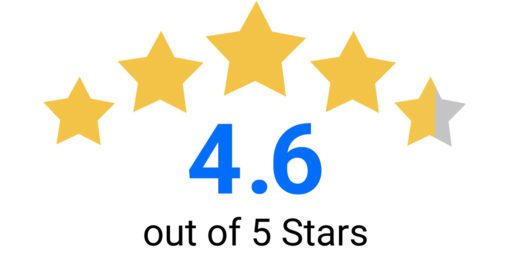 Maintaining last year’s record 4.6/5 star applicant rating, we are thrilled to report that applicants are continuing to love their experience with Kira, whether it’s on-demand or in real-time.
And that’s just the benchmark we’re setting for ourselves. Since its launch, the team at Kira has continued to make improvements to Live Interviewing; adding to and refining functionality, boosting load capacity and enhancing the overall experience.
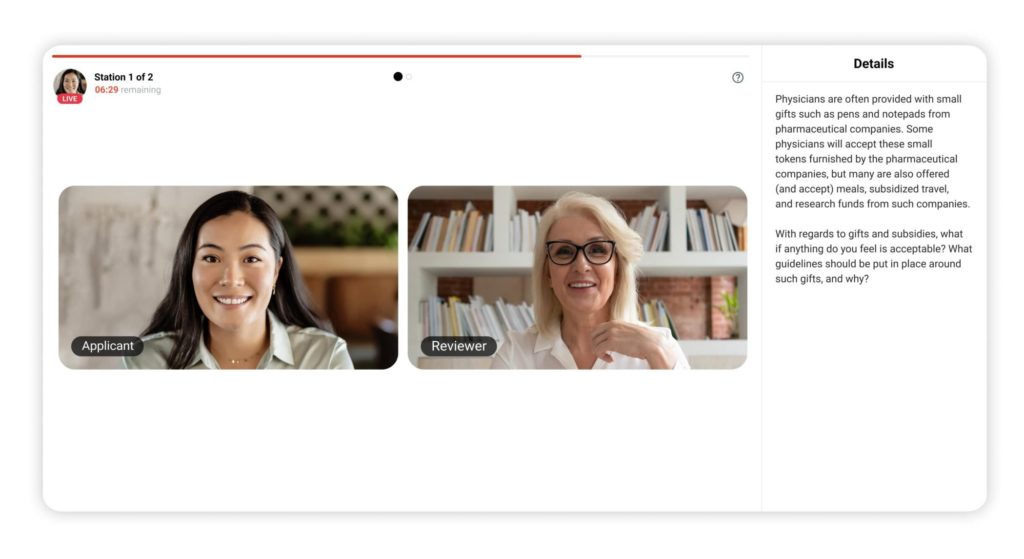
Learn how Live Interviewing is setting the stage for admissions in 2022
By the numbers
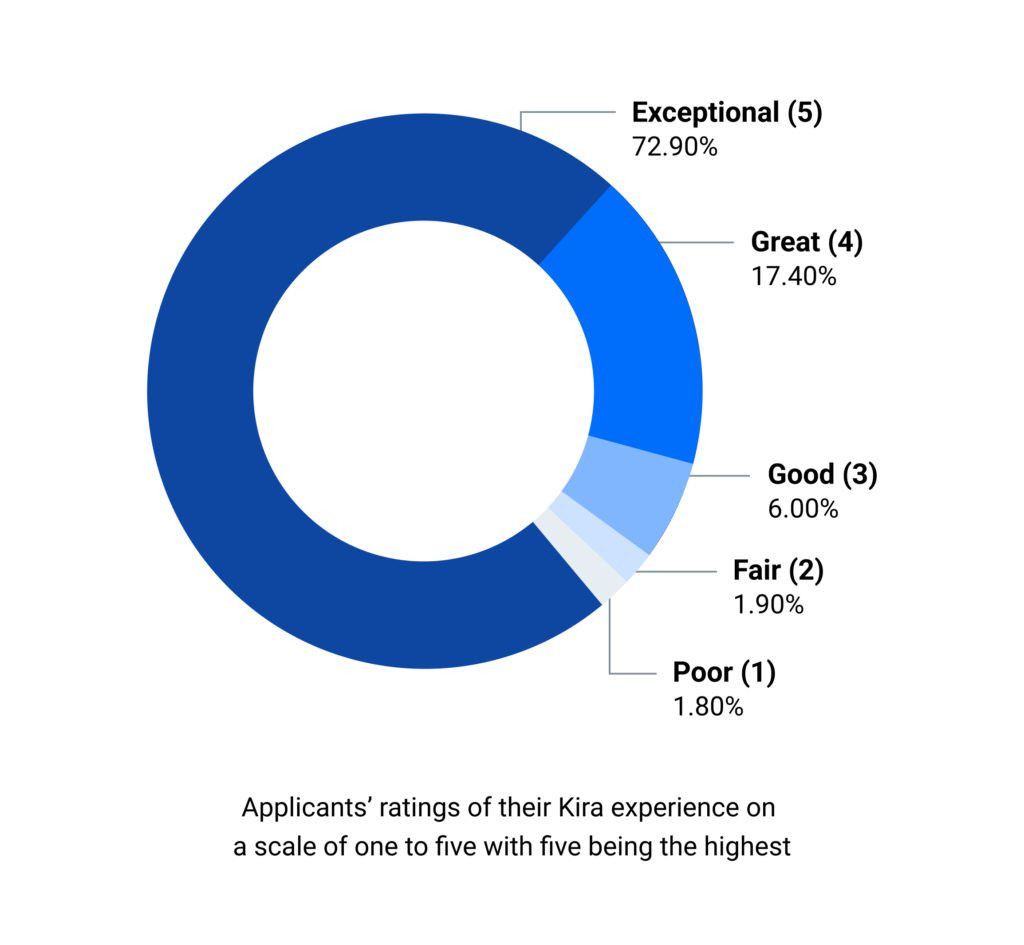
90.3% of applicants rated their Kira experience either “Great” (4/5) or “Exceptional” (5/5)
For our team at Kira, this is everything! We’re thrilled that applicants are continuing to feel empowered while sharing their stories via Kira, and we’re ever-expanding the ways in which they’re able to do so.
The average rating was “Exceptional” (4.6/5)
Maintaining our “Exceptional” rating from last year, we’re especially proud of how this is reflected in applicants' experiences with Live Interviewing right out of the gate. As we continue to build new products to better serve admissions teams, our partner schools can be confident that we’ll continue to deliver on our promises.
1.8% of applicants rated their experience as “Poor” (1/5)
Although we always love to hear about applicants’ great experiences, it’s from this small group that we often get great insights for future improvements.
We’ve already been able to address many of the concerns that these applicants had, from enabling them to test their speaker prior to their interview, to an auto-save feature for written responses.
Another common concern we heard from applicants was the time limitations they were given during their assessment. Given that prep and response times are determined by our partner schools, we’re able to anonymize this applicant feedback and share it with the respective program, ensuring they get candid feedback directly from their applicants.
97% of inquiries were solved instantly by Charlie
From device management to network issues, we all need a little help sometimes! Luckily for applicants, Charlie the chatbot is on-hand to instantly provide answers. And for the 3% of questions that Charlie couldn’t answer? They went straight to our applicant support – ensuring that the teams at our partner schools never have to moonlight as IT support.
Over 91% of applicants who left feedback on support rated their experience as "Great", given the options of "Great", "Okay", and "Not Good".
A small but mighty 1% increase from last year’s report, we’re proud to share that applicants are continuing to have such positive experiences interacting with our support team at Kira.

By the comments
Here at Kira, we stand by the knowledge that numbers can't capture a whole story. Here's what applicants had to say in their own words...
Applicants loved the seamless and professional experience with Kira
The most popular feedback we received this year focused on the overall ease and professionalism that the Kira experience offered. Compared to the complicated link-juggling and impersonal interfaces they encountered in other admissions processes, applicants felt that the personalization and professionalism offered by the Kira platform helped our partner schools stand out.
 “This was an excellent interview experience. Everything worked perfectly. It was basically the same as an in-person MMI. I definitely recommend this interview platform for future medical school interviews.”
Looking to conduct a virtual MMI? Discover how Kira makes it convenient for your team
“It's like everything was done for me and all I had to do was click start.”
 “Very user-friendly, great design and I liked that actual humans ask us the questions through video.”
“Efficient and reliable. The structured approach allowed me to concentrate on the question at hand rather than the technicality of the app.”
 "I think the platform is wonderfully designed and very easy to use! I really like that the practice questions are available so people can get a handle of how the actual interview will run.”
Hands-on support was there to help applicants, and they noticed
“Kira Talent customer service is definitely the best. I was able to get immediate responses to my emails and they helped me out very much. I am looking forward to using Kira Talent in the future as well! Thank you :)”
“Great support team, got back to me as soon as I had a question!”
With Kira, applicants are fully supported throughout their interview or assessment without putting the onus on admin teams.
Some applicants wanted a little more time...
“The questions are very interesting, but I really hoped that we could have more time to deliver our answer, as some questions are very complicated and can be answered from different perspectives.”
“I would recommend a little more preparation time so the responder has more time to organize their thoughts. An increase from 30 seconds to 45 or even a minute would be helpful.”
Kira’s fully customizable platform gives your team creative control — which includes deciding how much prep and response time your applicants will get. To find the best fit for you and your applicants, we always share their anonymized feedback so you and your dedicated Customer Success Manager can optimize any and all parts of your process as needed.
Overall, applicants felt they could fully express themselves
“This interview had some intelligent questions that grasp your ideologies and thoughts from your mind.”
“Was awesome. I enjoyed the questions and how they made me examine myself and my inner thoughts.”
“Makes you think on the fly and makes you reflect on what you've done to answer those questions.”
Reports from other years
Kira Applicant Experience Report 2022
Kira Applicant Experience Report 2020
Kira Applicant Experience Report 2019
Kira Applicant Experience Report 2018
Kira Applicant Experience Report 2017
Regardless of how you may go about it, admissions can never be completely objective.
But that’s not necessarily a bad thing. Learned experiences help the tens of thousands of admissions professionals around the world identify the best and brightest amongst a pool of applicants. After all, engaging, assessing and admitting tomorrow’s leaders requires more than a computer algorithm with a checklist — it requires that human touch.
The goal, then, is not to train biases out of your admissions team, but to build a process that mitigates the biases that give some applicants an unfair advantage over others.
With that in mind, we sat down with Jamie Young to discuss the presence of bias in admissions and what schools can do to minimize its impact.
Having worked in higher education admissions for over 12 years, Jamie Young has brought his insights and expertise to Kira Talent over the past three years. In his role leading the Client Success team at Kira, Jamie sees first-hand how schools around the world are addressing the challenge of bias mitigation in admissions — often when time and budget are limited.
We asked Jamie to share what he has learned from his experiences as the Director of Recruitment and Admissions for the Full-Time MBA at Rotman School of Management, and the Associate Director of Admissions and Recruitment at the Sauder School of Business. Below you’ll find suggestions for how your school can optimize the practice of addressing bias in your admissions process.
Discover:
Why bias mitigation is so important
How Kira helps mitigate admissions bias
The nine forms of bias in admissions
- Groupthink effect bias
- Halo effect bias
- Confirmation bias
- Ingroup bias
- Conservatism bias
- Bizarreness effect
- Stereotype bias
- Status quo bias
- Recency bias
Want to take it home? Download the how-to guide to reducing admissions bias at your school.
Why is bias mitigation so important for admissions teams today?
Jamie Young (JY): When we as admissions professionals consider the landscape that’s in place today there seems to be a spectrum. On one end there are the traditional admissions processes that rely on grades and standardized tests as measures to explicitly determine admissions and scholarships or financial aid decisions. And on the other end, there is pioneering work being done with artificial intelligence (AI) (or at least machine learning algorithms) to help find a better way to address the human selection challenges.
Every admissions team I’ve worked on or with seems to fall somewhere on that spectrum, and regardless of their process, each have their unique obstacles to navigate when it comes to mitigating bias. That’s why I think that teams being aware of the different biases that can occur and how they can be mitigated within their specific admissions process is the first step to invoking real change.
Is my admissions process biased?
Take our quick assessment to diagnose the potential areas in which bias can occur in your admissions process. Your assessment will remain completely anonymous.
How does Kira help mitigate common biases that manifest in the admissions process?
JY: Over the last nine years, Kira has worked with hundreds of admissions teams to identify and address biases in their admissions process. We’re focused on mitigating the biases that show up anywhere along that spectrum. For some schools that means adding timed video or timed written responses to augment their existing holistic admissions practice, for others it’s adding a new component to a one- or two-dimensional process that provides new and important insights.
In order to help schools understand and identify how bias may be affecting their admissions decisions, we published the Breaking Down Bias in Admissions eBook that outlines the nine most common forms of admissions bias. We’ve used this research to guide our development of the products and services that continue to help our clients reduce biases in their processes. Although it’s not possible to remove all biases from the admissions process, by making it a focus of our product development, we can help ensure that our partner schools and their applicants have a fair process.
Below Jamie outlines nine common forms of bias, gives some examples as to how and when they may occur in the admissions process, as well as how the Kira platform can help mitigate these biases.
Groupthink effect bias: When members of a group set aside their own opinions, beliefs, or ideas to achieve harmony.
What this looks like: The groupthink effect comes into play when reviewers are visible or communicative with one another during the scoring and decision-making processes. From commentary to facial expressions, reviewers can unintentionally influence one another’s decisions when they’re in the same room or on a video call together.
How Kira helps: Kira’s platform requires reviewers to assess applicants independently. Although administrators can see all applicant data, reviewers cannot view other reviewers' scores or comments and don't know which reviewers are assigned to which applicants. In this way, Kira removes the possibility of any communication that may influence a reviewer’s rating.

Halo effect bias: When one remarkable quality influences other factors in a decision.
What this looks like: Whether it’s one very high test score, a compelling story, or a strong reference, halo effect bias makes it so easy for that one excellent quality to overshadow any flaws in an application. Conversely, if an applicant’s first response in their interview misses the mark, that negative impression can subconsciously spill over into subsequent scoring.
How Kira helps: Both Kira’s Asynchronous Assessment and Live Interviewing have built-in tools that allow teams to engage more reviewers in the process by eliminating travel and enabling them to review when and where is most convenient for them. By gathering multiple, independent evaluations of each applicant, this process reduces the potential impact that any one reviewer has on an admissions outcome.
In an Asynchronous Assessment, Horizontal Review mitigates the halo effect by assigning reviewers to assess a wider pool of applicants for a specific competency.
In Live Interviewing, which was built to host a Multiple Mini Interview (MMI), applicants move through several stations, each with different reviewers and a different question or prompt.
This structure fundamentally addresses the halo effect bias, as stations and competencies are scored independently from one another, preventing previous responses from influencing scoring for a later response.

Confirmation bias: Seeking, interpreting, selecting, or remembering information in a way to support an existing belief or opinion.
What this looks like: A glowing recommendation letter, a degree from a prestigious school or work experience at a well-known company can be interpreted as signals of a strong applicant. However, it can often happen that factors such as these prompt reviewers to prematurely reach the conclusion that the applicant is a good fit for their program and then subconsciously only look for other factors in their application that supports that conclusion. The struggle with confirmation bias is that, fundamentally, all humans like to be right.
How Kira helps: Gathering multiple, independent perspectives on an applicant is one of the most effective ways for schools to mitigate confirmation bias. Kira makes this easy by offering a flexible and efficient reviewing process that enables multiple reviewers to assess each applicant, and for each reviewer to assess a greater number of applicants by adding the convenience of being able to review applicants where and when is most convenient.
Kira’s structured review process that includes custom rubrics and rating scales built into the platform also helps reduce confirmation bias. By focusing each response towards assessing a specific competency, admissions teams can help ensure that subsequent scores are focused on that competency and not a reflection of a previous part of the applications that made an impression. Kira further supports this effort by plainly showing the custom descriptions of what each score for a specific competency looks like. By having a defined rubric, clearly visible at all points of the interview, Kira’s structured review helps mitigate the impact of biases.

Ingroup bias: Giving preference to a person or organization that aligns with one's own group.
What this looks like: Ingroup bias often shows up around the edges of an interview, influencing the way questions are asked or some of the informalities which end up creating an uneven experience for applicants.
Imagine you’re evaluating an application and you learn that an applicant went through the same undergraduate program as you or they grew up in the same city, or they are also a single parent. This connection not only makes them stick out in our minds, affecting later discussion in admissions committee meetings, but it can change the way we interact with them in an interview by making us act a little warmer or dig a little deeper for a great response.
How Kira helps: With in-person interviews, reviewers often start with small talk in order to put the applicant at ease and segue into the evaluation. Although these conversations may seem benign, they can unknowingly precipitate ingroup bias. Pre-recorded question videos in Kira’s Asynchronous Assessments ensure that every applicant is getting exactly the same experience.
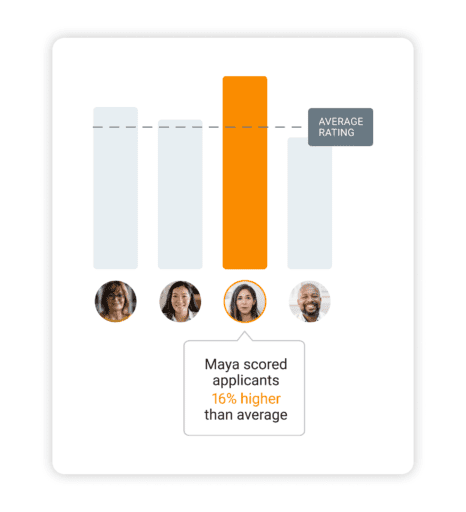 Whether your team is using our Asynchronous Assessment or Live Interviewing, Kira’s Horizontal Review can reduce the impact of ingroup bias behind the scenes by helping you engage multiple reviewers in scoring each applicant thereby reducing the impact of one reviewer scoring higher because of a shared connection.
And with Kira’s inter-rater reliability dashboard, any significant deviation in scores across reviewers will be flagged.

Conservatism bias: Maintaining a prior viewpoint without adjusting for new information or evidence.
What it looks like: Conservatism bias can occur when a reviewer receives new information about an applicant – like a glowing employer reference or excellent interview performance – but that information gets mentally distorted by the reviewer in order to maintain their initial opinion of the applicant formed from their below-average test scores and mediocre transcripts.
How Kira helps: Reviewers can know that they are assessing for a competency such as empathy and have a previously conceived notion of what empathy is and what it should look like in an interview setting.
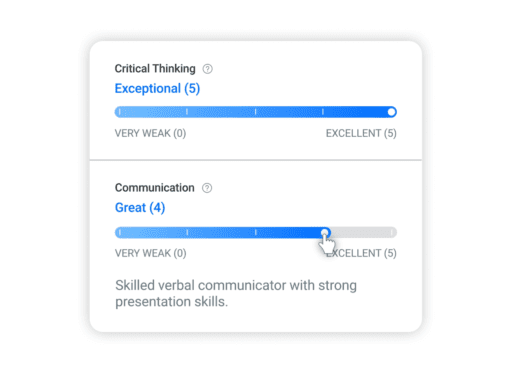
Kira helps mitigate this by using defined rubrics and rating scales that clearly lay out which competencies you’re evaluating applicants for, and the definitions of each score on the rating scales.
Kira’s inter-rater reliability dashboard can also help identify scoring patterns amongst reviewers. Flagging any reviewer who scores applicants significantly higher or lower for one competency, and opening the door for that reviewer to receive clarification or more training.
Bizarreness effect bias: Recalling only unusual information in a series of facts or details.
What it looks like: People with unusual experiences or stories tend to stand out in our memories.
Imagine two candidates with identical resumes, competencies and skillsets apply to your program. They both speak Japanese, but one learned it through a summer program in Japan during which time they climbed Mount Fuji, and one took intro classes at their local language school. The first applicant would make a greater impression compared to the other candidate, making us remember them in more detail.
In admissions, this Bizarreness Effect not only affects the consistency with which we score applicants, but it also presents a challenge with inequity as, in many cases, the bias favours applicants from higher-income families who have the resources to support these unique experiences.
How Kira helps: Where traditionally reviewers take notes during an interview and complete their scoring after, Kira’s in-app rubrics allow them to score applicants in the moment. With easy-to-use scoring in the Kira platform, reviewers can seamlessly evaluate applicants during the interview (with Live Interviewing) or while watching the video (in an Asynchronous Assessment), helping make their decisions based on all the relevant information, not just the pieces that remain in their memories hours later.
Kira’s inter-rater reliability dashboard can also help mitigate the bizarreness effect from impacting the admissions process. By flagging significant deviations in scores between reviewers, the dashboard helps admin monitor for possible biases.
Stereotype bias: An oversimplified understanding of a particular type of group, person, or thing.
What it looks like: Stereotyping is one bias that most of us are familiar with but often don’t realize when it’s affecting our own judgement.
Perhaps it’s that graduates from certain prestigious universities are more studious, or that people who come from an arts background are more laid back than people who have worked in the finance industry.
Regardless of whether it’s a positive or negative association, stereotypes about an applicant’s race, gender, age, or academic experience, can unknowingly trigger assumptions about that applicant which can unfairly influence the admissions process.
How Kira helps: This is where Kira’s ability to easily engage multiple, independent reviewers in the assessment process makes a significant difference. By increasing the number of reviewers that evaluate each applicant, Kira helps ensure that one reviewer’s evaluation can’t make or break an application thereby reducing the potential impact of bias.

Status quo bias: Having an aversion to change or an emotional attachment to the current state of being.
What it looks like: This form of bias occurs when we fear the possible risks of the unknown and discount the benefits because of the fear or discomfort. In admissions, this can manifest as sticking to ‘traditional’ review methods, such as not updating admissions principles, or sticking to the same metrics that don’t necessarily prove the applicant’s success in the program.
How Kira helps: Kira helps teams make that leap in a supported, structured, and validated way.
Our dedicated Client Success Managers (CSM) are on-hand to guide you through every step of the process and make sure that the experience for both yourself, your reviewers, and your applicants is as seamless and professional. By helping your team define the competencies that you want to assess applicants for, and updating existing or creating new rubrics to get to the heart of those competencies, your dedicated CSM helps ensure that your questions and rubrics are truly evaluating for that skill, and not just supporting the status quo.
By constantly evolving our own platform with the goal of making admissions more efficient, effective, and fair, Kira helps ensure that your process is growing to meet best practices in education admissions.

Recency Bias: Assigning more weight or importance to a recent event or interaction than others in the past.
What it looks like: Imagine a reviewer is interviewing several applicants back to back. They’re more likely to have a detailed memory of the applicant they interviewed at 4 p.m. over candidates they saw earlier in the day. The reviewer may remember the applicant in the 3 p.m. interview explaining their work experience, but when looking back at the interview, the reviewer will likely give that candidate’s awkward handshake at 4 p.m. more emphasis.
How Kira helps: When it comes to recency bias, Kira helps minimize the impact by having reviewers score applicants in the moment.
The platform ensures that interviewers complete their review during or directly following their time with the applicant with structured in-platform rubrics. In this way, we’ve removed the tendency to – no matter how good their intentions are – ‘finish this later’ and inadvertently open the door to the influence of recency bias.
Kira’s Asynchronous Assessment is also great for minimizing this form of bias. It doesn't matter if an applicant completed the assessment at 10 AM or 4 PM because, unlike synchronous interviews, viewing applicant responses and scoring applicants happens whenever and wherever is best for the reviewer.
I know we’re just scratching the surface on bias in admissions here. What haven’t we said that you want to share with admissions teams?
JY: I think one of the parting notes here is that there probably isn’t ever a perfect time to think about process change. For the schools or individuals who are trying to figure this out, it’s helpful to consider Kira as an investment in a continuous improvement of their process. Start where you are, we’ll add system and structure and bring in the best practices. From there, we’ll have an established baseline and can continue to leverage our technology to improve processes and outcomes for you and your teams.
A brand new year and a ton of bright new projects underway at Kira! But before we get started on what’s sure to be another record-breaking year at Kira, we want to reflect on the big changes we made in the admissions space over the past twelve months.
In 2020, we made a ton of enhancements across the board. In 2021, we focused in on one big project — Live Interviewing.
The demand for virtual interviews is only growing. Since the COVID-19 pandemic shed light on the accessibility, efficiency, and equity gains associated with online admissions processes, schools have been trying to find a way to deliver the professionalism of their traditional experience in this new medium.
And while some still see going back to their old comfort zone as the only solution, leading schools are taking the lessons of the past couple of years and leveraging new tech to ensure their process is future-proofed, no matter what unprecedented circumstances we find ourselves in the future.
That’s where Kira comes in.
Tailor-made for the way admissions teams interview, Live Interviewing in Kira Talent takes real-time video interviewing to a new level of ease and refinement.
Taking the same principles and practices of holistic admissions that have made our Asynchronous Assessment a client favourite over the years, Live Interviewing transforms real-time video interviewing from a quick-fix pandemic solution into a new era of refined, innovative and professional admissions experiences.
Discover what's new in Kira
Live Interviewing
Live Interviewing
From automated entry to in-app reviewing, Kira Talent has brought multi-station interviewing into a new era of convenience.
When we say ‘built for the way you interview’, we mean it.
Working with several Canadian medical schools, we’ve designed Live Interviewing to replicate the traditional Multiple Mini Interview (MMI) process and address the challenges typically associated with real-time video interviews. From scheduling to reviewing, the platform unifies all of your tools and processes so you don’t have to juggle anything. The result is an interviewing experience that brings a level of ease, efficiency, and professionalism to your process that other video conferencing tools simply can’t.
In its first several months, thousands of applicants completed a Live Interview in Kira Talent. With 90.2% of those applicants rating their experience either “Great” (4/5) or “Exceptional” (5/5), Live Interviewing was off to a great start.
Learn more in the 2021 Live Interviewing Experience Report
Discover the ins and outs of Live Interviewing and how we’ve added to and improved the platform since its launch earlier this year.
The Admin Dashboard
The Live Interviewing admin dashboard is your control panel for executing your interviews without a hitch.
This at-a-glance dashboard sets you up for success in every stage of the interview process by providing real-time updates on everything from participant engagement status to interview circuit details.
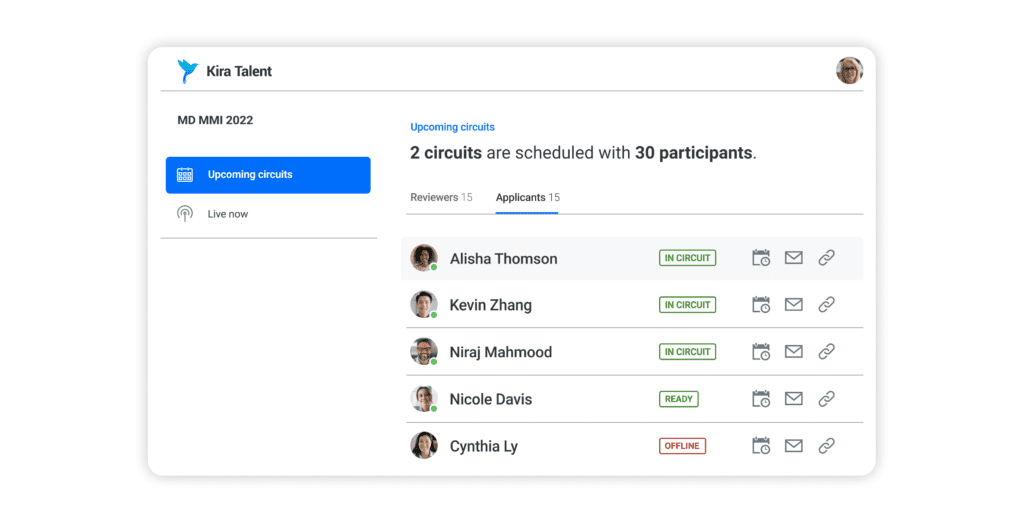
From sending an email invitation to participants to checking if participants are on the platform and ready to go, to delaying a specific circuit’s start time if someone is running late, the admin dashboard gives you a birds-eye-view of the entire interviewing circuit and the ability to keep things organized and running smoothly.
Integrated invitations
With invitations customized and sent right from the Kira platform, getting your applicants to their interview is a snap.
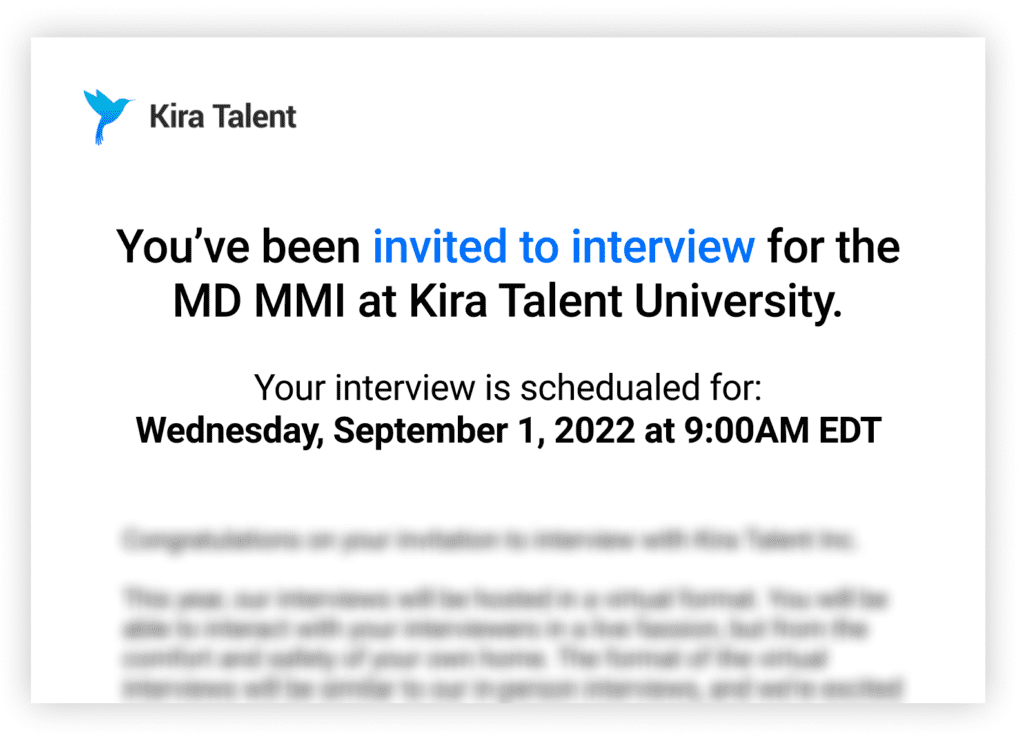
From the admin dashboard, you can send invites individually or in bulk, all with a single click. Invite emails are customized with your messaging and automatically populated with scheduled interview date and time, as well as a unique link to access their interview.
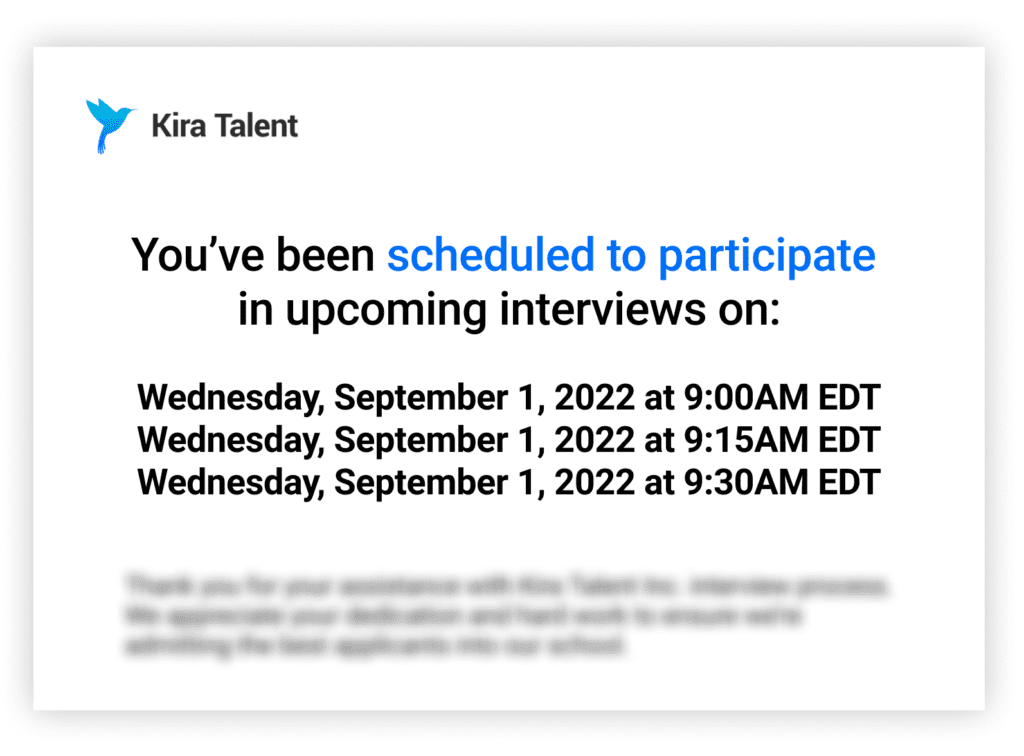
The same goes for your reviewer invitations! Reviewer invites will automatically contain all of their upcoming scheduled interview dates and times, as well as their unique interview link.
With integrated invitations, the admin dashboard helps you streamline the communication with your applicants and reviewers, because efficient communication is never a bad thing.
Real-time status updates
Make sure everyone is online and ready to go with real-time status updates!
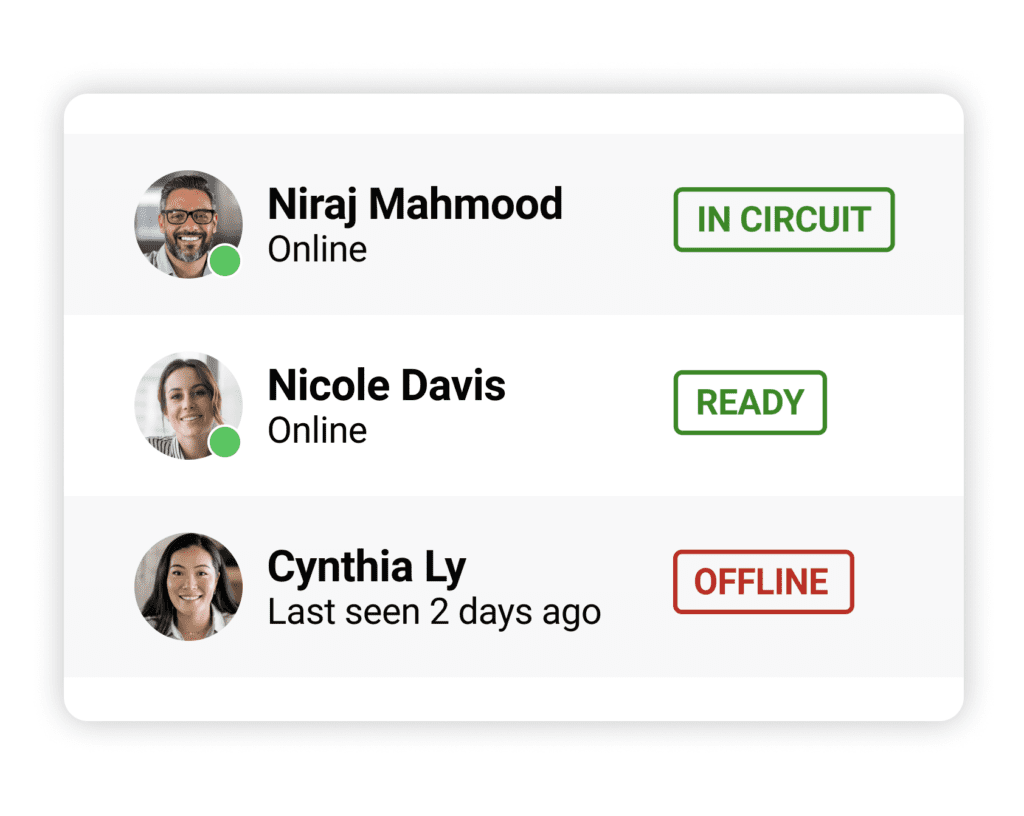 Refreshed every 2-3 seconds, status updates in the admin dashboard show you which applicants and reviewers have been invited, if they’ve visited their interview page, if they’re at their computers ready for their circuit, and if they’re inside their circuit as scheduled.
Upcoming & live circuits
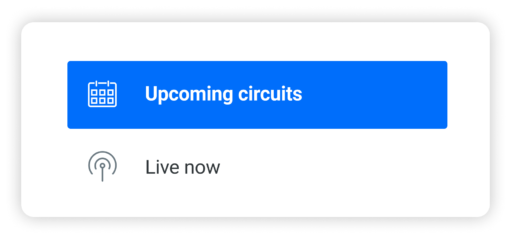 The admin dashboard also segments your participants into two main groups — those with an upcoming circuit and those currently inside a live circuit.
Delay Start
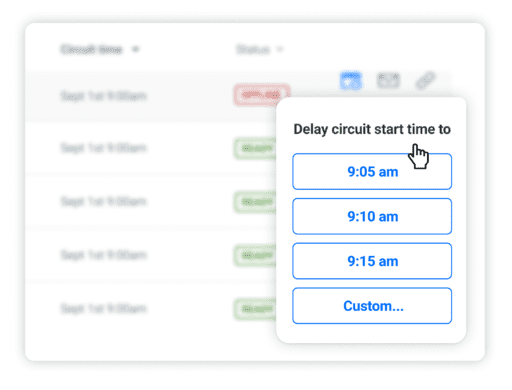 Dealing with a last-minute scheduling snag or reviewer swap? No problem. The admin dashboard makes it easy to delay the upcoming circuit and give participants some extra time to join.
Kira enables you to select a new date and time and automatically notifies all participants of the change.
Custom participant naming
What applicant information do you want your reviewers and observers to see during the interview process? How do you want applicants to address interviewers? Whether you’re looking for complete anonymity or for interviewers to make the connection between an applicant's resume and personal statement to the person on their screen, the choice is yours.
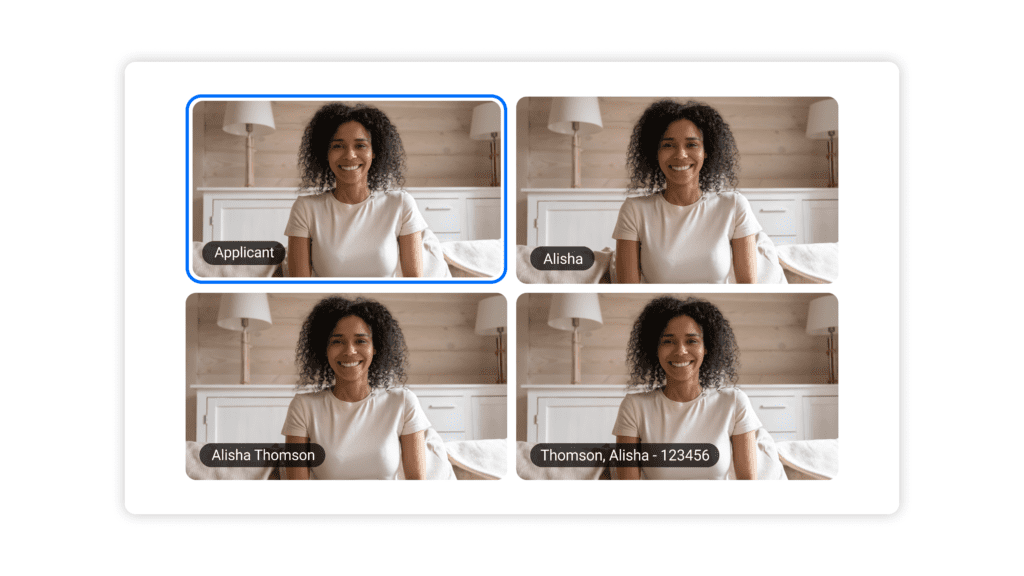
With custom participant naming in Kira Talent, you can choose to display any combination of an applicant’s first name, last name, and ID number on their video — giving you full control over the anonymity of your interview.
The same can be done for your reviewers! Display any combination of a reviewer’s first, last, or display name, or use another word such as “Assessor” or “Rater”.
Double Length Stations
With several American medical schools using the platform, double-length stations were a priority addition to Live Interviewing.
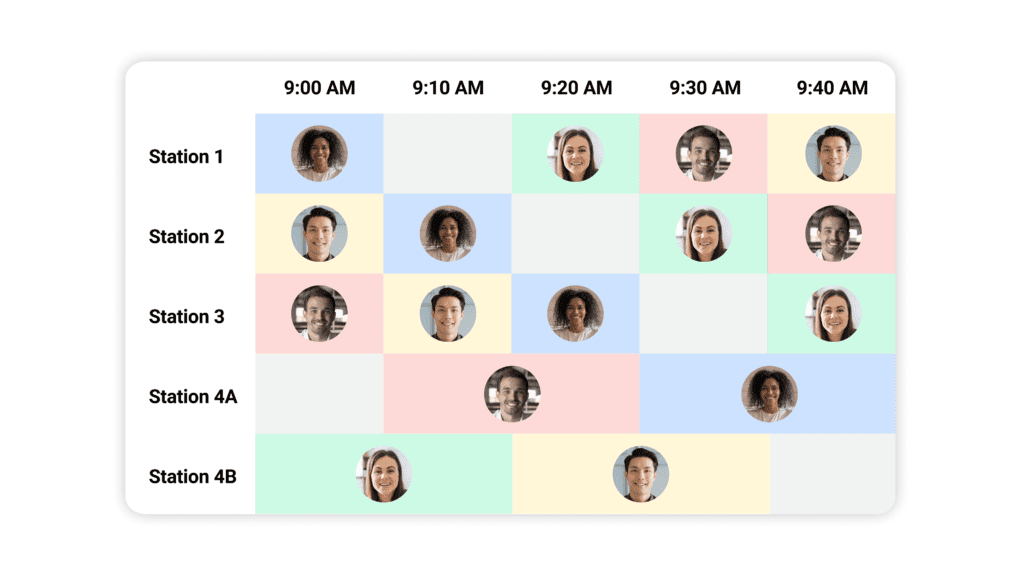
These extra-long stations provide an opportunity to include a panel-like interview within the MMI and allow for a more free-flowing, informal discussion over a longer period of time.
Double-length stations in Kira Talent can be easily added to your schedule and are seamlessly incorporated into the rotational flow of the rest of your MMI.
Wondering what you can expect from Kira in 2022?
Subscribe below for more updates.
Ranking first in the world by the Financial Times for the sixth consecutive year, IESE Business School is a leading force in the world of Graduate Management Education.
With their largest campus located in Barcelona, IESE also boasts locations in Munich, New York, Madrid, and São Paulo. On all of these campuses, IESE centres learning around the case methodology. By having students from all around the world take real problems and work in teams to propose solutions, the school creates a unique and diverse learning environment that sets it apart from other schools.
It’s for this reason that assessing an applicant’s communication skills within the admissions process is so important.
“An applicant may look very impressive on paper, but we need to know that they can arrive on campus and be able to work with their peers on cases,” shared Admissions Director Paula Amorim.
Needing an efficient way to assess applicants’ communication skills, IESE turned to Kira Talent.
Keeping ‘fit’ at the forefront of admissions
“We use Kira Talent for our deferred admissions process for our MBA, which we call the Young Talent Path (YTP),” explained Amorim.
Having started as a summer school, the YTP program has evolved into a preparatory course that offers successful students deferred admission to the MBA. As acceptance to the YTP is just the start of a longer relationship with the school, IESE places significant emphasis on identifying and selecting applicants who are the right fit not only for the YTP program, but for the greater IESE community.
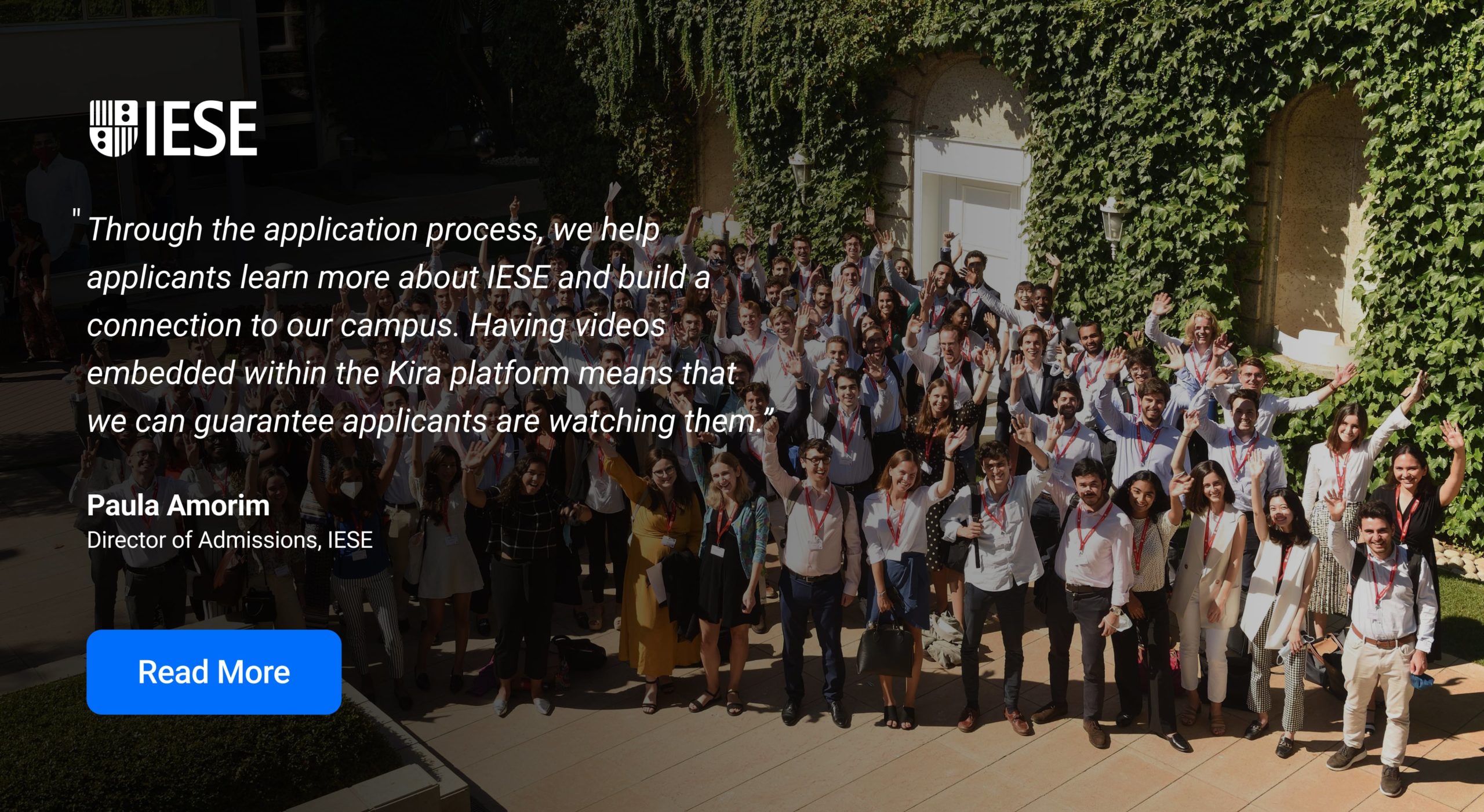
“Our full-time MBA is aimed at people with five to six years of full-time work experience, so we use the YTP program to help foster younger prospective students’ interest in the MBA,” she continued. “Through both the YTP application process as well as the actual course, we help them learn more about IESE and build a connection to our campus.”
“The Kira platform really helps us do that,” Amorim added. “Having videos embedded within the application process means that we can guarantee applicants are watching them.”
“IESE is a very values-oriented school, so the alignment between our mission and an applicant’s values is very important. We are looking for best-fit candidates and that also means that IESE needs to be a good fit for them. The customized and personal experience in Kira allows us to show off our personality, so applicants can see if IESE is what they’re looking for and we can find that alignment in a personable and efficient way.”
This intentional selection progress has helped foster a very strong brand for YTP graduates within the larger IESE community.
Building a consistent evaluation process
“Before finding Kira, we tried having applicants upload and submit a video essay,” shared Amorim. “We found that the submissions were so varied it was difficult to consistently score applicants. On top of that, we didn’t know whether this was the product of several minutes or several days of work, and we couldn’t ensure that they hadn’t received assistance.”
“It was almost impossible to accurately assess their abilities.”
“With Kira, we’re able to assess applicants on comparable submissions,” she continued. “We know that each applicant has had the same amount of preparation time and delivery time.”
“Kira gives us comparable samples of the candidates which makes the scoring process more fair.”
Adding efficiency to holistic admissions
The admissions team at IESE prides itself on a holistic and hands-on approach to the admissions process. Despite the fact that they’re often recruiting applicants from all around the world, the admissions team is able to build a personal connection with each candidate. As something that students often highlight as unique to the IESE admissions process, the school was adamant that the admissions process for the YTP live up to that reputation.
“IESE has always been very international, so we’ve always conducted our interviews online,” explained Amorim. “We don’t delegate the interviews to alumni or faculty, our admissions committee is always responsible.”
“Before Kira, we were spending a lot of time coordinating interviews,” shared Amorim. With the significant number of applications coming in each cycle, the real-time video interview solutions available simply weren't scalable.
By switching to Kira’s Asynchronous Assessment, IESE is able to invite every applicant to complete an assessment and is still saving time in the overall process.
“We were able to go from about 1.5 hrs per application –which includes organization time, scheduling, reading the application, and actually conducting the interview – to around 10 minutes.”
“Kira helps us save time in the admissions process," Amorim added. "And we're still able to assess our applicants’ communication skills and create that personable, hands-on admissions experience that attracts applicants to our programs.”
Discover how more business programs are enhancing their admissions processes with Kira Talent
Founded in 1954 as part of a joint effort between the Brazilian government and local businessmen with the collaboration of Michigan State University, Fundação Getulio Vargas’ Business Administration School in São Paulo (FGV EAESP) has been a leader in higher education in Latin America for over 60 years.
Today, the school is ranked first on the Brazilian Ministry of Education’s General Course Index (IGC) and is the only Brazilian institution to rank among the top ten in Latin America in the QS Global 200 MBA Rankings.
The school’s well-established reputation, as well as its campus in Brazil’s business hub of São Paulo, are some of the reasons why admission to its Business Administration Undergraduate Program is so competitive. The admissions committee didn’t want to lose the valuable insights gained through applicant interviews, but Program Director Renato Guimarães Ferreira knew that they would need modern and innovative methods to make the process scalable for their growing program.
“We interview around 1000 students per cycle,” Ferreira explained. “Coordinating in-person interviews at that scale is a massive undertaking. At the end of the day, we are making better use of our time and resources using the Kira Talent platform.”
Convincing a traditional school to invest in an innovative process
“We had been talking about adding a tool like Kira Talent to our application process for a long time, but there was a culture of face-to-face interviews and process which was really difficult to change,” shared Ferreira. “Some people were concerned we were going to lose too much if we lost the in-person contact.”
“By forcing our processes online, the COVID-19 pandemic actually helped us convince people that a new kind of process was a good thing,” he continued. “We couldn’t continue doing what we had previously done, so let’s try the process with Kira Talent.”
Now in their second year evaluating applicants through Kira’s Asynchronous Assessment, FGV EAESP has received considerable positive feedback from their reviewers.
“We were on a very tight timeline, but the on-demand nature of the assessment meant reviewers were able to review on their own time,” Ferreira shared. “They really valued the flexibility that the platform offers.”
Kira’s reviewer dashboard also helped FGV EAESP adhere to the tight timeline. By tracking reviewer progress, the dashboard gives admin an overview of where each reviewer is with their assigned applicants and allows them to easily reassign applicants to new reviewers if needed.
“Having spoken to the professors who had previously raised concerns, they now see the value in the platform," Ferreira added.
"The consensus is that Kira is here to stay.”
Making an assessment more efficient and fair
In previous years applicants who had done well in their written exam travelled to FGV EAESP’s campus to take their interview with the admissions team. As interviews were spaced across several days, Ferreira and his team knew there was a chance that some applicants were heading into the interview with more information than others.
“In a very high-stakes selection process like this we’re supporting applicants with a level playing field,” Ferreira shared. “We knew our old format put some applicants scheduled for later in the week at an advantage because they had the opportunity to talk to peers and gather information about the process. We knew it wasn’t a perfect system.”
Learn how the Merage School of Business streamlined their admissions review process with Kira
With Kira, all applicants take the exam on the same day. FGV EAESP chose to keep the on-demand assessment open for four hours, during which time everybody entered into the platform and completed the assessment.
“Kira helped us ensure that every applicant had a fair opportunity. We wanted to have everything happen on the same day in a limited number of hours to not advantage any one group of applicants who had a chance to talk amongst friends.”
And making sure everyone completed their assessment within the window was simple. Kira’s applicant dashboard helps FGV EAESP ensure their applicants are on track and ready to go on the day of the assessment.
“Prior to the exam day, we can see if applicants have registered, if they’ve set up their device, and if they’ve completed some practice questions,” Ferreira shared. “If they hadn’t, we could send a quick message to get them back on track.”
Building a more diverse applicant pool
By making the application process more accessible, Kira is helping FGV EAESP solve logistical challenges and engage a more diverse pool of applicants.
“We want to recruit people from all over the country,” Ferreira explained. “And for that to happen, we needed candidates to be able to easily take part in the application process without geographical constraints.”
“There are great students who are just far away from São Paulo and who are now able to consider our university,” he continued. “Kira helps us reach them and advance our strategy to increase diversity at FGV EAESP."
"With Kira, we’ve already seen an increase in the percentage of students coming from outside of São Paulo — a trend which we expect to continue to grow.”
Building a reputation of innovation
“We are one of the oldest business schools in Brazil and that drives a reputation of being rather traditional,” Ferreira shared. “When people think of FGV EAESP they don’t necessarily think of us as a school that is at the cutting edge of technology.”
“Kira helps us demonstrate our commitment to innovation,” he added.
“As our school continues to evolve and bridge the gap between traditional and innovative, Kira’s professional and seamless platform projects the image of a modern and forward-thinking school.”
Discover how more business programs are enhancing their admissions processes with Kira Talent